




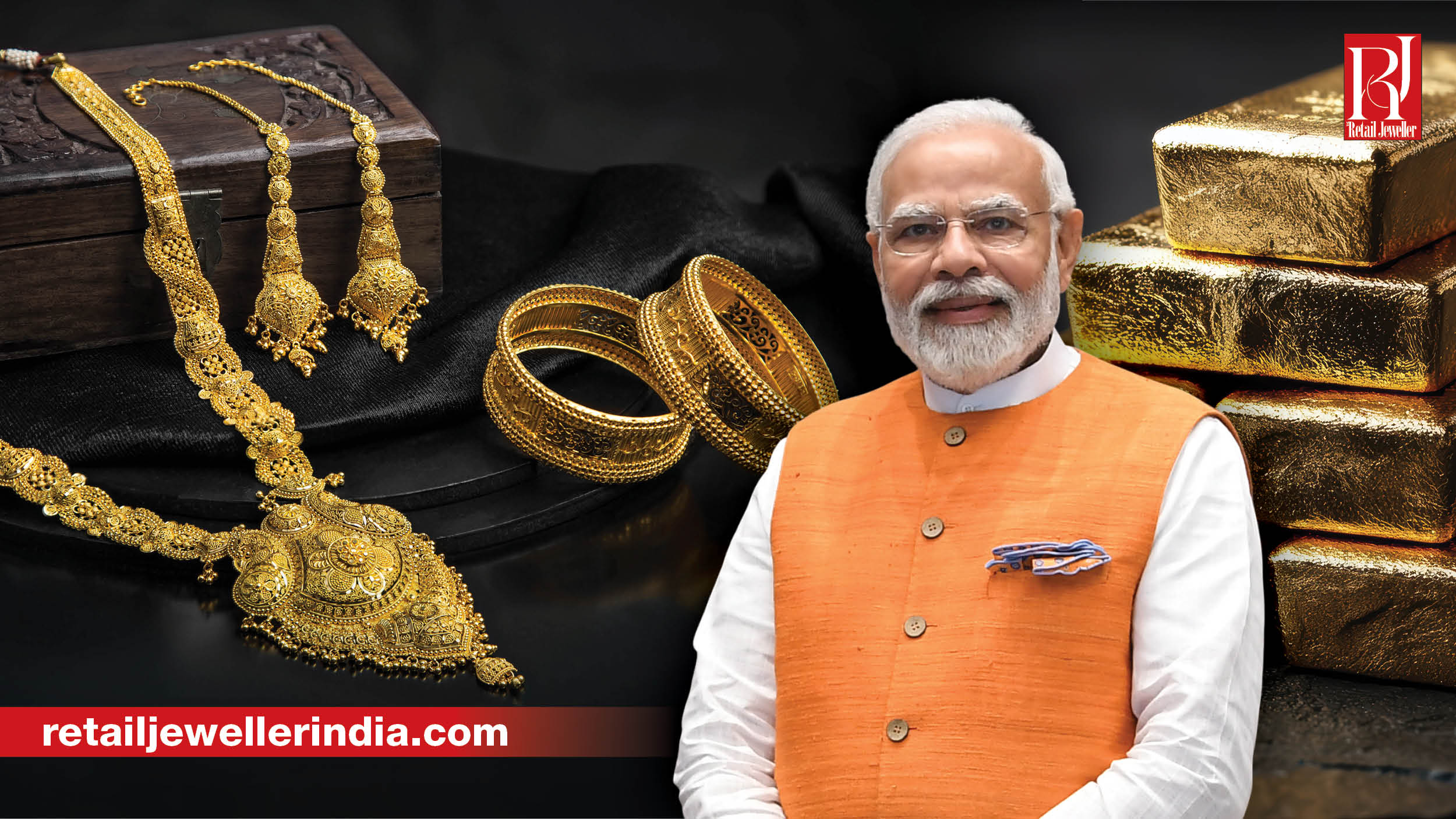

Recent developments have led to a quick shift in gold demand dynamics. While gold’s cultural and economic role remains intact, consumption is expected to move towards exchange-led buying, lighter jewellery, and alternative categories, with retailers adjusting inventory strategies to match more cautious demand patterns
Mumbai: As of May 2026, a policy signal from Prime Minister Narendra Modi has set the tone for a new phase in India’s gold market. Speaking at a rally in Hyderabad, the PM urged citizens to refrain from non-essential gold purchases for one year, positioning the appeal within a broader effort to conserve foreign exchange reserves amid high crude oil prices and geopolitical tensions in West Asia. Within days, the Government raised the effective import duty on gold to 15% from 6%, reinforcing its intent to curb imports and manage external pressures.
At an institutional level, the response from apex industry bodies has been measured and aligned with the broader economic objective. Kirit Bhansali, Chairman, Gem & Jewellery Export Promotion Council (GJEPC) said, “The gem and jewellery industry fully understands the reason and respects the appeal made by Prime Minister Narendra Modi in view of the current global situation and the larger national interest. As responsible stakeholders, we stand with the nation during challenging times.” He also highlighted that the sector supports millions of livelihoods and is working with stakeholders to arrive at practical solutions.
Echoing this position, Rajesh Rokde, Chairman, All India Gem And Jewellery Domestic Council (GJC) stated, “We believe the increase in Customs duty is a temporary and calibrated measure in the present economic scenario. The trade should remain calm and confident,” reinforcing the need for stability within the industry. GJC Vice Chairman Avinash Gupta added, “Gold and jewellery are deeply connected with India’s economy, traditions, and savings culture… it is important for the trade fraternity to avoid panic and continue business with confidence and responsibility,” signalling continuity despite policy changes.
For a sector where consumption is closely tied to weddings, festivals and savings behaviour, the development has led to a recalibration rather than a pause. Across retail counters, early indicators suggest a shift in how consumers are approaching purchases.
Fatehchand Ranka, Director, Ranka Jewellers, Pune, frames the transition as a change in buying patterns rather than demand erosion. “The Prime Minister’s appeal is significant; however, in India, gold buying remains deeply linked to weddings, festivals and cultural practices. While discretionary purchases may slow, bridal and occasion-led demand is expected to remain steady, with a growing preference for lighter and value-focused jewellery,” he said. This change, he added, is pushing retailers to adapt through low-grammage collections, exchange programmes and diversification into studded and alternative categories.
At the same time, the immediate sentiment on the ground reflects caution. In stores, customers are seeking clarity before proceeding with purchases. Saumitra Saraf, Director, Aisshpra Gems and Jewels, Lucknow, pointed to the uncertainty that has followed the announcement. “When the Prime Minister advises against buying gold, it does influence consumer sentiment. Many customers are already cautious, and some who had made advance payments are reaching out to seek clarity on whether they should proceed,” he said. He noted that any decline in store visits could affect both gold and diamond sales, given that conversions are often driven by initial gold-led footfalls.
Despite this, the structural drivers of demand remain in place. Gold continues to be linked to social occasions across regions, limiting the scope of a sustained decline. Pratap Kamath, Managing Director, Abaran Timeless Jewellery, Bengaluru, explained that a large part of consumption is already supported by recycling. “Nearly 50 to 60% of purchases today are driven by recycled gold, with only about half being fresh demand,” he stated, adding that while there could be a short-term sentiment impact, long-term behaviour is unlikely to change. He also flagged that higher import duty may create price gaps that need to be monitored.
Retailers are aligning their response with the broader economic context behind the policy. Aman Kataria, Director, D.P. Jewellers,Indore, said the industry is viewing the development in line with national priorities. “The recent increase in import duty from 6% to 15% reflects an effort to control gold consumption… while this may create some short-term challenges, it is a policy move aimed at long-term stability,” he stated. At the store level, he added, the focus has shifted towards encouraging customers to exchange unused gold and towards maintaining lighter inventory.
This shift towards circulation has brought renewed attention to the role of idle gold within the domestic economy. Raghav Dhir, Director, DhirsonsJewellers, New Delhi, pointed to the opportunity this moment presents. “We strongly encourage our customers to bring in their old gold and exchange it for new jewellery… this is also the right momen to formalize a robust gold monetization scheme,” he said, highlighting the need to reduce dependence on imports through structured mechanisms.
From a corporate perspective, Suvankar Sen, MD & CEO of Senco Gold Ltd, Kolkata, connected the policy shift with existing industry practices. “Consumer jewellery buying is not directly connected to fresh gold imports alone, since a large part of the industry already functions through old gold exchange and recycled gold,” he said. He also highlighted the need to mobilize domestic reserves, noting that exchange-driven sales already account for a significant share of business.
The recent developments point to a broader shift in how gold demand may evolve in the near term. While the cultural and economic role of gold remains unchanged, the mechanisms of consumption are being reshaped. Exchange-led buying, lower weight jewellery, and alternative categories are emerging as key responses. Retailers are also reworking inventory strategies to align with demand patterns that may become more cautious.
At the same time, the policy intent is clear. By raising import duty and signalling restraint in consumption, the Government is seeking to manage external pressures on the economy. For the industry, the challenge lies in balancing this macro-economic objective with the realities of a sector that supports a large workforce and operates on steady demand cycles.
The coming months will test the industry’s ability to adapt. Past phases of regulation have shown that the sector can adjust through innovation in sourcing, product design, and consumer engagement. This time, the focus appears to be on circulation rather than accumulation on bringing existing gold back into the system rather than relying on imports.
In that sense, the current phase is not defined by a halt in demand, but by a reconfiguration of how that demand is met.
Written by Achal Chaubey
Retail Jeweller India News