





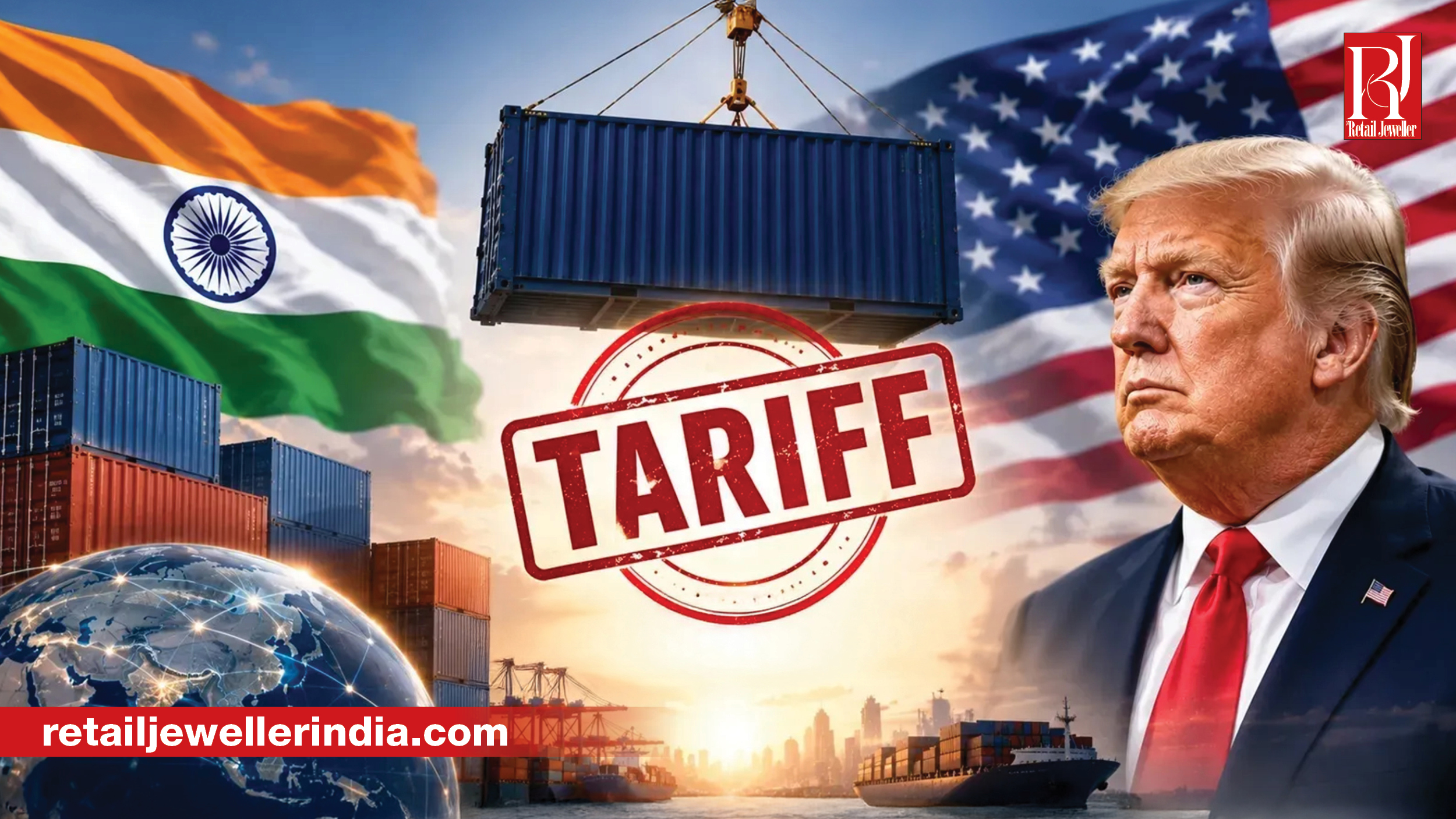

While India is in a lower tariff band than some countries, the absence of exemptions and caps creates a differential treatment, affecting margins, sourcing decisions and export growth in a key market
Mumbai: India’s gem and jewellery exports to the United States face a cost increase following the imposition of a 10% tariff under Section 301, effective 24 July 2026. The measure introduces pricing pressure in one of India’s largest export markets and is expected to affect competitiveness across key product categories.
The tariff follows a Notice of Action issued by the Office of the United States Trade Representative on 23 July 2026, linked to investigations concerning the enforcement of prohibitions on goods produced with forced labour. The duty applies to goods entered for consumption from 12:01 a.m. eastern daylight time, corresponding to 9:31 a.m. IST.
For Indian exporters, the tariff is levied on an ad valorem basis under HTSUS heading 9903.05.44 and is applied in addition to existing most-favoured-nation (MFN) duties. India has been placed in the 10% band, lower than the 12.5% imposed on countries including China, Thailand and the UAE. However, unlike certain economies, India does not benefit from a cap mechanism, and the duty is fully additive.
The impact varies across product segments. Bullion and certain precious metals listed under Annex I and Annex II, Part A are exempt, including gold, silver bullion, platinum group metals and scrap. In contrast, cut and polished diamonds, coloured gemstones and semi-precious stones are not exempt and will attract the full 10% duty. Jewellery exports will face a combined burden, with MFN rates of 5.5–6% in addition to the new tariff.
Polished diamonds, a principal export line for India, will now carry a 10% duty as MFN rates on this category are nil. Diamonds from certain economies, including the European Union and Switzerland, are exempt under U.S. Note 52(j), resulting in differential treatment. Identical products from India and exempt jurisdictions will therefore enter the United States at different duty levels.
The measure is expected to affect margins and may influence sourcing decisions in the near term. Buyers may adjust procurement based on landed cost, while exporters may review pricing structures. The 2.5 percentage point gap with higher-tariff countries provides limited scope in negotiations but does not offset the additional cost.
With the United States accounting for a significant share of India’s gem and jewellery exports, the tariff introduces a structural cost factor that may affect growth in the market. Industry stakeholders are expected to assess responses including pricing, market diversification and policy engagement.
Retail Jeweller India News