
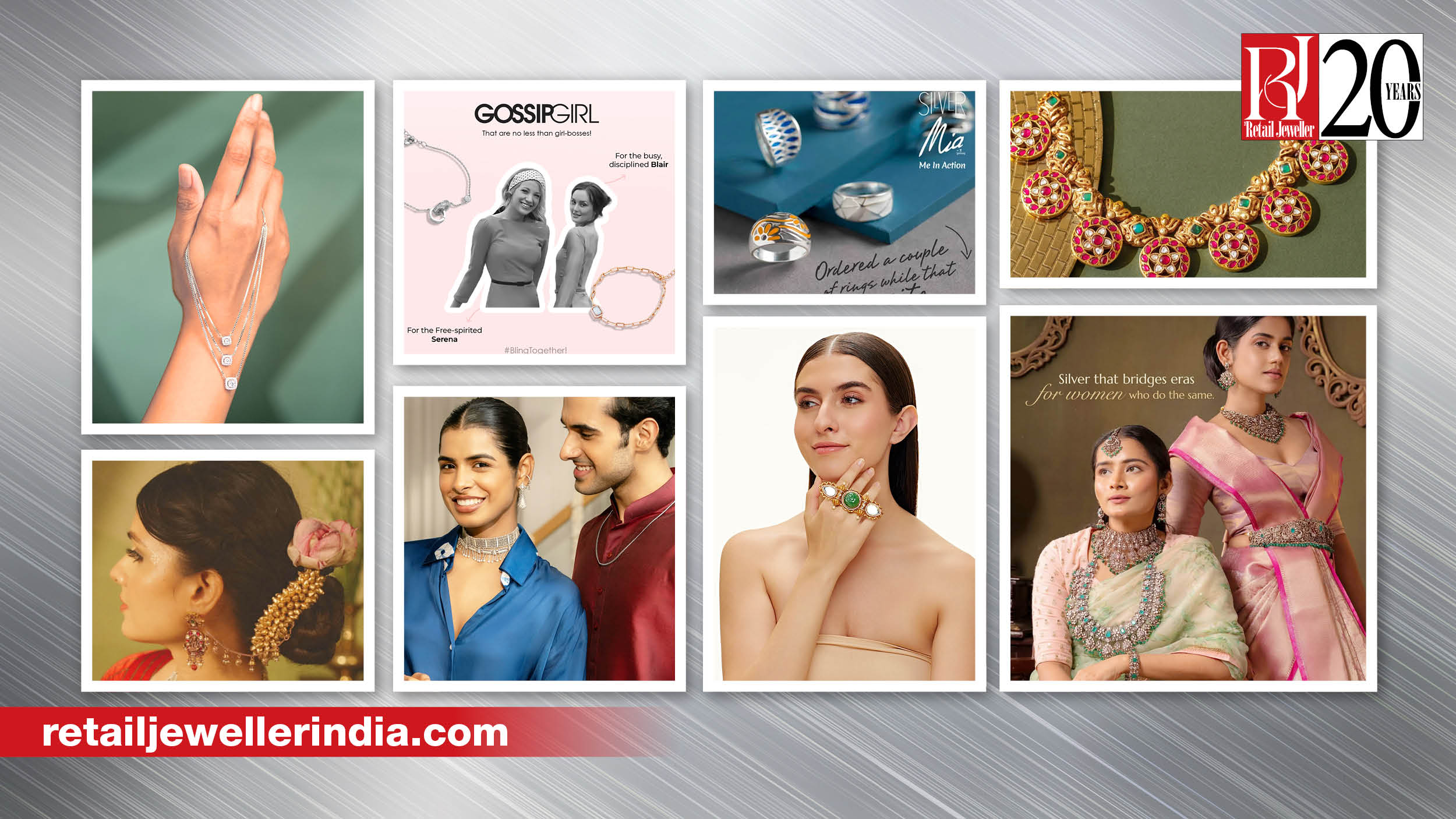

Once a supporting act to gold, silver has emerged as India’s most dynamic jewellery story — a category reinvented by legacy houses, powered by digital acceleration, and legitimised by hallmarking. As gold prices reach record highs, silver holds a new, thus far largely unexplored promise for the industry.
Accessible, aspirational, and remarkably resilient, it is the new driver for customer acquisition and profit for businesses. From legacy retailers to national chains, jewellers across India are discovering that the metal once considered secondary is now at the heart of growth.
India’s silver jewellery industry is no longer a quiet side act. In FY 2024-25, more than 32 lakh silver articles were voluntarily hallmarked, according to the BIS — the highest number ever recorded. The number might appear modest compared with gold. Still, it captures a significant shift—the movement of silver from the fringes of imitation counters to the centre of India’s organised jewellery business.
This surge coincides with record-high gold prices that have redefined consumer behaviour. As 22K gold crosses Rs. 10,945 per gram, silver’s price — now around Rs. 155 per gram (as of October 2025), almost 165 per cent growth since its pre-Covid level — makes it the new accessible and investible precious metal. Jewellers say this differential has been pivotal in impacting silver imports and domestic sales.
“Gold is now competing with lifestyle spends,” observes Aditya Modak, Director, Gargi by PNG Sons, a silver-focused sub-brand from Pune’s 190-year-old jeweller, which has become one of the most successful examples of a legacy house scaling silver with 14 brand outlets (self-owned and franchisee) and 68 shop-in-shop outlets in a span of 5 years. Listed on BSE in 2022 the brand’s current market capitalisation is Rs. 873 crores (as of late October 2025)
“The 25 to 35-year-old buyer has limited disposable income, and jewellery is competing with travel, gadgets, and experiences. Silver fills that space — precious, aspirational, yet affordable.”
The results are evident in the numbers. According to India’s trade ministry, the country’s silver imports have risen sharply in recent times. In August 2024 alone, India imported 410.8 tonnes of silver, worth $451.6 million, as reported by the Ministry of Trade. This monthly import is substantial when viewed in context – India’s total silver imports for the entire year 2023 were only about 3,475 tonnes, indicating a significant increase in both demand and value.
From Cautious Category to Core Business
“Rising gold prices have influenced buying patterns, but silver’s growth goes beyond affordability. It carries emotion—auspicious, precious, and culturally rooted. Even GenZ has surprised us, celebrating festivals with enthusiasm and choosing temple-inspired designs reinterpreted with a modern, wearable twist,” adds Manish Gulechha, Co-founder, Kushals Fashion and Silver Jewellery, which is a Bengaluru-based fashion and silver jewellery brand widely recognised for its temple silver jewellery. Founded in 2006, the company plans to expand to over 300 stores within the next three years. The company is targeting 50% growth for FY25, a significant increase from their 40% growth in the previous fiscal year.
The inflection point came after Covid-19, when wedding budgets shrank but self-expression soared. As gold prices hit new highs, consumers began looking for affordable fine jewellery that could deliver design and prestige without the weight of large outlays. The jewellers who read that shift early are the ones leading the category today.
Kushal’s saw silver grow exponentially post-Covid. “It’s not about metal choice anymore,” says Gulechha. “Customers come for design, not denomination. Silver met the post-pandemic appetite for everyday luxury — festive, bridal, and now even corporate wear. For us, silver category has grown by nearly 20 per cent year on year since 2021. “Temple jewellery remains enduring, but everyday silver is our fastest-growing category,” says Gulechha.
Similarly, Gargi identified a gap in the market for affordable precious jewellery under Rs. 10,000. Within four years since inception, the sub-brand scaled from Rs. 15 crores to Rs. 126 crores in turnover. “Silver let us speak to the younger generation of our decades-old loyal gold customers,” says Modak. “It’s a bridge between generations — the same family, new spending power.”
For Ajith Singh, Business Head of Shaya, a contemporary silver brand from the house of Caratlane, launched in 2018, the category’s growth coincided with digital acceleration in retail. “Nearly 60 per cent of our sales come from online channels.”
Retailers also realised that silver’s fast market acceptance meant it could finally have its own space. Ishaan Agarwal of Jodhamal Jewellers, Meerut, opened a dedicated silver boutique after tracking a five-year doubling of silver jewellery sales from their flagship store.
“We were seeing gold buyers asking for silver (article) gifts and younger buyers asking for gold-like craftsmanship,” he says. “It made sense to give silver a store of its own — it deserved that stage.”
The Two-Way Street
Silver’s biggest contribution to the Indian jewellery business is not just margin—it’s migration. It has become a two-way bridge—bringing first-time buyers into the precious jewellery segment, while giving gold-led retailers a tool to acquire younger, digital-first customers.
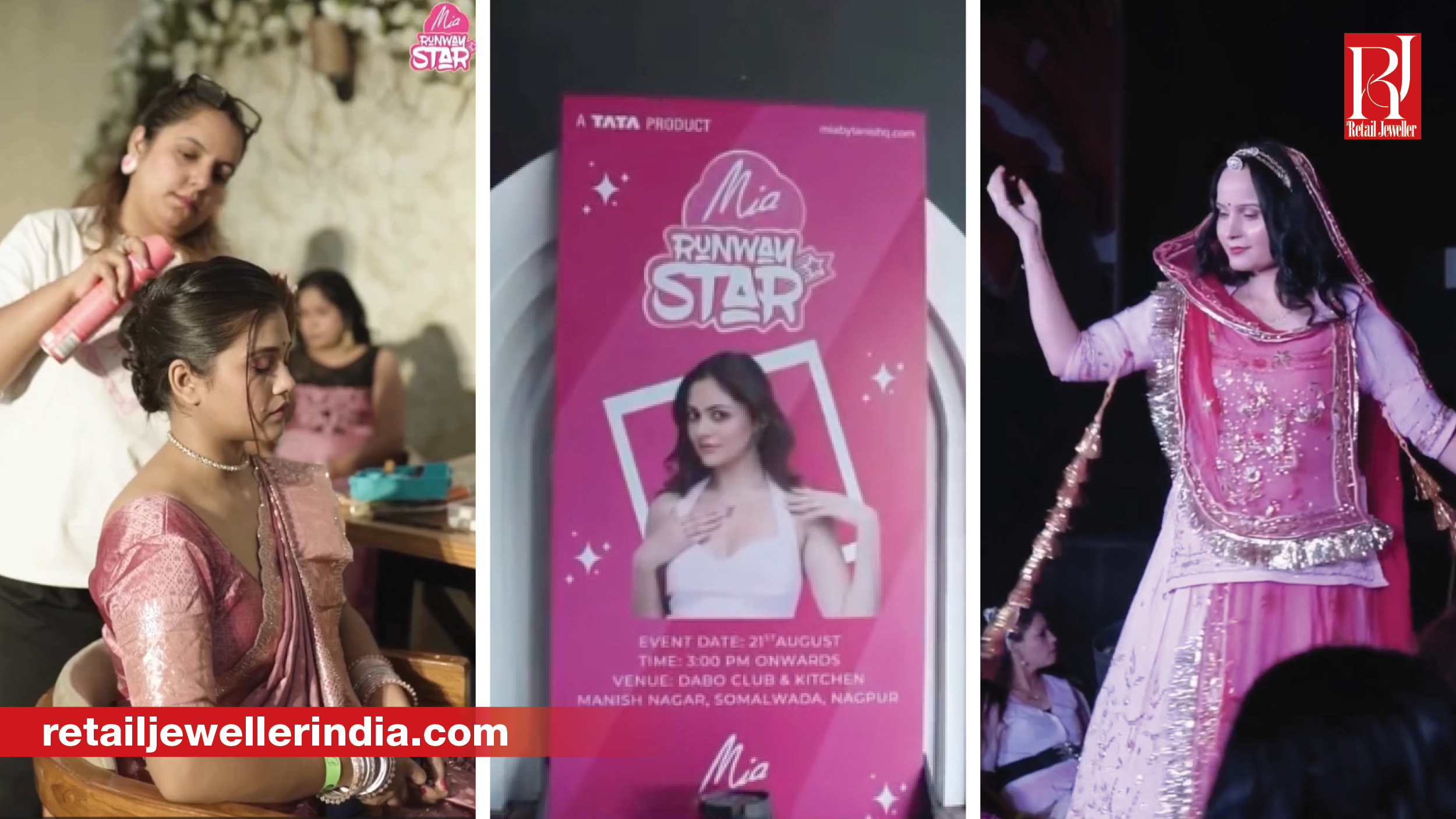
At Mia by Tanishq, which diversified into silver jewellery from gold in 2018, broadening its precious jewellery portfolio with accessible, design-driven pieces for everyday wear, silver now functions as the first point of connection. “It’s where our relationship with the consumer begins,” says Shyamala Raman, Business Head, Mia by Tanishq.
“Silver is the perfect entry point into the world of Mia and, by extension, Tanishq. We call ourselves a recruiter brand—introducing young buyers to fine jewellery through affordable yet stylish silver before they graduate to gold and diamonds.”
This “funnel” logic is precisely what differentiates silver from other precious categories. Its frequency of purchase is higher, its repeat cycle shorter, and its aspirational value persistent. Unlike gold, where purchase cycles are long and heavily occasion-led, silver’s buying pattern is frequent, impulsive, and repeat-driven, resulting in higher profitability from lower capital investment. Retailers agree that silver’s shorter turnaround time offsets its lower per-ticket value. According to CaratLane data, a typical gold buyer shops twice a year; a silver buyer shops four times — a critical insight in a market where repeat sales equals higher profitability.
For Gargi, the silver-gold synergy is now central to business design. “It’s not two different customers,” Modak reiterates. “Our Gargi buyers are PNG buyers in the making. If you’re not offering silver today, you’re missing tomorrow’s gold customer.”
The same logic is driving innovation at Shaya by CaratLane, which recently collaborated with its parent brand to launch Shaya Diamonds—a line combining real diamonds with silver. The initiative connects affordability and aspiration, bringing fine jewellery within reach of a wider audience.
“This collaboration with CaratLane connects Shaya’s silver buyers to the diamond jewellery universe,” says Singh. “It gives our customers an entry point to experience real diamonds through affordable silver jewellery, bridging style, aspiration, and accessibility.”
Launched ahead of the festive season this year, Shaya Diamonds debuted with 150 designs across 50 stores, priced between Rs. 3,000 and Rs. 15,000. It’s a clear signal that retailers see silver not as a compromise, but as a connector—linking style, fine jewellery, and investment under one ecosystem.
This is the industry’s most valuable takeaway; silver is not competition to gold — it’s a recruitment strategy. Every silver counter is a customer-acquisition engine waiting to be scaled.
The Secondary Market
If entry-level trust brought silver into the mainstream, exchangeability is what will keep it there. “In the past year, the secondary market for silver has quietly matured — powered by hallmarking, resale confidence, monthly saving schemes, and formal exchange programs that mimic gold’s value proposition,” says Agarwal.
Divas Mantra, a Chennai-based brand specialising in bridal silver, which is also born out of the legacy of Thangamaligai Jewellers, has introduced a 50% lifetime exchange policy.
“Around 30 percent of our brides have already used it,” says Harini Nevedha R, Co-Founder & CEO, Divas Mantra. “They exchange their wedding sets for lighter, contemporary pieces once the occasion is over. It creates a loop — you buy, you trust, you return.”
This has proven to be a strong retail model for the brand, helping retain brides beyond their wedding purchase and driving repeat visits. Harini also shared that nearly 40 per cent of Divas Mantra’s customers are repeat buyers, a result of this continuous engagement cycle.
Hira Panna Jewellers from Patna has adopted a more structured approach by launching a silver SIP, positioning silver as an investible precious category for mainstream clients.
Shradha Keshri, Partner at Hira Panna Jewellers, offers an interesting perspective. “We introduced a Silver SIP at Hira Panna Jewellers after observing the increasing importance of the category — from jewellery to solar panels. Growing industrial demand, combined with consumer awareness, made silver a logical next step for investment-based savings,” she states.
SILVER DEMAND HITS NEW HIGHS!
India’s soaring appetite for silver jewellery has tightened supplies across the market. Domestic silver now trades at a 10% premium over global prices, reflecting record consumption rather than concern. Between January and August 2025, silver imports dipped 42% even as demand hit new highs — a result of investors, manufacturers, and retailers chasing the same metal. Prices have climbed to around Rs. 1.9 lakh per kg, more than double since January, reflecting silver’s new investment and adornment appeal. The government’s move to regulate imports till March 2026 has further fuelled anticipation, making existing stock even more valuable. While jewellers report lean inventories, most view it as a short-term squeeze in a long-term growth story — proof that silver has firmly arrived as India’s most dynamic precious category.
Shraddha adds that making silver “work like gold” operationally is vital—run it as its own program, and back it with transparent exchange. She stresses, “Our silver SIP runs separately from gold and diamond—on a seven-plus-one format—and we support exchange on metal weight. We melt, test purity, apply live rates, and credit purchases or transfer funds; transparent making charges keep trust consistently and clearly high.”
At Jodhamal Jewellers, the approach to silver has evolved into a structured, trust-based model. The brand now offers buyback at live silver rates, a move that has changed how customers perceive the metal’s value. “Once we started taking back silver at current market rates, customers felt secure about buying larger pieces,” says Ishaan Agarwal. “It immediately doubled our average ticket size and kept them returning to the store.”
This model has also strengthened Jodhamal’s confidence in the category, making the family positive about venturing deeper into silver through a new, dedicated store.
The Bridal and Traditional Boom
If the entry and investment stories belong to mainstream jewellers, the design revolution belongs to the specialists. Brands like Divas Mantra and Kushal’s have shown that silver can be aspirational, artisanal, and deeply Indian — all at once.
For Harini Vasudevan, the journey began with a simple insight—the emotional pull of gold, the freedom of silver.
“A full bridal set in gold today can cost Rs. 1 crore,” she says. “The same grandeur in silver costs Rs. 5 lakhs. Our brides are not compromising — they’re choosing smart luxury and reinvesting the rest in their future.”
Her brand now sees 25 per cent annual growth, with a significant portion coming from repeat bridal families. The ability to offer intricate temple-inspired designs at a fraction of gold’s cost has made Divas Mantra a bridge between generations and geographies — 40 per cent of its clientele is now overseas.
Vasudevan notes that Divas Mantra’s highest bridal price points touch Rs. 2 lakh, primarily for bespoke temple and antique-inspired pieces that combine craftsmanship with contemporary relevance. What truly appeals to her brides, she says, is authenticity and meaning — jewellery that feels heirloom-like yet wearable beyond the wedding day. “Brides today want versatility,” she adds. “They want something that looks as grand on the mandap as it does later for festive occasions — silver gives them that freedom.”
At Challani House of Silver, off shoot of Challani jewellery Mart, bridal silver has steadily evolved into a core growth category. Prakash A, Regional Manager of the brand, shares that customers are increasingly choosing elaborate silver jewellery for weddings, with growing acceptance among families who once reserved silver for gifting or rituals. He adds, “Bridal silver sales have risen by nearly 10 per cent over the past year, reflecting how design innovation and affordability are drawing more brides toward the metal.”
Alongside legacy brands, independent silver specialists are redefining bridal design freedom. Raabta by Rahul, founded by designer Rahul Luthra, has shown how creative liberties thrive when metal cost isn’t a constraint. Working primarily with sterling silver and semi-precious stones, Raabta serves over 1,000 brides annually from its Delhi flagship and through multi-designer stores across Toronto, Vancouver, and New York.
“Today’s brides-to-be value utility and meaning in jewellery,” says Luthra. “Around 80 per cent of our customers buy for family occasions or milestones, not leisure. Silver lets us turn personal stories—wedding dates, meaningful motifs—into bespoke pieces without the price anxiety that comes with gold.”
With 70 per cent of sales from sterling silver bridal jewellery and 10 per cent year-on-year growth, Raabta exemplifies how designers can innovate structurally and stylistically—experimenting with finishes, motifs, and lightweight architecture that gold rarely allows. It represents a new generation of pure play silver brands that are expanding the market through design freedom, digital reach, and cross-border appeal.
The New Silver Vanguard
Beyond legacy houses and bridal specialists, a new generation of pure play D2C brands is pushing silver into fresh creative territory. These designer-led labels are rewriting the category’s language—making artistry, authenticity, and accessibility their common grammar.
Moha by Geetanjali, founded by designer Geetanjali Gondhale, stands out for its theme-based collections inspired by India’s history and symbolism—from Sanchi to Maheshwar—translating cultural motifs into wearable stories. With over 3 lakh orders in the last 5 years and 45 per cent repeat customers, Moha proves that narrative-driven design can build loyal communities online.
Unniyarcha, led by Divya Nambiar, treats silver like gold—complete with lifetime plating, exchange and return policies, and full after-sales service. Its in-house manufacturing has scaled to 10,000 designs in three years, with 4× growth since launching on quick-commerce platforms such as Blinkit and Zepto. The brand’s women-led karigar team and trend-responsive drops—like Ram Mandir- and Bridgerton-inspired pieces—show how agility and empowerment coexist in modern silver retail.
House of Aadyaa, co-founded by Sayalee Marathe and Jaydeep Hingne, began as a home-grown initiative in 2012 and has evolved into a digital-first powerhouse with flagships, franchises, and more than 300 pop-ups nationwide. Its niche—office-appropriate silver for working professionals—has now expanded into festive and bridal lines. Aadyaa’s interactive social strategy and three-hour delivery promise capture how digital intimacy and service innovation can transform silver buying into an everyday luxury experience.
Together, these brands demonstrate how lower metal costs liberate design, enabling experimentation, smaller batch runs, and cross-cultural aesthetics that gold rarely allows. Their creativity—and their customers’ willingness to invest in story, not just metal—is collectively expanding India’s silver jewellery market.
A Future of Awareness and Aspiration
For all its progress, silver still faces one barrier: perception. The industry agrees that awareness, not appetite, is the final hurdle. Many consumers still see silver as transient or decorative, unaware that hallmarking, exchange, and design innovation have changed its fundamentals.
“The challenge isn’t demand—it’s information,” says Harini Vasudevan. “Once customers understand that silver can be pure, resaleable, and fashion-forward, they stop comparing it to gold. They see it for what it is: precious on its own terms.”
Echoing this, Shraddha Keshri says a structured silver SIP helps customers treat silver seriously as an investment, increasing inquiries and improving cash flow—proof that awareness plus mechanism turns interest into repeat behaviour.
That awareness, however, is rising rapidly—powered by technology and new retail formats. Mia by Tanishq, for instance, has tapped into quick-commerce and e-commerce platforms over the past year, transforming how consumers perceive and purchase silver jewellery.
“Quick commerce has completely changed the buying pattern,” shares Raman, “It’s been only a few months since we entered the space, but people are actually buying jewellery within ten minutes—mostly silver gifting. That immediacy is building confidence and visibility for the category.”
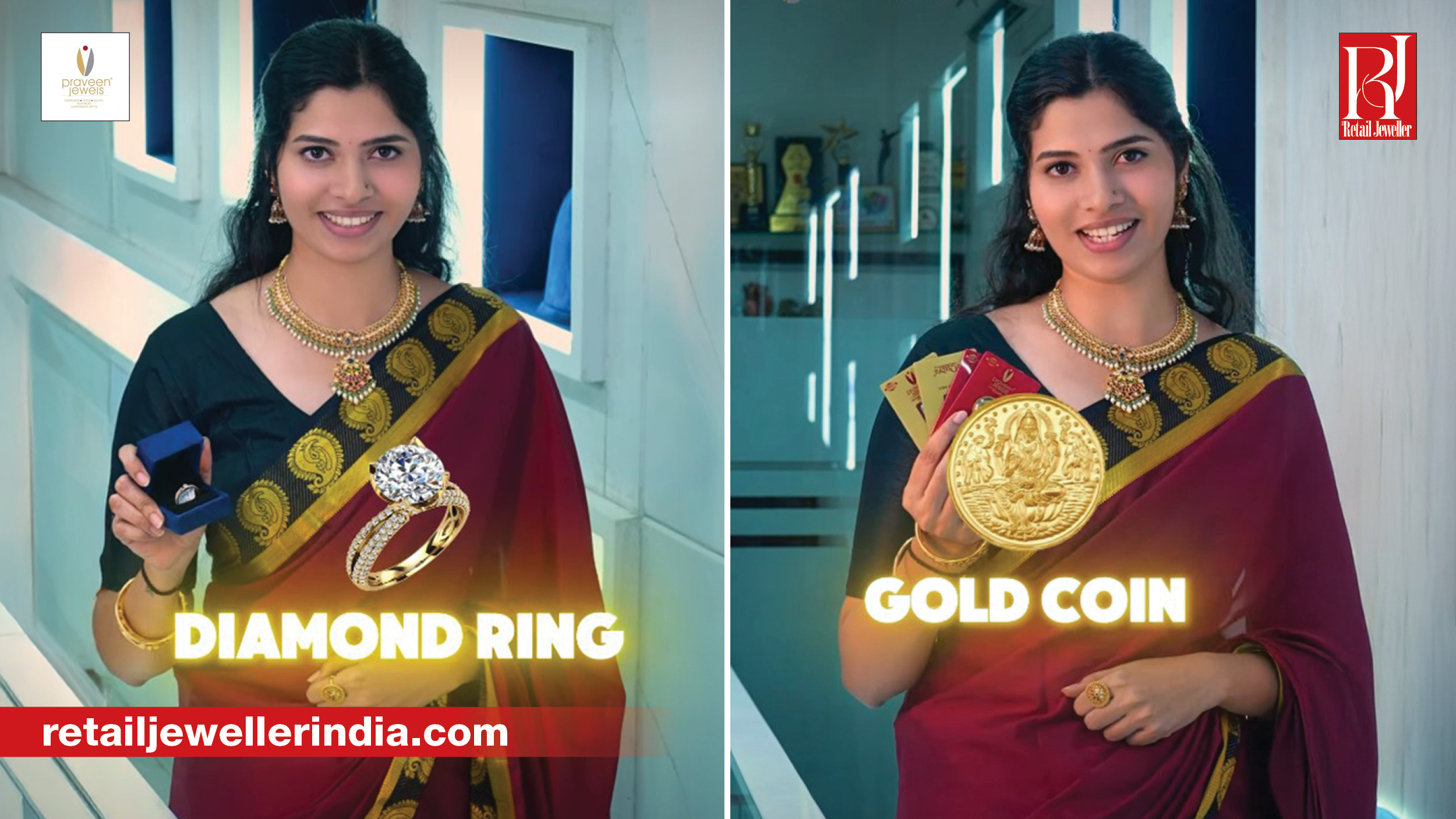
Launched last Diwali with gold coins and expanded into silver soon after, Mia’s quick-commerce initiative now contributes a significant share of its online business, helping the brand achieve 4–5x growth in silver over the past year. The accessibility of fast delivery, backed by a trusted national brand, has made silver an impulse-friendly, aspirational purchase for younger buyers.
Shaya by Caratlane is also currently exploring quick commerce in select cities like Delhi to understand its potential for silver jewellery and instant gifting.
Retailers across India report similar momentum. Double-digit annual growth, exponential hallmarking adoption, and digital-first sub-brands have together made silver aspirational again. The numbers tell a simple truth: India’s silver jewellery market has grown at exponentially pace in the last few years, outpacing nearly every other jewellery segment.
For mainstream jewellers, this isn’t a passing phase — it’s a generational opportunity. Silver is no longer where customers end up after they’ve bought gold; it’s where they begin their journey with you.
Written by Maithili Patange