



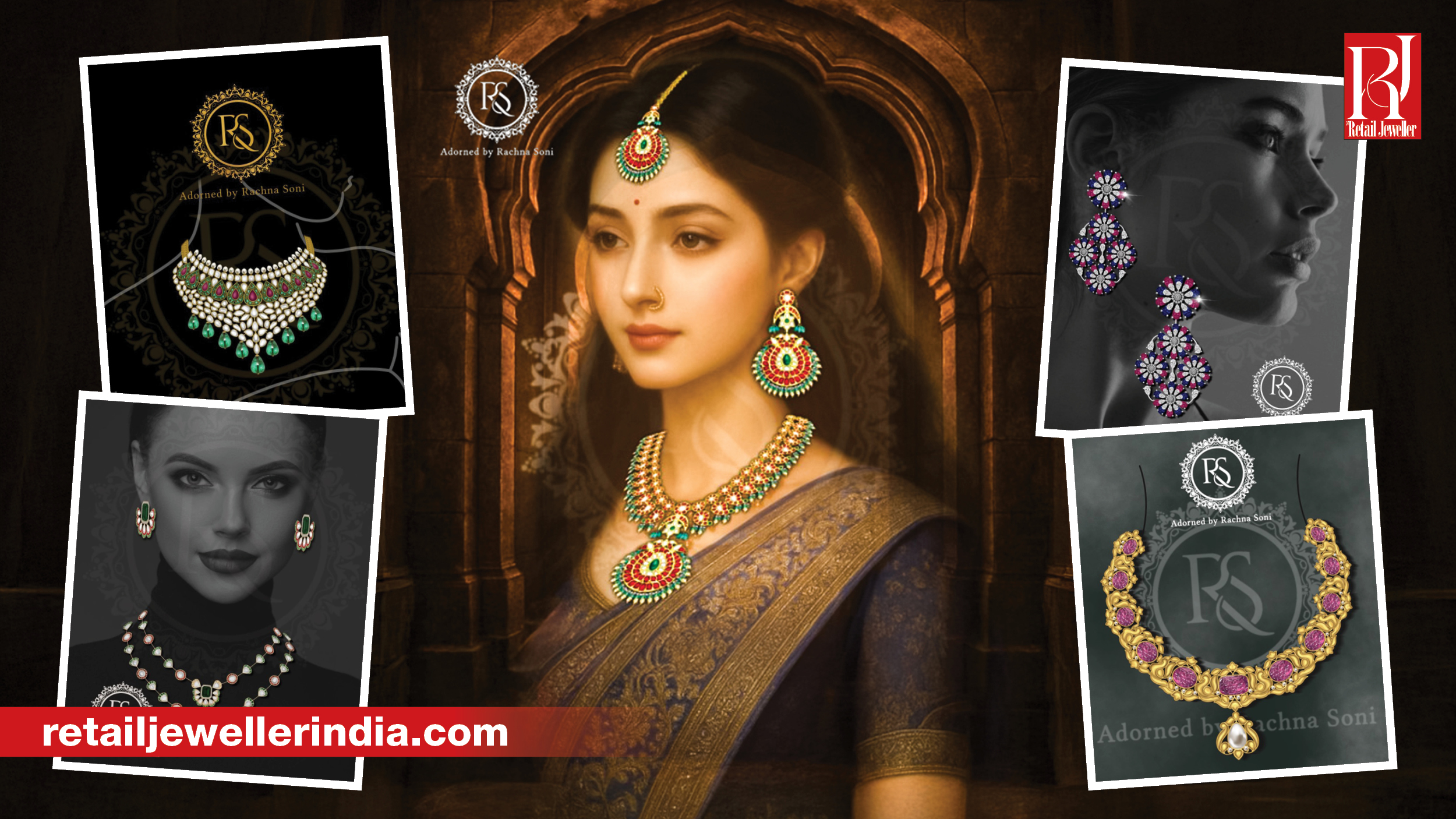

With over 15 years of shaping some of India’s most exquisite antique gold bridal jewellery, Rachna Soni, Founder of Adorned by Rachna Soni, believes in the quiet power of intention. In conversation with THE RETAIL JEWELLER, she speaks about regional sensibilities, digital evolution, and the non-negotiables that define her craft.
Q. Tell us about your educational and professional background and key milestones in the journey.
My journey began with formal training in design. Over 15 years, I evolved from sketching concepts by hand to mastering Procreate for jewellery design. That transition was a defining milestone. It allowed me to combine traditional design sensibilities into a modern digital workflow. Alongside designing, I have grown into teaching and mentoring, guiding aspiring designers through this very journey.
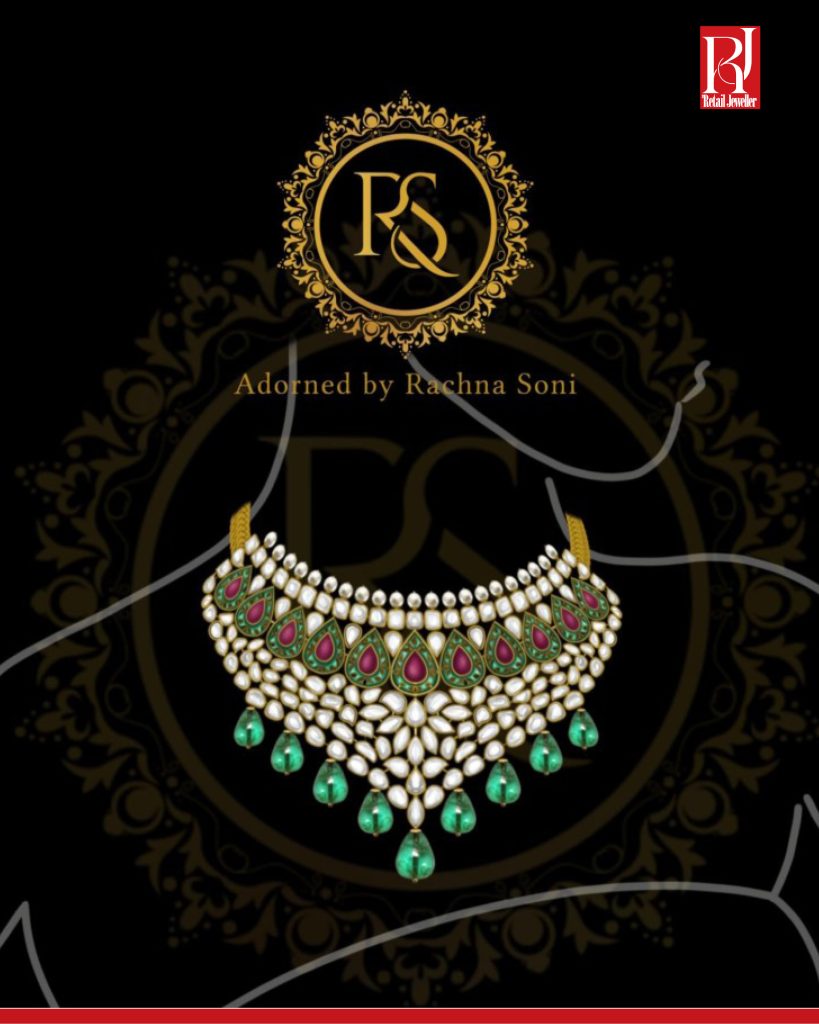
Q. You have been working with SK Seth on antique gold bridal sets. What are the current trends, and how do you see demand evolving for the category?
Today’s customers are not simply buying jewellery; they are seeking a connection. There is a growing inclination towards ethnic and traditional pieces that carry memory and meaning. SK Seth Jewellers embodies this philosophy beautifully. Besides, customers want the grandeur of antique gold without the weight, both literally and in terms of investment.
Q. What unique trends do you observe across different markets in this category?
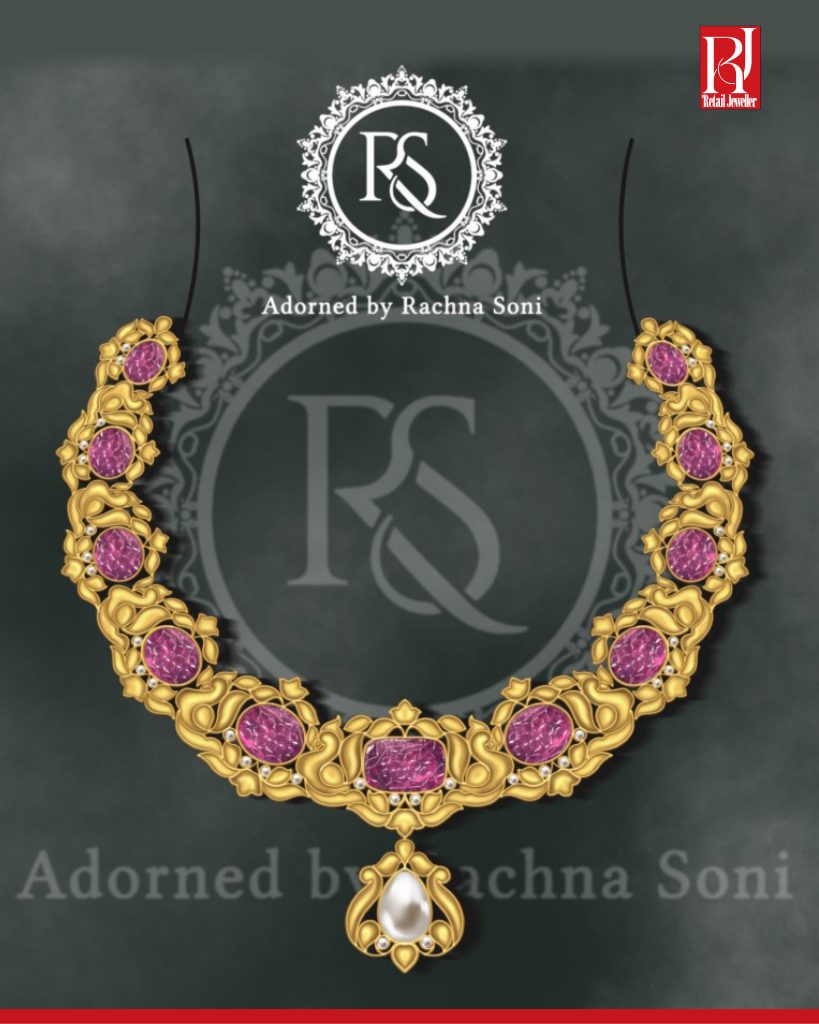
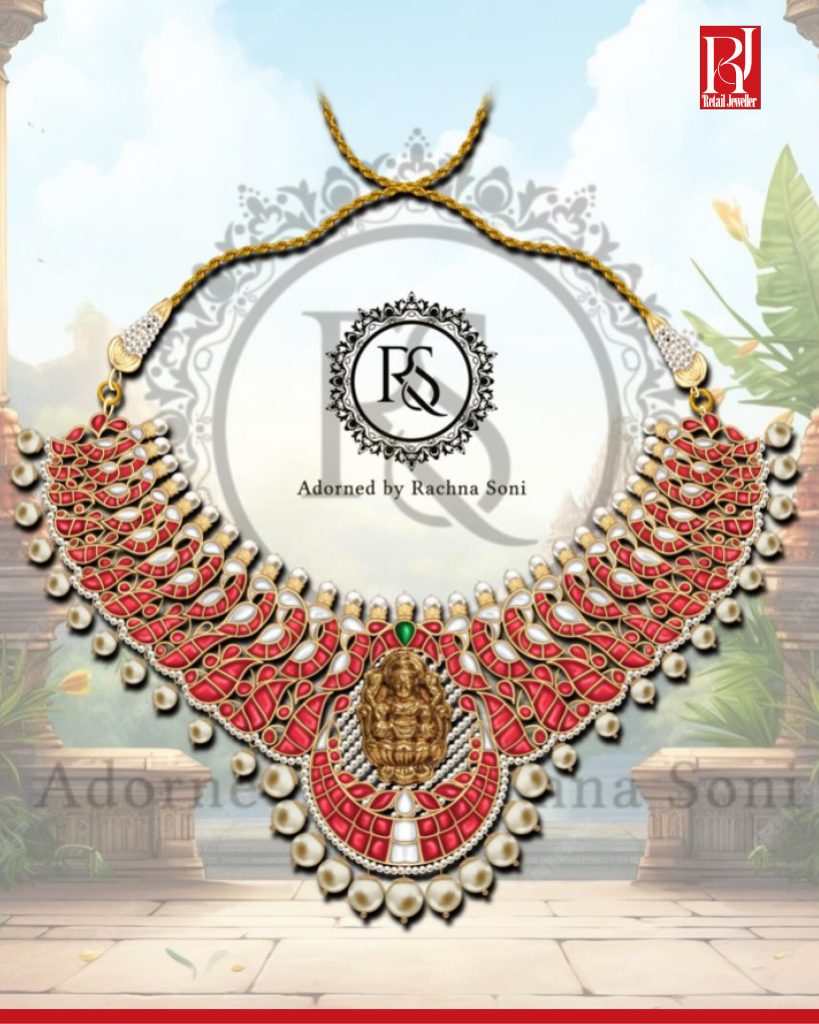
Regional distinction in design language is one of the most fascinating aspects of this category. South Indian markets remain strongly rooted in plain gold and temple-inspired antique jewellery, varying from bold motifs, deity elements, layered silhouettes. North and Western markets, on the other hand, lean heavily towards studded antique work: Polki, Kundan, Jadau; where intricate stone-setting complements the antique base. The cultural thread is common, but the expression is beautifully diverse.
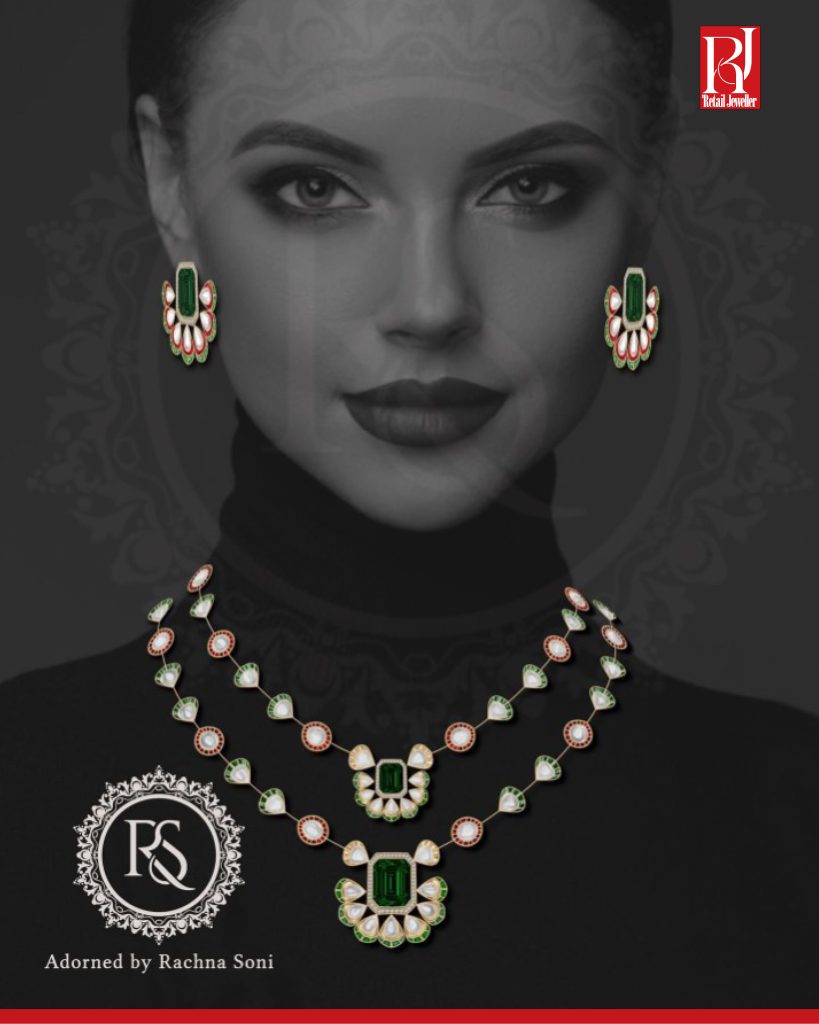
Q. After being in the industry for over 15 years, what big shifts have you observed in retail jewellery design?
The landscape has moved decisively from product-driven to design and customer-driven. Retailers can no longer simply stock what is available. The customer today is informed, intentional, and seeking a distinct identity in what she wears.
Q. How have you evolved your teaching methods to keep pace with market needs?
The biggest shift has been from theoretical to practical, application-based learning. Students today need to be industry-ready from day one. I focus on real-time design thinking, and ensure students understand not just how to design, but what to design and for whom. I also build in market awareness: trends, customer preferences, retail expectations. The goal is to produce designers who are not only skilled, but relevant.
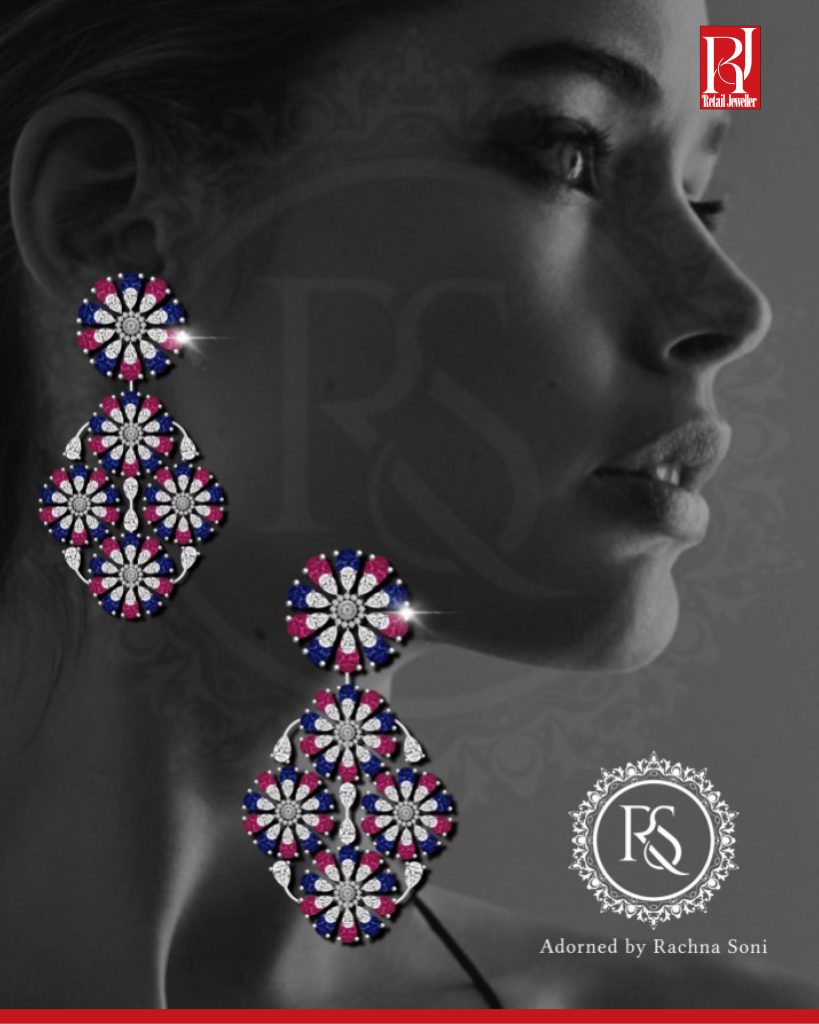
Q. When working on a new design, what are your non-negotiables?
Proportion, balance, and the core design story; these are inviolable. A piece must also be wearable, not just visually compelling on paper. And above all, it must be authentic. Trends may inform a design, but they should never define it. Every piece should have its own identity and feel true to its origin.
Q. How do you build versatility into your pieces? Do you design to transition across occasions, or do you intentionally create for specific moments?
Versatility is essential in modern jewellery design, but it must never come at the cost of the piece’s identity. I always begin with a primary occasion in mind, particularly in bridal jewellery, where emotional and visual impact is paramount. But while designing for that key moment, I consciously incorporate elements that allow the piece to travel beyond it.
Q. Looking at your body of work, how has your design thinking matured? What have you unlearned along the way?
My thinking has evolved from a focus on aesthetics and detailing alone to a far more holistic approach; one where design, wearability, customer perspective, and market relevance all converge. What I have unlearned is the impulse to over-embellish. Restraint, I have come to understand, is its own form of sophistication.
Q. How do you ensure your designs stand out in an Instagram-driven landscape where visuals can feel overwhelming and repetitive?
The focus is always on original design thinking rather than trend-following. Social media tends to flatten visual language into sameness, and I am conscious of that pull. My safeguard is always the concept, that is, when a piece is rooted in a strong, clear idea, it naturally differentiates itself.
Q. How do you see the role of designers evolving within retail organisations? Can retailers build their own design identities rather than relying on ready-made pieces?
Designers today are shaping the visual language and signature style of a brand. With increasing competition and a far more discerning customer, retailers cannot afford to rely on generic, ready-made designs. There is a growing and urgent need to offer something distinctive and recognisable.
By Xena Aayesha Stephen
The Retail Jeweller