





The designer’s Byzantine-inspired collaboration with The Metropolitan Museum of Art signals a growing role for Indian jewellery in the global luxury, heritage and cultural conversation.
NEW YORK: Indian jewellery is finding a new route onto the global luxury map as Sabyasachi Mukherjee partners with The Metropolitan Museum of Art for a new high jewellery collection inspired by the Byzantine Empire.
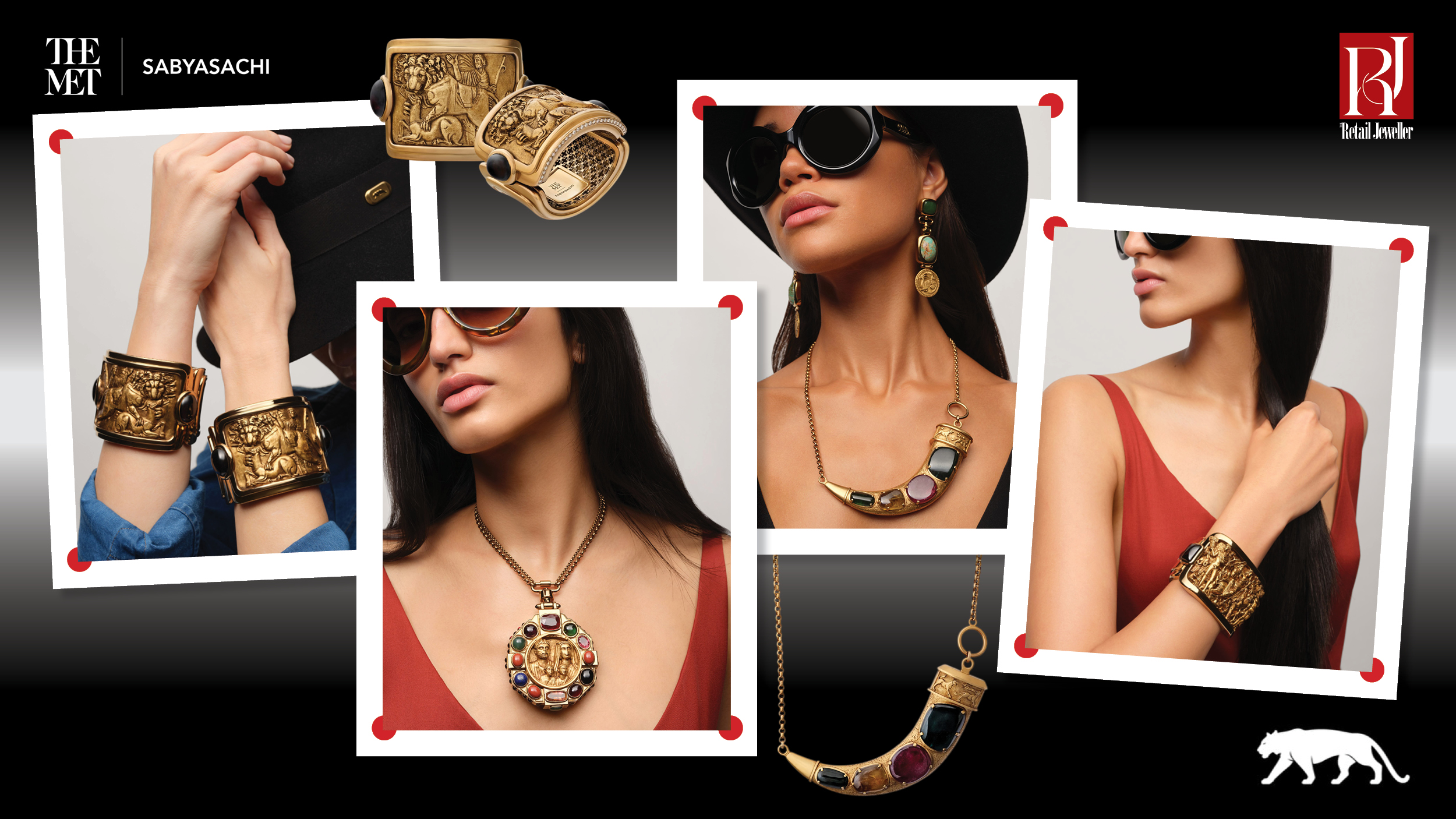
The multi-year collaboration, which debuts on September 15 during New York Fashion Week, brings together an Indian luxury designer and one of the world’s most influential cultural institutions. The collection comprises more than 100 pieces and will be available at Sabyasachi’s New York flagship, with prices ranging from approximately $2,500 to $100,000.
The significance of the collaboration extends beyond the collection itself. For Indian jewellery, it represents a shift from being presented primarily through the lens of Indian heritage to participating in a broader international dialogue around art, history, craftsmanship and luxury.
Sabyasachi’s interpretation of Byzantine jewellery draws on the civilisation’s rich visual language of gold, colour and ornamentation.The collection uses 18-karat and 22-karat gold, alongside gemstones including tourmalines, spinels, amethysts and lapis lazuli. Oversized pendants, asymmetrical forms and figurative motifs reinterpret historical references for the contemporary luxury consumer.
The Byzantine influence also creates an interesting cultural bridge. The Met’s collections encompass jewellery, metalwork, mosaics, icons and luxury objects from a civilisation shaped by extensive exchange across Europe, Asia, North Africa and the eastern Mediterranean. Sabyasachi has similarly approached the period through the idea of movement — of people, craftsmanship and ideas across geographies.
That perspective allows the collaboration to move beyond a straightforward historical revival. The designer has drawn parallels between the interconnected Byzantine world and Kolkata, his home city, whose own history has been shaped by commerce and cultural exchange.
For the global jewellery industry, this positioning is significant. Indian designers and jewellers have increasingly expanded beyond domestic markets, building international retail footprints and engaging with global luxury consumers. Sabyasachi’s collaboration with The Met adds another dimension to that expansion: cultural legitimacy and institutional association.
It also builds on the designer’s existing relationship with the museum and its global fashion audience. Through his visibility at the Met Gala, Sabyasachi has already established a strong presence within one of fashion’s most internationally watched cultural moments. The jewellery collaboration takes that relationship from red-carpet visibility into a longer-term engagement with museum heritage.
For The Met, the partnership provides another contemporary interpretation of its Byzantine holdings, allowing historical jewellery and craftsmanship to enter the modern luxury landscape through an Indian design perspective.
The collaboration therefore represents more than an international launch for Sabyasachi. It reflects the increasingly fluid boundaries between Indian craftsmanship, global luxury, museum culture and contemporary design — and places Indian jewellery within that conversation on one of the world’s most prominent cultural stages.
The Retail Jeweller Global