




The report sets out targets including 10–15% of annual gold demand to be met through domestic mining, mobilisation of 10–15% of household gold into formal financial systems, and India becoming the largest exporter of gold jewellery
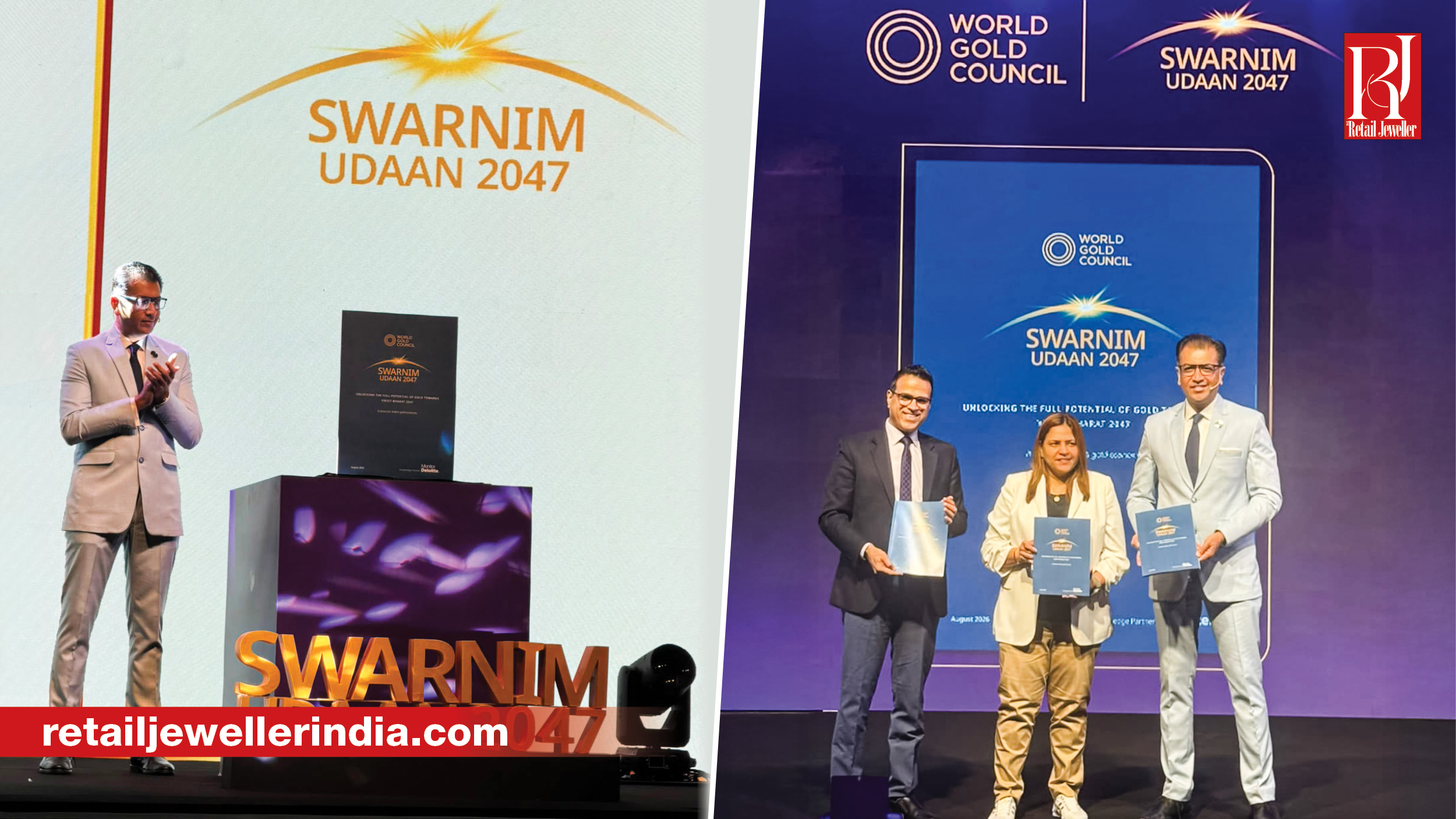
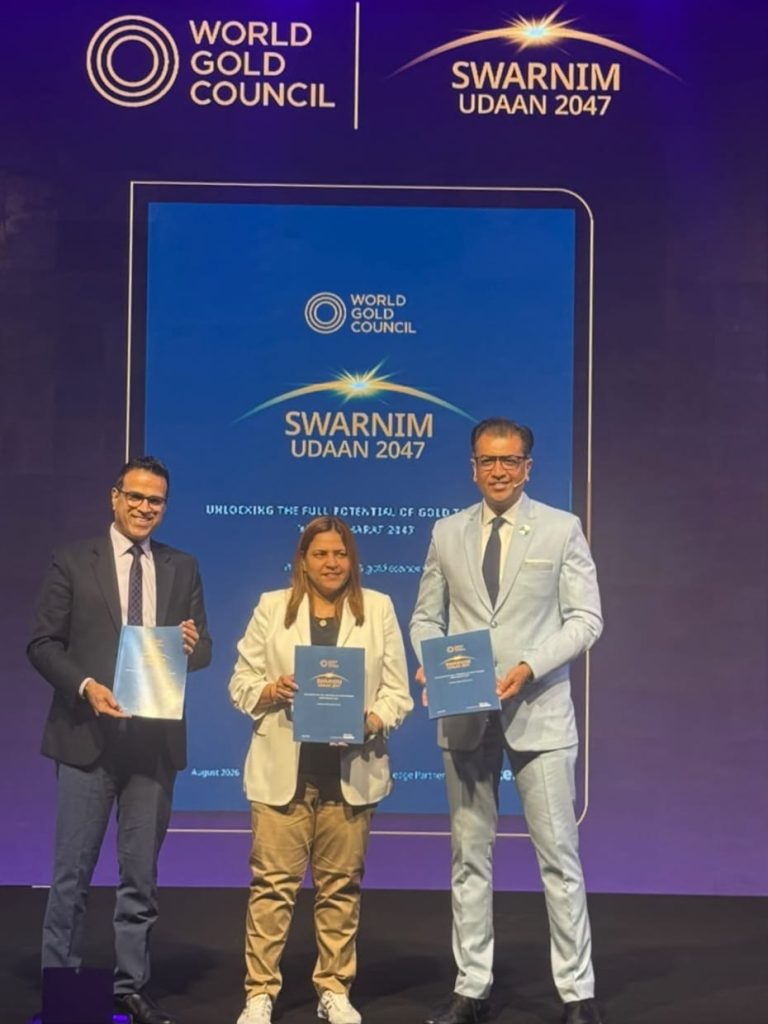
Mumbai: The World Gold Council has released a vision document titled Swarnim Udaan 2047: Unlocking the Full Potential of Gold Towards Viksit Bharat 2047. The report, developed with Monitor Deloitte as knowledge partner, sets out a roadmap for the role of gold in India’s economy up to 2047.
The document outlines a framework to position gold within India’s economic system as the country moves towards a US$30 trillion economy by 2047. It identifies gold as part of financial systems, exports, manufacturing, domestic value creation, and industrial use.
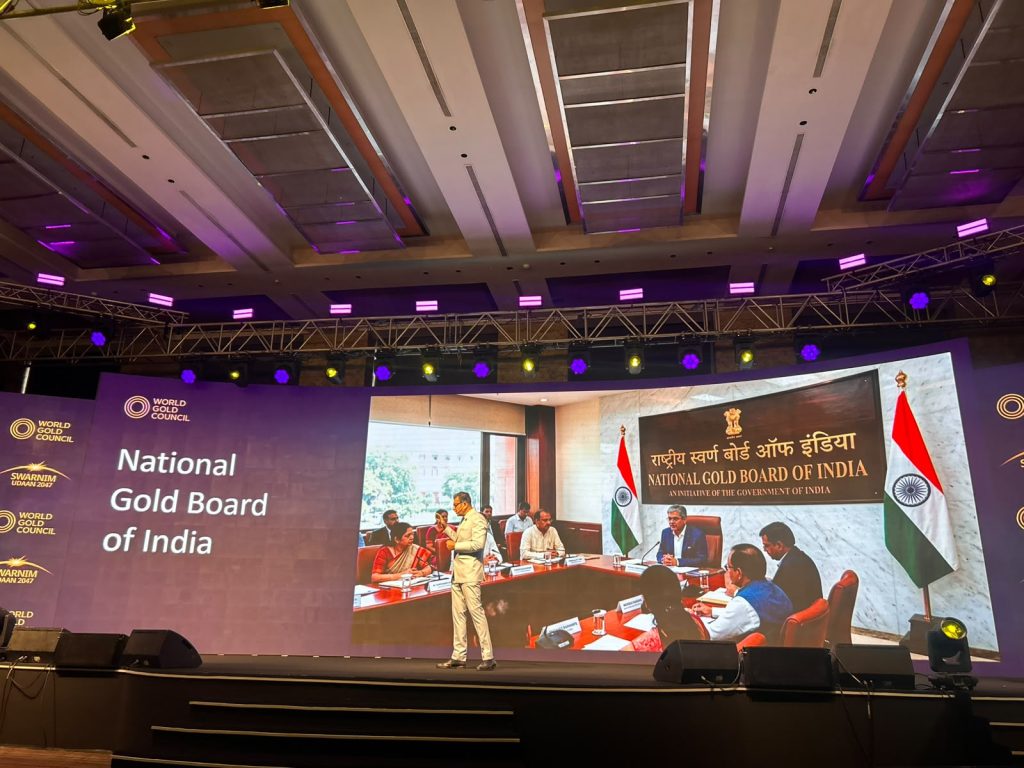
The report sets out targets including 10–15% of annual gold demand to be met through domestic mining, mobilisation of 10–15% of household gold into formal financial systems, and India becoming the largest exporter of gold jewellery. It also proposes institutional mechanisms including a National Gold Board and a Gold Innovation Centre to support coordination, regulation, research and technology adoption.
Speaking on the Swarnim Udaan 2047 report, David Tait, CEO, World Gold Council, said, “India is already central to the global gold ecosystem, and its role is set to become even more significant as global supply chains evolve, financial markets deepen, and strategic technologies advance. Gold’s importance goes well beyond investment and jewellery; it is increasingly critical to industrial innovation, financial resilience, and economic security. Swarnim Udaan 2047 sets out a clear pathway for India to modernise and strengthen its gold market enhancing resource security, supporting financial deepening, enabling advanced manufacturing, and contributing to long-term, sustainable economic growth”
Sachin Jain, Regional CEO, India, World Gold Council, said, “Gold has always been deeply embedded in India’s cultural and economic fabric. The opportunity now is to unlock its full potential as a strategic national asset aligned with India’s economic priorities. Through coordinated action across mining, recycling, financialisation, jewellery, exports and innovation, gold can become a stronger contributor to India’s Viksit Bharat. Jain concluded by stating, “Swarnim Udaan represents the ascent of India’s Sone ki Chidiya (“Swarnim Udaan 2047″)-rooted in heritage, powered by innovation and aligned with national ambition India can secure its golden future and build a legacy that endures for generations to come.”
Harsh Kapoor, Partner, Monitor Deloitte, South Asia, said, “Swarnim Udaan 2047 presents a bold vision for repositioning gold from a traditional ‘store of value’ to a strategic national asset for India’s future economy. By bringing together policy reform, institutional coordination and innovation, the report outlines how greater value can be unlocked across the entire gold ecosystem while strengthening economic resilience, industrial competitiveness, and long-term value creation. We are proud to have partnered with the World Gold Council in shaping this roadmap towards a Viksit Bharat.”
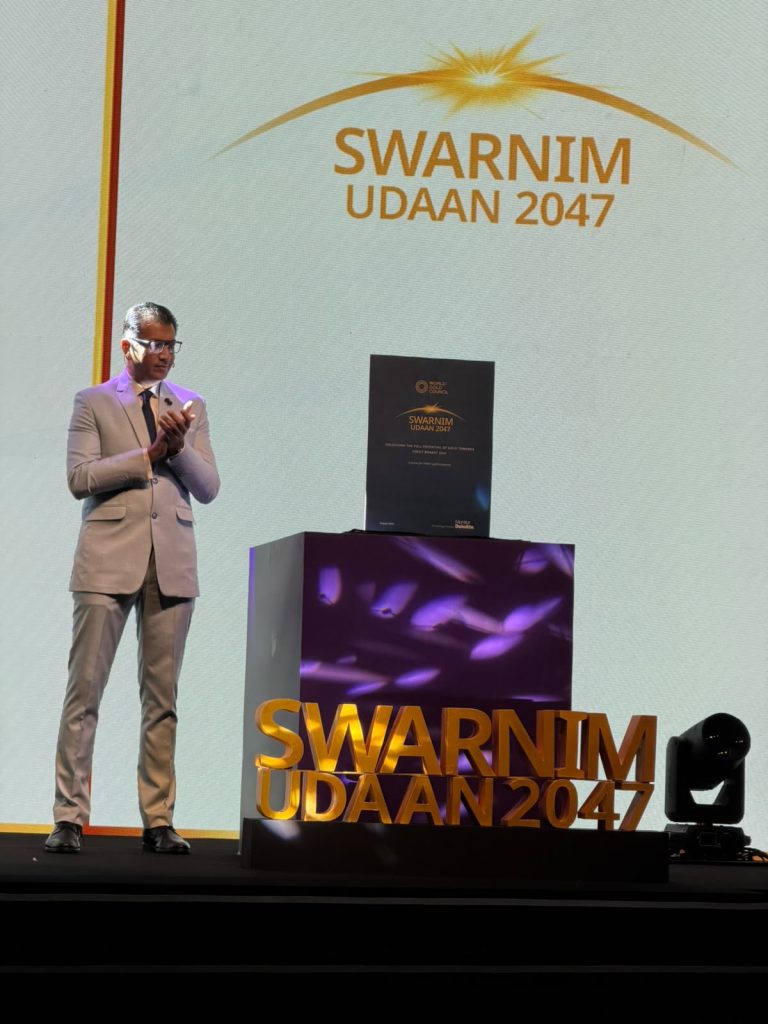
Building on the current size of India’s gold industry, the report outlines five areas for development to enable a formal and globally competitive gold economy.
The first area, “Mine in India”, proposes meeting 10–15% of annual demand through domestic mining by 2047. It includes measures such as designation of gold as a “Strategic Mineral” under the MMDR Act, exploration incentives for early-stage mining, streamlined approvals, updated geological data systems, use of exploration technologies and workforce development.
The second area, “Jeweller to the World”, sets out a pathway for India to become the largest exporter of gold jewellery. It includes diversification of export markets beyond the diaspora, design localisation, a “Made in India” proposition, cluster development, artisan skilling and export programmes. Proposed initiatives include Karigar Connect to modernise artisan clusters, a Gold Jewellery Technology Upgradation Fund and platforms such as India Gold Fashion Week.
The third area focuses on financialisation of gold. The report states that households hold around 31,000 tonnes of gold, valued at approximately ₹149 lakh crore (US$1.553 trillion). It proposes mobilising 10–15% of this stock into the formal financial system with participation from banks and reforms in bullion banking. It states that monetising around 11% of this stock annually could substitute imports worth ₹23.1 lakh crore (US$34 billion) and reduce import dependence.
The fourth area addresses jewellery consumption and proposes changes to align with a consumer base of more than 380 million people. It includes retail formats, product design, hallmarking, traceability, and positioning for regular use.
The fifth area examines the role of gold as a national asset and mineral in industrial sectors. Electronics account for 80% of global industrial gold demand, and India’s semiconductor market is projected to reach US$750 billion by 2047. The report states that gold can support sectors including electronics, semiconductors, biotechnology, diagnostics, aerospace, artificial intelligence, and quantum technologies.
To support implementation, the report proposes a National Gold Board in line with NITI Aayog–Watal Committee recommendations (2018) to coordinate stakeholders, align policy, rationalise regulation, strengthen infrastructure and monitor progress. It also proposes a Gold Innovation Centre for research, capability development, technology adoption, digital systems, sustainability and market development, along with a multi-stakeholder task force to drive implementation.
The World Gold Council is a membership organisation that works on the role of gold as an asset and on the gold supply chain. It conducts research, analysis, and industry engagement and works on policy and standards for the gold market.
Retail Jeweller India News