






Rising gold prices, instant buyability and World Gold Council awareness campaigns are encouraging younger Indians to look at gold not as a physical asset but a portfolio diversifier that is transparent and seamlessly integrated into modern investing habits
Mumbai: India’s gold investment landscape is undergoing a structural shift, with gold Exchange-Traded Funds (ETFs) emerging as a serious contender for the attention—and allocation—of new-age investors. According to Arti Saxena, Head of Marketing, India, World Gold Council (WGC), the category is no longer niche; it is entering a decisive growth phase driven by digital behaviour, rising gold prices and targeted awareness efforts.
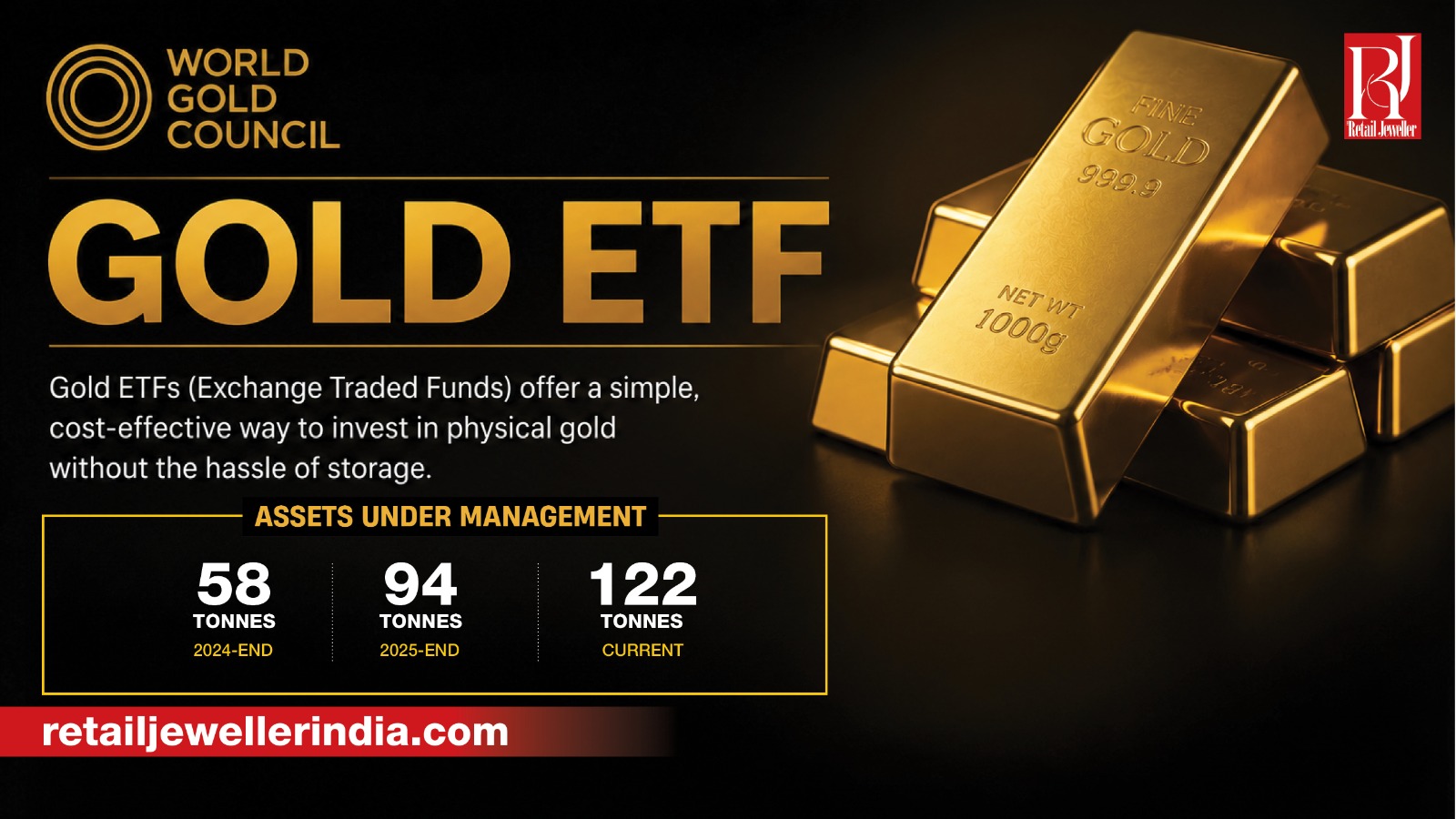
The numbers tell a compelling story. Gold ETF assets under management (AUM) have climbed sharply from 58 tonnes at the end of 2024 to 94 tonnes by end-2025, and currently stand at around 122 tonnes despite intermittent outflows linked to profit booking. This steady expansion signals not just market performance, but a deeper behavioural shift among investors.
“At a broad level, there has never been any doubt about gold as a long-term asset,” Saxena explains. “The gap we identified was not belief in gold, but understanding its role within a modern investment portfolio—and limited awareness of ETFs as a format.”
This insight has shaped WGC’s ongoing ‘Aaj Ka Gold’ campaign, now in its second phase, which positions gold ETFs as simple, accessible and aligned with digital-first lifestyles. The strategy is less about reinventing gold and more about reframing how it is consumed.

Three core drivers are defining this trend: accessibility, agility and transparency. Accessibility has become critical in a high-price environment. With gold prices rising sharply—by over 70% in 2025 in rupee terms—the entry barrier for physical gold has increased. ETFs counter this by allowing investments at fractional levels, sometimes at points as low as Rs 200, making gold participation far more inclusive.
Equally important is agility. Today’s investors expect investments to mirror their on-the-go lifestyles. The ability to buy gold instantly, through mobile platforms, aligns perfectly with the broader digitization of financial services. “Investments today have to move at the speed of the consumer,” Saxena notes, highlighting how convenience and immediacy are now baseline expectations.
The third pillar is transparency. As a Securities and Exchange Board of India (SEBI)-regulated product backed by physical gold holdings, ETFs offer a level of clarity and assurance that resonates with younger, information-driven investors. This is particularly relevant in an ecosystem where concerns around unregulated products persist.
Yet, despite these advantages, the primary challenge remains awareness. “There is no structural gap in the ETF ecosystem itself,” Saxena says. “The real gap is that the product hasn’t been actively promoted until recently.”
This is where coordinated industry efforts are beginning to make an impact. While the WGC works closely with asset management companies and the broader BFSI ecosystem, its role remains that of a category catalyst—focusing on education, advocacy and long-term market development rather than direct consumer partnerships.
The digital surge is also shaping geographical adoption patterns. Urban markets, particularly metros, are leading ETF uptake, driven by higher awareness and digital penetration. In contrast, Tier II and Tier III markets are still at an earlier stage, with slower adoption largely due to information gaps rather than resistance.“The difference is not behavioural, but informational,” Saxena points out. “As awareness increases, we expect these markets to respond similarly.”
Looking ahead, the next phase of growth will hinge on three levers: sustained awareness-building, simplification of the ETF narrative, and continued alignment with digital-first consumption patterns. Demystifying the term ‘ETF’ itself—often perceived as technical or intimidating—will be key to expanding the investor base.
Interestingly, the rise of experience-led consumption among younger consumers does not appear to be a headwind. Instead, Saxena sees a dual-track mindset emerging. “It’s not a choice between spending and investing. This generation is doing both—seeking experiences while actively participating in financial markets.”
For gold ETFs, this presents a unique opportunity: to position gold not as a static store of value, but as a dynamic, portfolio-balancing asset that fits seamlessly into contemporary investment journeys.
Success, for the WGC, will ultimately be measured not in product-level metrics but in shifts in perception—higher awareness, stronger consideration and growing confidence in gold ETFs as a credible investment avenue.If current trends hold, gold’s next chapter in India may well be written not in vaults or jewellery boxes, but on smartphone screens.
Written by Srabana Lahiri
Retail Jeweller India Exclusive