


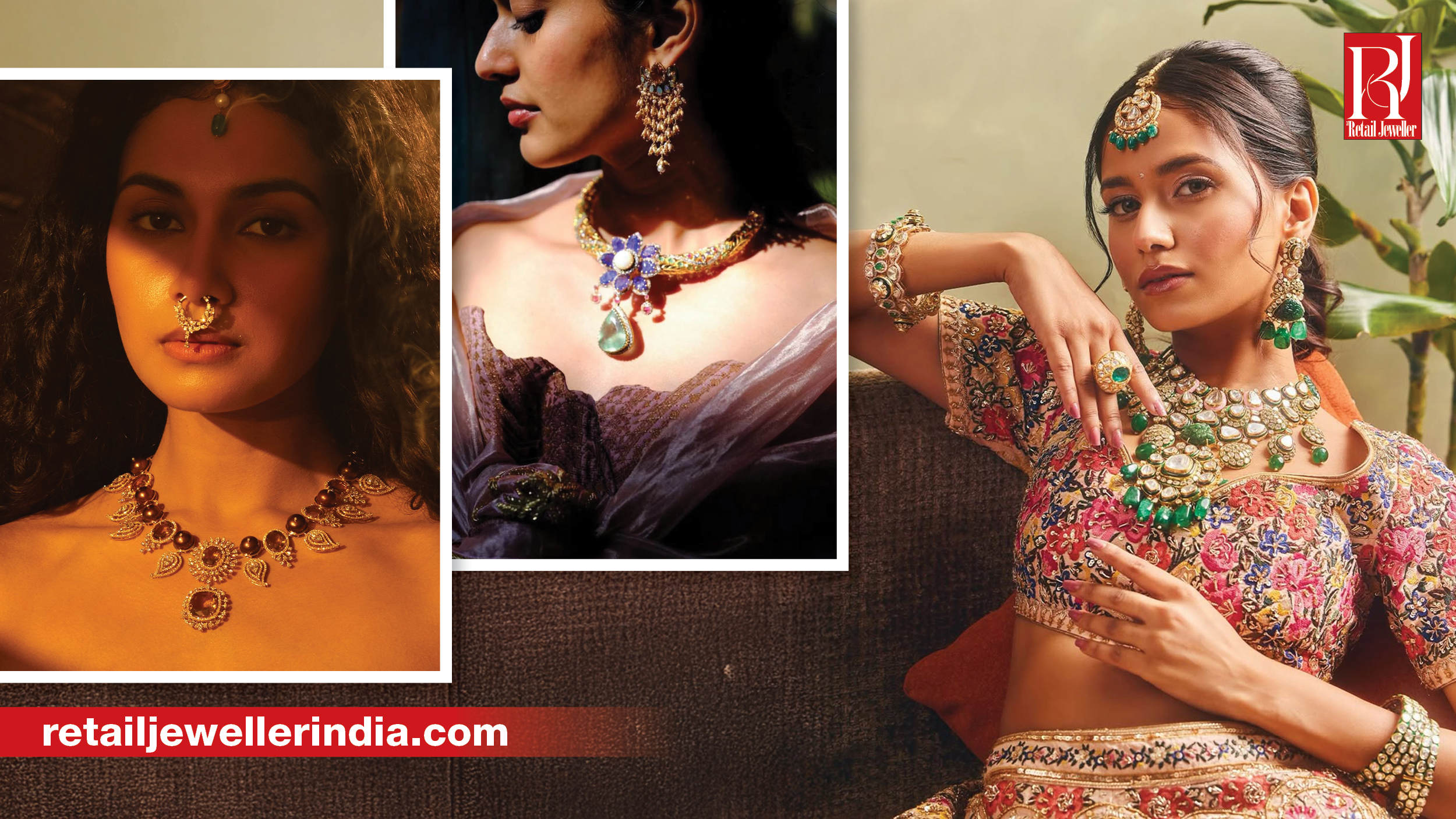

As design parity grows across the market, a handful of forward-thinking jewellers are finding their edge not in the design — but the story it tells. The Retail Jeweller finds out how narrative-led collections are reshaping client engagement, business models, and the very way jewellery is conceived.
There is no shortage of design in the Indian jewellery market today. Walk into any high-end store and you will find craftsmanship, variety, and increasingly, originality. Yet, for a growing segment of high-net-worth individuals, it is no longer enough. A new class of customers is seeking more.
With jewellery, they are buying meaning, identity, and most of all a story that resonates with them, making the design distinctly their own. As an industry, we are busy creating beautiful designs — but are we creating enough value around them to entice those looking for experiences that last beyond the material purchase?
A growing number of jewellers are waking up to this opportunity — and building their businesses around it. Khwaahish Diamonds in Chennai, Isvari India in Delhi, and Vasundhra Raj Jewellery, also in Delhi, are among those making story-led collections the centre of their identity. Their approaches differ, but the underlying conviction is the same: for the HNI buyer, a design is far more than its visual appeal.
Design as a starting point, story as the destination
The journey at Khwaahish Diamonds did not begin with a brief to “do storytelling.” It began with a sharper problem. Pankajj Chetan, Director of Khwaahish Diamonds, had spent nearly two decades watching South Indian jewellery carry what he calls “a routine sameness” — and observing that the next-generation buyer was restless. Contemporary design was gaining traction, but Pankajj noticed something else: the buyers responding most strongly were not simply those who liked modern aesthetics. They were the ones who saw their own culture reflected back at them in a new, wearable form. The opportunity, as he saw it, was not just to contemporarise — it was to reinterpret South Indian heritage with enough depth and authenticity that a new-age buyer could be proud to wear it.
That double objective became the foundation for the Signature Edit. “For the Beautiful South collection, we spent nearly three months working with historians, a heritage temple tour guide, and mythology experts — identifying around 30 to 35 story sources and narrowing them to 20 storyboards strong enough to lend credence to incredibly powerful creative concepts. Each board became one jewellery design,” says Pankajj.
The Chidambaram piece represents the cosmic dance of Lord Nataraja; the Kalahasti piece uses moonstone to represent Shiva’s element of air; a contemporary Mango Mala reimagined with Hong Kong chocolate pearls and tanzanites came to life after Pankajj watched a mother-daughter argument about whether traditional jewellery could ever be stylish — and showed them it could.
“If you want to connect with the next-generation buyer with fine jewellery, it has to be story-led. There has to be inspiration and originality,” says Pankajj. “We began by reimagining familiar traditional designs — starting with the Mango Mala — which resonated with new-age customers because it carried both familiarity and a fresh narrative.”
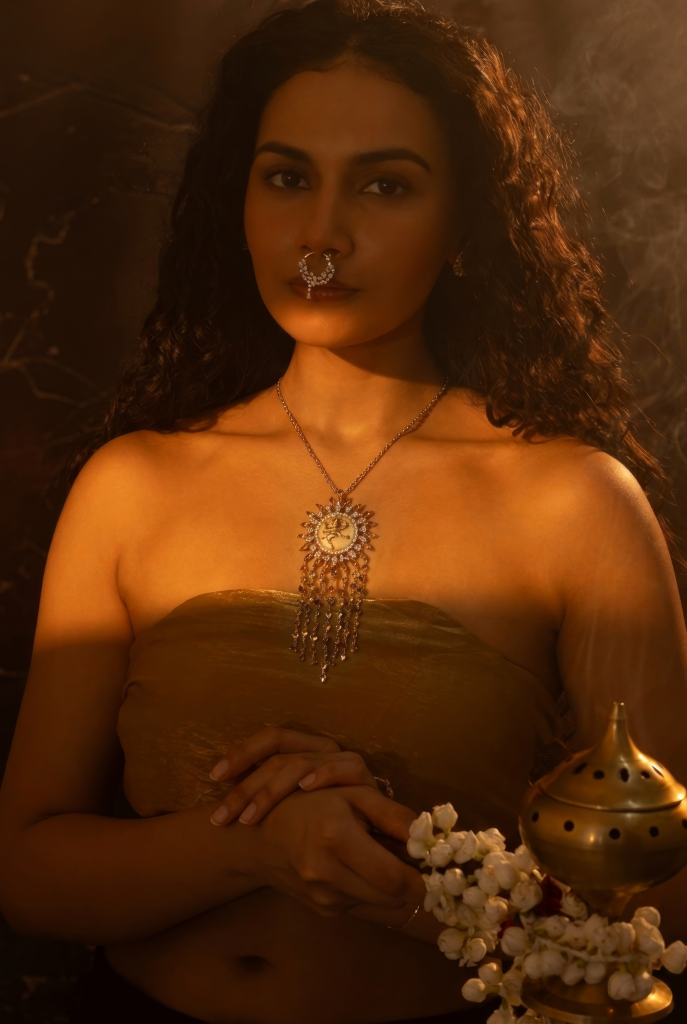
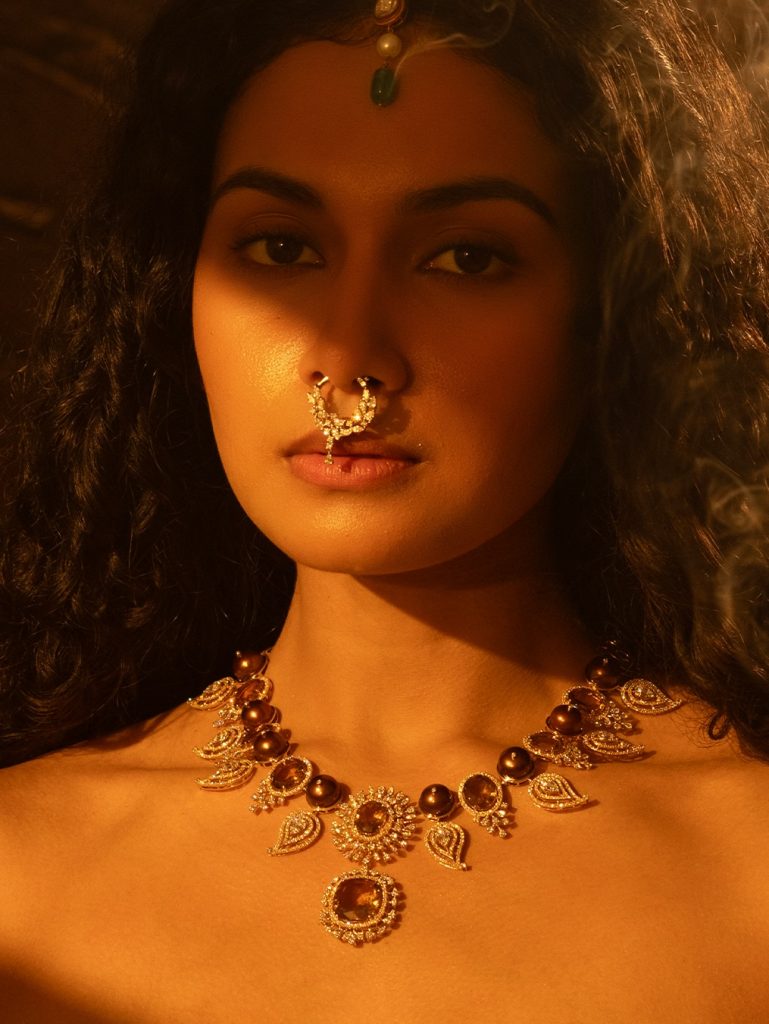
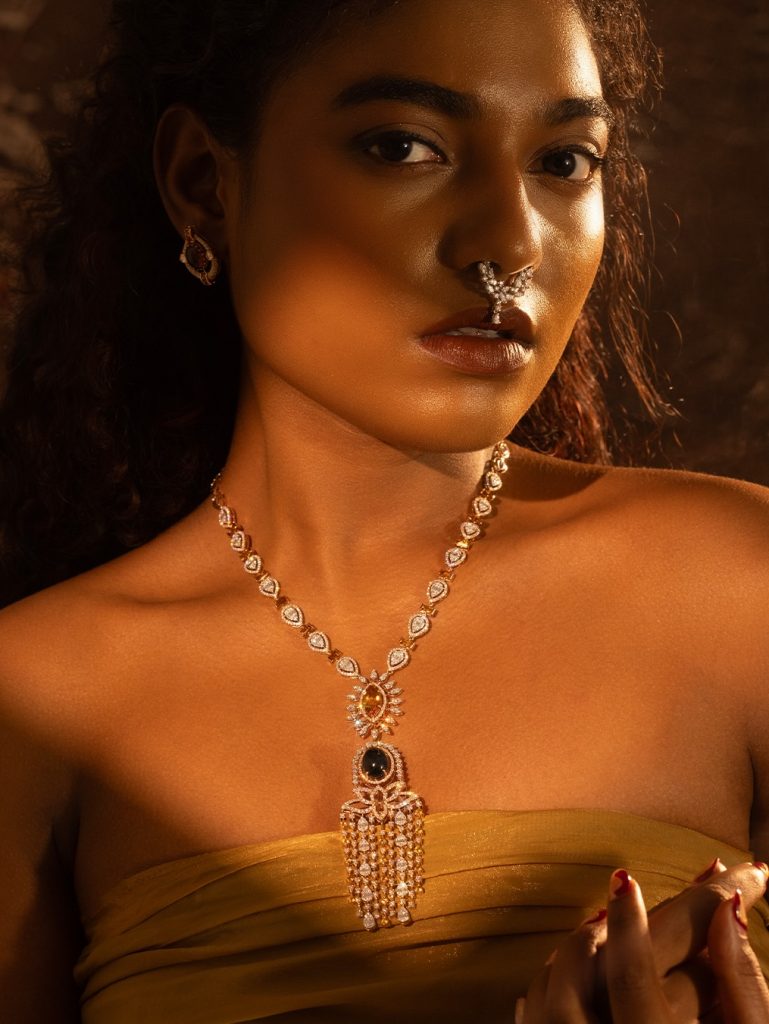
The second collection, World Symphony, applied the same rigour to gemstones — researching five semi-precious stones with documented connections to Indian and European royalty, and presenting them in silhouettes drawn from Victorian jewellery history but made wearable for the Indian buyer. Each piece in the Signature Edit comes with a custom scroll narrating its story. Two podcast episodes have already been filmed with guests who have direct relevance to the pieces. The Signature Edit is now targeted to contribute 40% of Khwaahish’s revenue by the next financial year.
At Isvari India, a business led by fourth-generation jeweller Manik Jain, the same imperative is rooted in manufacturing ownership. “95% of jewellers across India don’t manufacture themselves,” he observes. “The Apple store feels different because the people there actually know the product.” Isvari’s distinction goes beyond the design; it is as much in each gemstone used as in the design it ultimately develops into — they procure the stone, then build the design around it, a process that can take four to six months per piece. “Every year, 10 to 12 named masterpieces are created — each priced in the range of Rs. 1 crore to 4 crores, each accompanied by a full written story covering concept, gemstone provenance, manufacturing journey, and design intent.”
A recently sold piece was built around a Madagascar ruby weighing 310–350 carats — irreplaceable by definition. Over 50% of Isvari’s business now comes from these story-led pieces, a figure that has been building since the brand began formally editorialising its masterpiece collection two to three years ago.
“The day we decide on a concept, our sales team is part of that discussion,” says Manik. “So when a client walks in, they don’t feel out of the concept. They already know the journey of that piece.”
When the name must mean something
Vasundhra Raj, Founder of Vasundhra Raj Jewellery, describes her primary buyer as someone who “appreciates art, music, heritage, and above all, meaning.” Her story-led collections now represent approximately 25% of total business — and the category is growing, with luxury consumers seeking pieces that reflect identity, mark personal milestones, and carry the potential to become legacies.
Her collection Raina: A Princess’s Memoir draws from cultural archives, vintage artifacts, and research into the emotional landscape of the era — and each piece is individually named after a woman, deepening the client’s entry into the collection’s world. “Design timelines are longer because each collection requires research and conceptual development beyond just aesthetics,” she says. “The collections are more edited — fewer pieces, but each with a stronger point of view.”
The naming of pieces, across all three brands, is worth pausing on — because it only works when there is real content beneath it. A name at the end of months of research is a character. A name applied without that foundation is just a label, and the HNI buyer can tell the difference. “The naming is not arbitrary,” says Vasundhra. “It’s a vital part of enriching the narrative and deepening the client’s connection to the piece. The name can evoke a character, a specific moment, or a feeling that is central to the collection’s story and its design concept.”
This is also reshaping the sales conversation. Jewellery has always been a relationship-led industry — that has not changed. What has shifted is that the design conversation is now pivotal to the transaction in a way it rarely was before. For high-value investments, customers are looking for an emotional connection that makes the purchase more symbolic than transactional. The relationship opens the door; the story closes the sale.
Learning about the material, its origins, and the concept not only enhances the value of the design by adding a dreamy halo around the material piece but also elevates the buyer’s status to someone with greater refinement, finesse, and taste in social conversations it sparks.
The ‘Preview’ as a platform for the story
One area where all three brands align — though they each navigate it differently — is the role of intimate, curated events in bringing story-led collections to market. This is not incidental. For collections where the story is as important as the design, the retail floor alone is rarely enough.
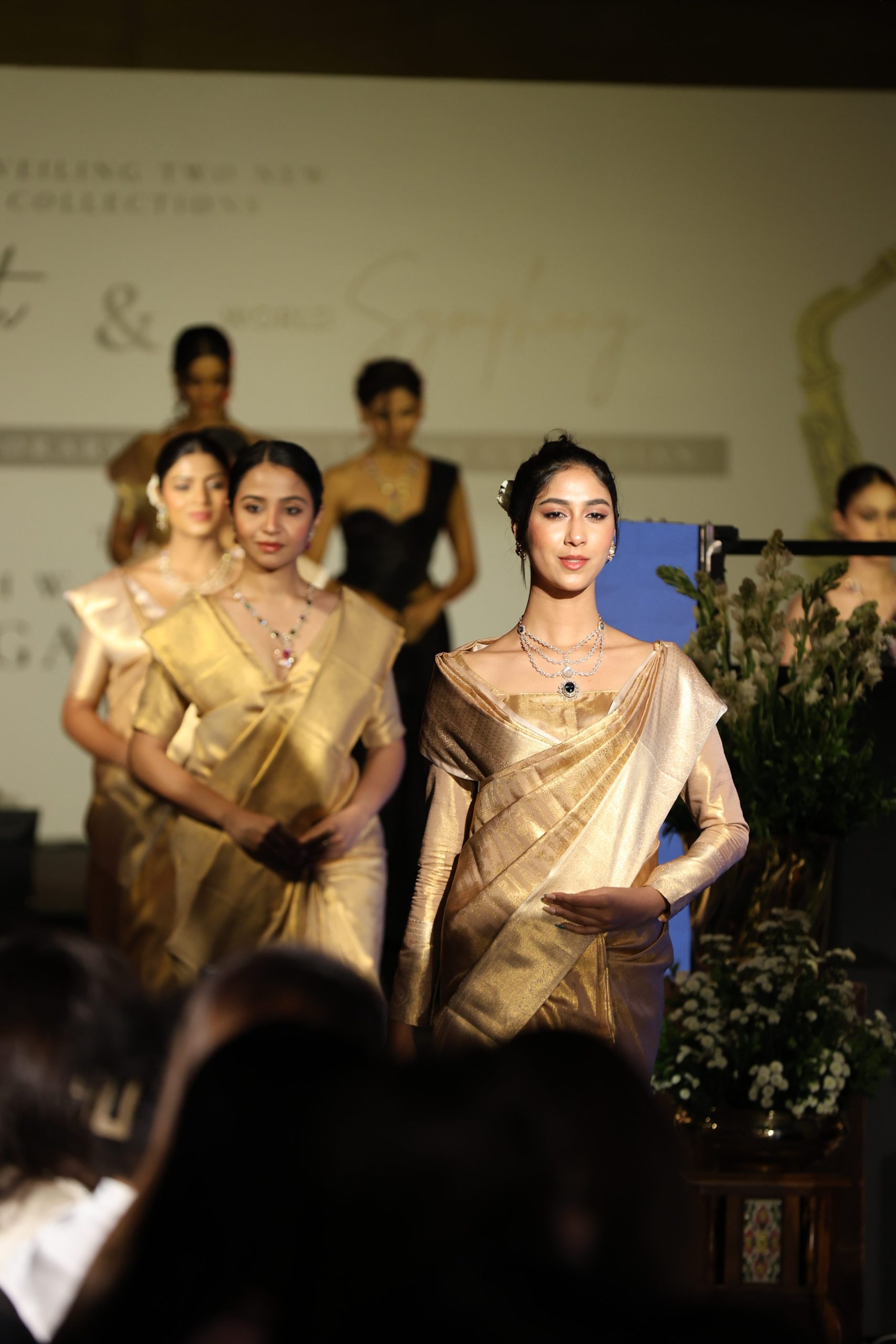
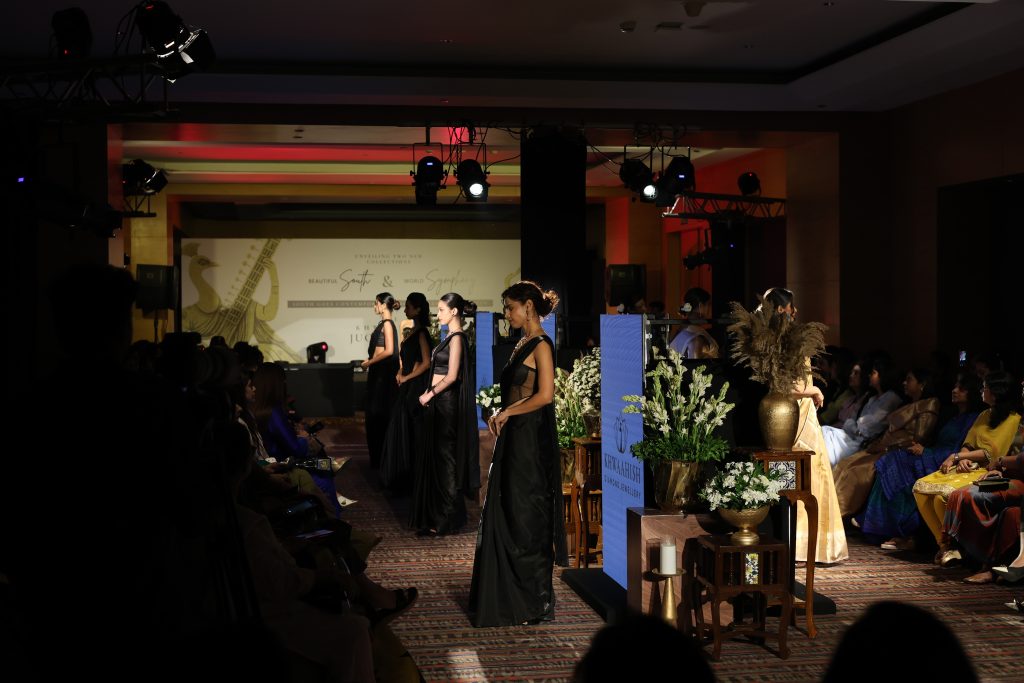
Khwaahish’s Jugalbandi event, which launched both Beautiful South and World Symphony simultaneously, was designed to present the two collections in dialogue with each other — the South becoming contemporary, the world styles becoming classically rooted. Pankajj has now built two major events into his annual marketing calendar specifically for Signature Edition launches. “Since this is not a very mass-market kind of product, we are curating the stories and keeping it restrictive — only to digital, which we are building, and through events,” he explains. The controlled environment of a curated preview allows the story to be narrated, shown, and experienced rather than merely described — when the jewellery is meant to carry cultural and emotional weight.
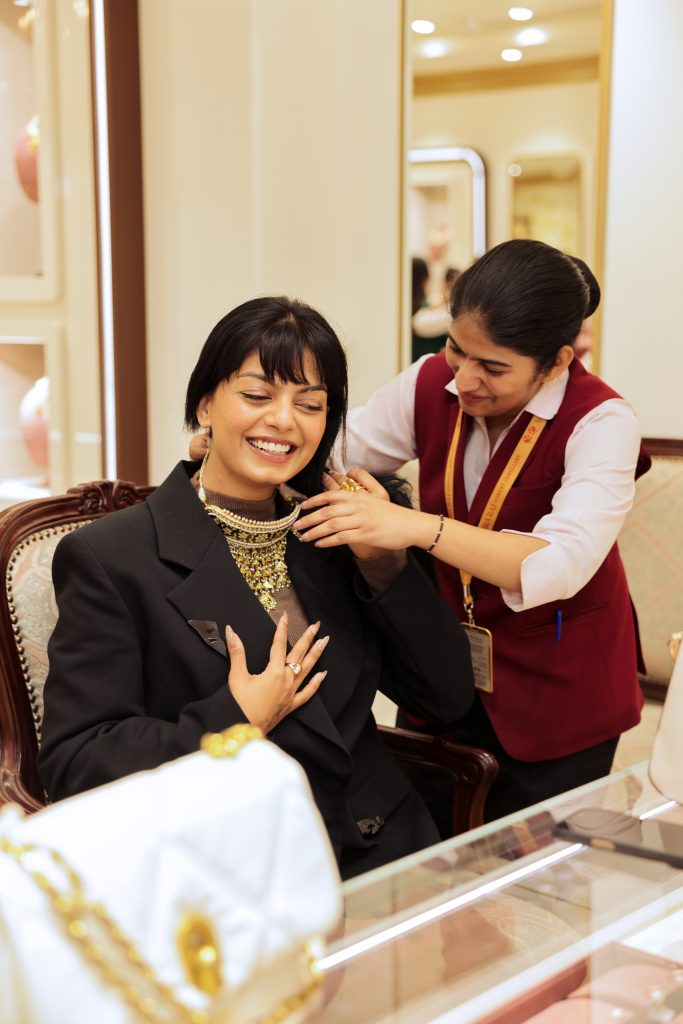
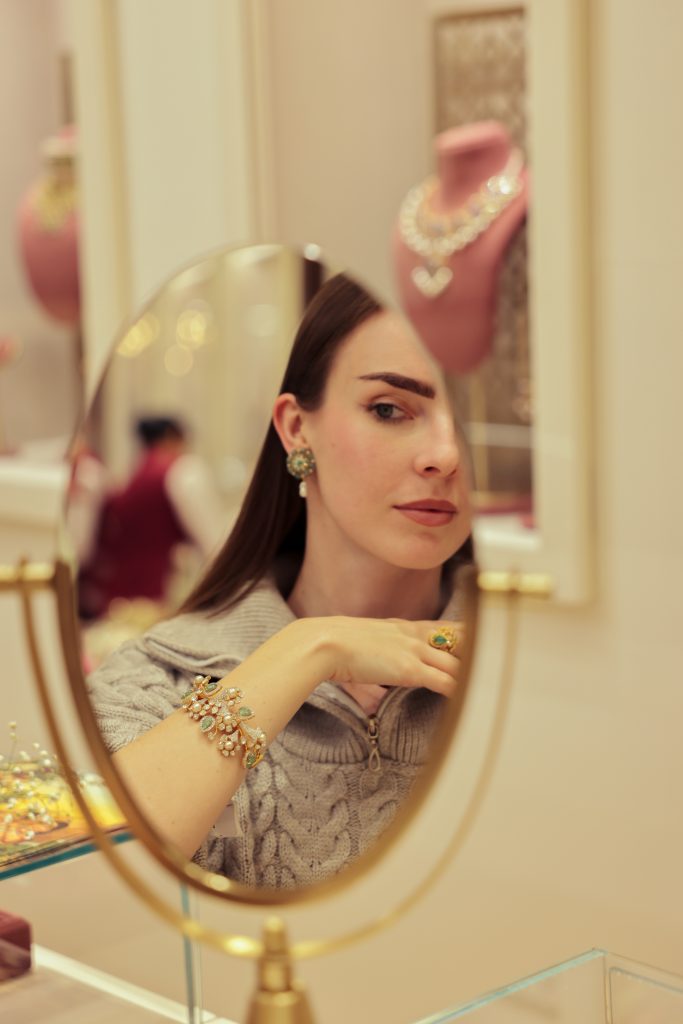
Vasundhra runs intimate previews for a select set of clients, creating settings that allow for what she calls a “more immersive experience.” For story-led collections, she says, this format works particularly well — “it gives clients the time and space to engage with the pieces beyond just their visual appeal.” When a buyer can sit with a piece, hear about the provenance of its gemstone, understand the research behind its design, and ask questions in an unhurried setting, the purchase decision becomes about more than aesthetics. That’s a transaction profile, higher involvement, stronger attachment, lower sensitivity to price, that most jewellers would want more of.
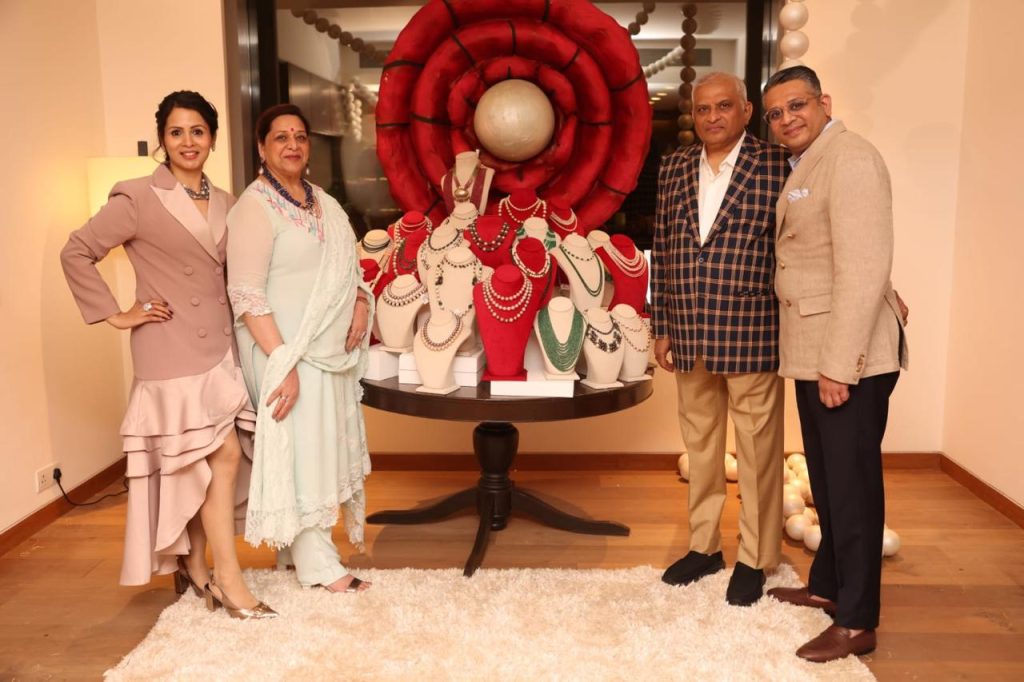
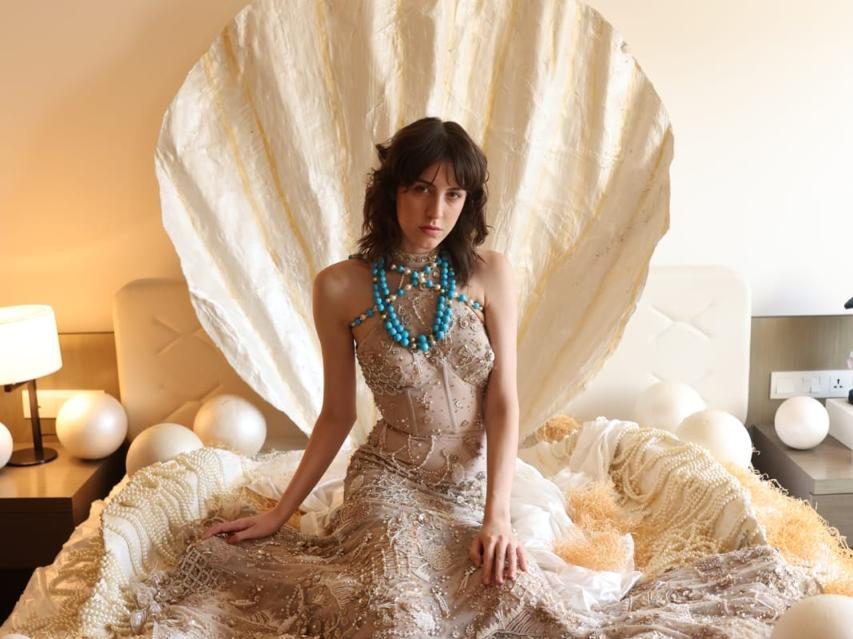
Isvari takes a different approach, keeping its most exclusive pieces deliberately off social media and presenting them through in-store conversation alone. “These are exclusive products and the customer of these products wants to be very private,” Manik explains. When a piece like Priyam — set with a 350-carat ruby and polki stones — is sold, it enters a personal collection, not a public profile. Putting it on Instagram would diminish its value for the buyer, and for the brand.
Across these three very different businesses the direction is the same. The HNI jewellery buyer responds to depth, originality, to research, to the sense that something was made with intention and care rather than produced to fill a display counter. For jewellers already working at this end of the market, building that depth into how collections are conceived, communicated, and sold is less a strategic pivot than a natural extension of what good jewellery has always been — something worth telling a story about.
By Maithili Patange
Retail Jeweller India Magazine