





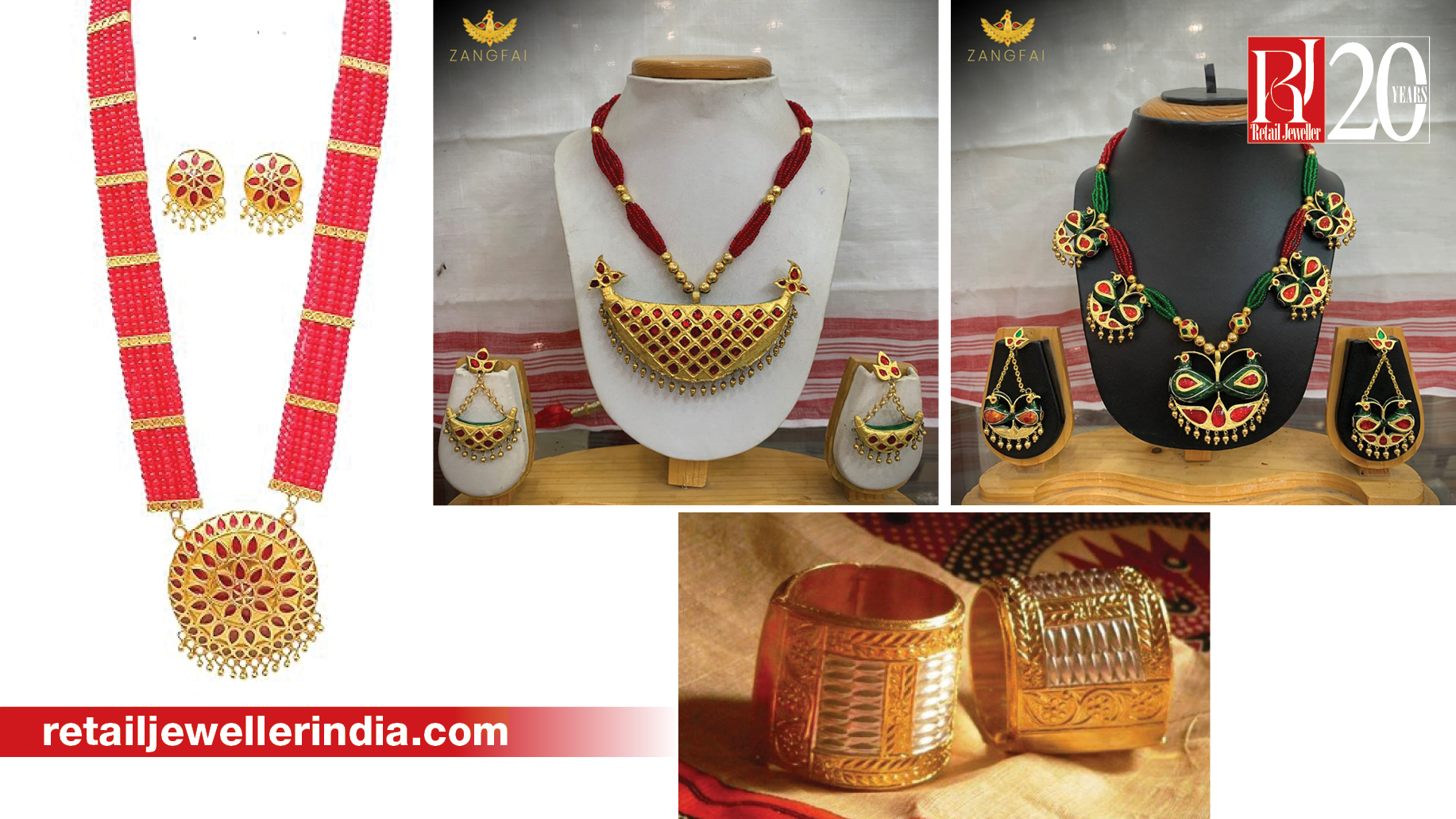

The recognition highlights the cultural significance and craftsmanship of these ornaments, made by artisans using high-purity gold and silver, which have been part of the Assamese identity for centuries. The craft and its makers are now expected to get more visibility
Guwahati: Traditional Assamese jewellery, known as ‘Axomiya Gohona’, has just received global recognition by way of the Geographical Indication (GI) tag, marking a milestone in Assam’s rich cultural history.
The Geographical Indications Registry announced the recognition under the Intellectual Property Office, and registration details were made available on the GI Authority’s official website. Notably, the GI tag application for Assamese Jewellery had been pushed forward by the Gems and Jewellery Promotion Council of Assam, and it was supported by the Assam Science and Technology and Environment Council (ASTEC). The aim had been to support traditional artisans through official recognition. The GI tag now provides a platform for further outreach and income generation.
The recognition of Assamese jewellery with a GI tag provides it legal protection under intellectual property law. This registration means the jewellery can now be marketed with geographic authentication, helping to prevent misrepresentation and encouraging fair recognition of original makers.
Traditional Assamese jewellery is made by hand, representing themes drawn from nature, instruments, and everyday artefacts in Assamese life. Designs in Assamese jewellery often derive their names from the forms they depict. For instance, Jon Biri refers to a crescent-shaped pendant; Lokaparo depicts two pigeons in a symmetrical pose; Jethi Poti resembles a lizard’s tail; and Dhol Biri mimics a drum. Historical records mention how gold was used to create these designs, and they continue to be produced with similar structure and composition over time.
These ornaments are crafted by artisans using high-purity gold and silver. Thin layers of gold are often combined with coloured gemstones or enamel. The natural resin lac is sometimes used as a filler material. The methods used to create these ornaments have been passed down over generations.
The GI tag for Assamese jewellery brings attention to the production hubs in Assam, namely Nagaon, Jorhat and Barpeta. Regional differences exist in production style. Items from Upper Assam often use stones more frequently, while those from Lower Assam focus on patterns formed through metalwork.
The GI system in India came into effect in 2003, with Darjeeling Tea being the first product recognized. With Assamese jewellery now added to this list, further visibility is expected for the craft and its makers. It is anticipated that this will encourage more economic activity in the sector and promote learning of traditional methods among younger generations.
Retail Jeweller India News