



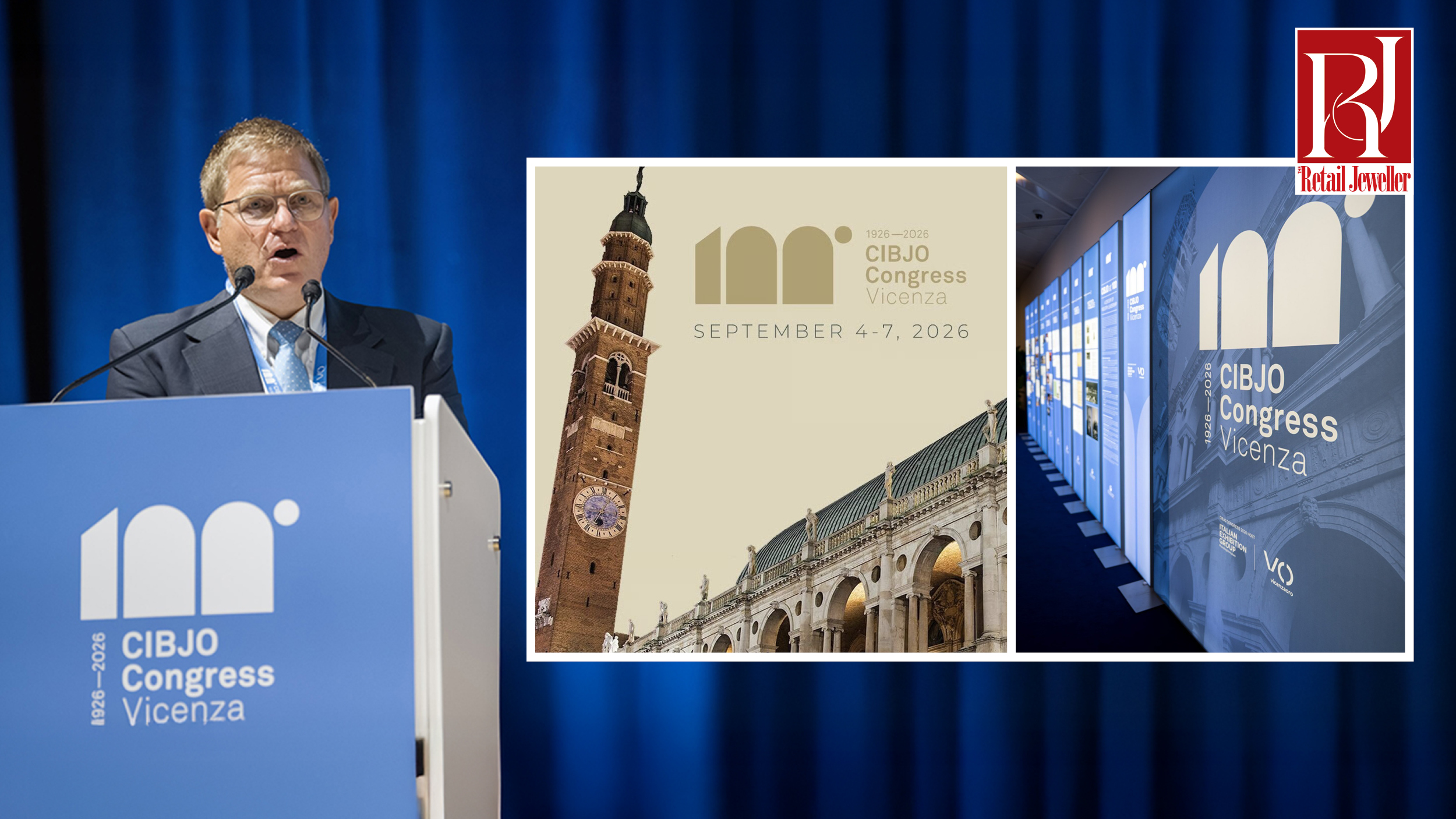

As CIBJO marks its centenary, its 2026 congress has put the future of natural diamonds under the spotlight, with calls for greater consumer trust, transparency, visible sustainability and stronger engagement with younger generations.
Vicenza, Italy: The World Jewellery Confederation, CIBJO, is marking 100 years at a pivotal moment for the global jewellery industry. Founded in 1926 as BIBOA in Paris and restructured in 1961 with a global mandate, the organisation today brings together members from more than 50 countries and represents interests across the international jewellery, gemstone and precious-metals supply chain.
Held alongside the Vicenzaoro September 2026 trade fair, CIBJO’s centenary congress looked beyond its milestone to the challenges likely to define the industry’s next century. Among the most pressing was the future of natural diamonds.
Gareth Penny, former CEO of De Beers and now chairman of Ninety One, described the natural diamond sector as being in the midst of a significant crisis, pointing to falling sales, the growing share of lab-grown diamonds in the US engagement-ring market and declining consumer confidence. He noted that younger consumers are asking increasingly difficult questions about a diamond’s origin, its environmental impact and who benefits from its purchase.
Penny outlined eight priorities that he believes could determine the future of natural diamond jewellery.
SELLING MEANING
The first is to sell meaning, not diamonds. Natural diamonds, Penny argued, have never been valued solely for their chemical or physical properties. Their enduring appeal has been rooted in the meanings consumers attach to them — love, commitment, achievement and the idea of passing something of lasting value between generations. The industry therefore needs to rebuild that emotional connection rather than allowing the conversation to focus predominantly on the product itself.
The second priority is communicating how natural diamonds can contribute to wider social and economic development. Penny pointed to responsible mining’s potential to support employment, infrastructure, education, healthcare and entrepreneurship, citing Botswana, Namibia and Angola as examples of countries where natural-resource revenues can contribute to national development.
Transparency is the third priority. Digital traceability and blockchain technologies are already creating new possibilities for communicating a product’s provenance. Penny envisaged a future in which a consumer could scan a QR code and access information about a diamond’s country of origin, mine, cutting process, environmental impact, community investment and the people involved in creating and selling the finished jewellery.
Making sustainability visible should be the next priority. The diamond industry has invested in responsible mining, renewable energy, conservation, water management, biodiversity and community development. Yet, according to Penny, consumers often remain unaware of these efforts. The challenge is therefore moving from simply doing good to demonstrating it in ways consumers can understand.
REBUILDING DESIRE
The fifth priority is perhaps the most urgent commercially: creating desire among younger consumers.Penny argued that the industry’s biggest challenge is no longer supply but demand. Reaching younger audiences will require marketing and storytelling on the platforms where they spend their time, including Instagram, YouTube, TikTok and Reels, alongside more creative brand-led approaches.
Innovation forms the seventh priority, with technologies such as artificial intelligence, digital traceability, blockchain, advanced analytics and immersive experiences expected to reshape everything from personalised shopping to supply-chain management and consumer engagement.
But technology alone cannot address the category’s economic pressures. He also noted that the sharp rise in gold prices means precious metal can now account for 70% or more of the cost of some jewellery, leaving less room for a significant natural diamond component. He argued that the industry needs to rethink design, materials and manufacturing techniques to create jewellery in which natural diamonds have a more meaningful role.
THE ROLE OF DE BEERS
The eighth priority is De Beers. Penny described the company’s current sale process as an opportunity to revitalise one of the most influential institutions in the history of the diamond industry. Beyond mining, he noted, De Beers has historically played a role in building consumer demand, category marketing, research, standards and trust around natural diamonds.
“The future is not looking bright, but all of us at CIBJO understand what has gone wrong, and I believe that together we can put things right,” Penny said, underlining the urgency facing the sector.
CIBJO’s centenary arrives at a defining moment for natural diamonds. The eight priorities outlined at its 2026 congress point towards an industry that must do more than defend an established category.
It must make the value of natural diamonds more meaningful, their provenance more transparent, their impact more visible and their story more relevant to new generations. After 100 years, the industry’s challenge is not simply to preserve the legacy of natural diamonds, but to build a compelling case for their place in the next century of jewellery.
The Retail Jeweller Global