



Abhishek Rastogi, Design Head at Indriya, decodes the brand’s strategy, says the two jewellery pieces – drawing from rich traditions of the Maratha empire and South India -reflect Indriya’s commitment to cultural memory and regional identity, more than mass appeal
Hyderabad: In an evolving fine jewellery market that is increasingly driven by consumer values of heritage, meaning and identity, jewellery retail brand Indriya has introduced two statement pieces – Rajmudra and Anantara – that aim to deepen brand resonance through an evolved level of cultural story-telling. Rather than catering to seasonal trends or mass appeal designs, Indriya’s latest work places craftsmanship and regional symbolism at the forefront of its brand strategy.
“Jewellery is not just decorative,” says Abhishek Rastogi, Design Head at Indriya. “It is a vessel of memory, a coded archive of regional wisdom, passed down in gold and gemstone through generations. Rajmudra and Anantara are rooted in this understanding. They aren’t about ornamentation; they’re heirlooms of tomorrow.”
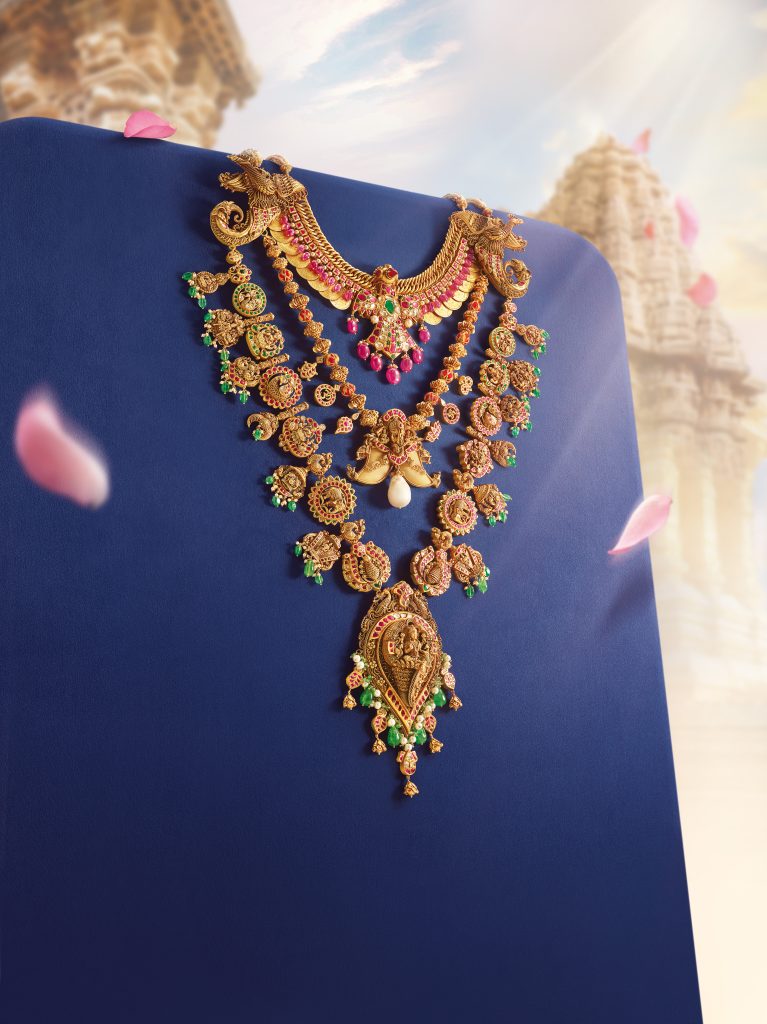
Anantara
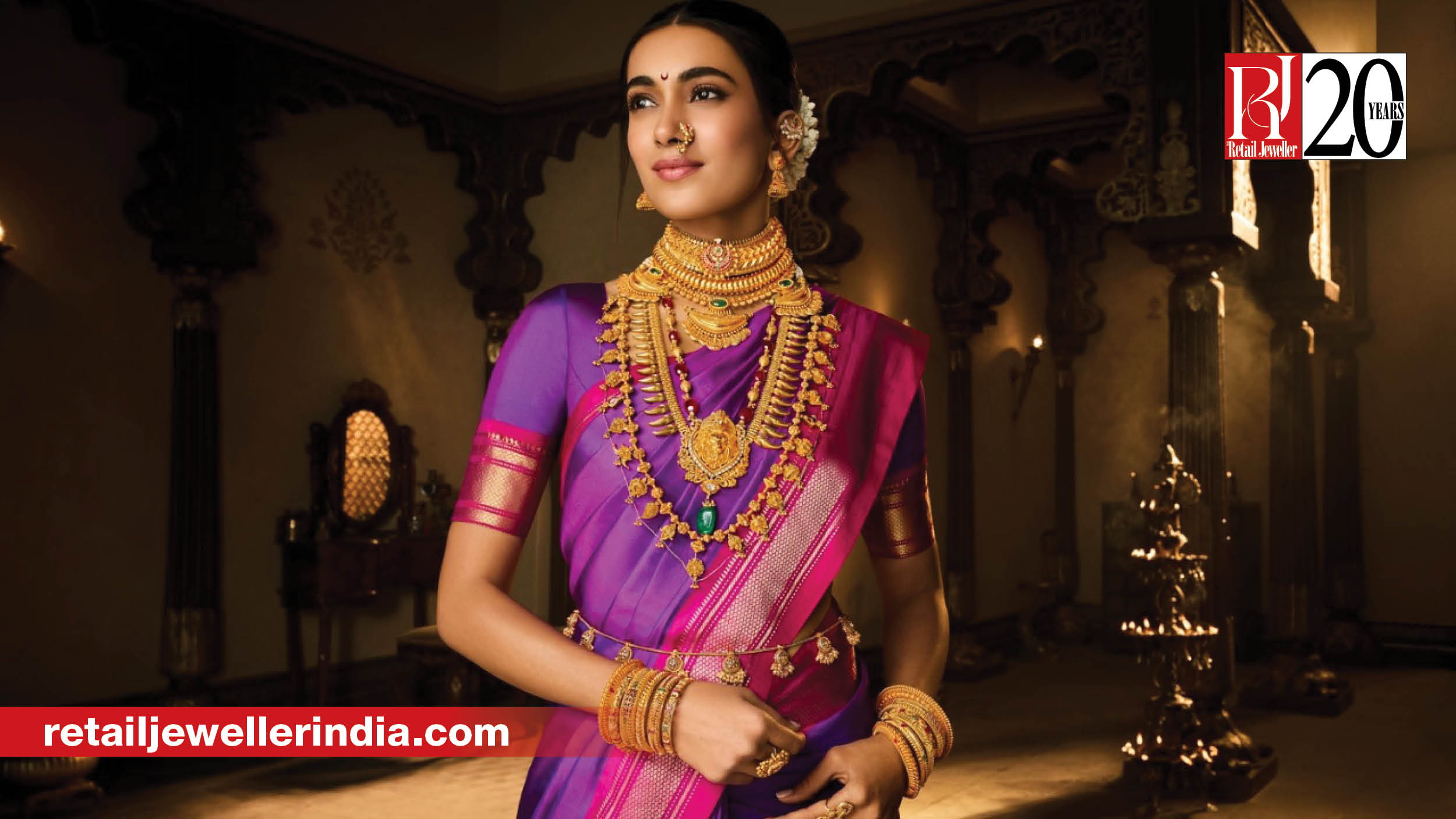
Each piece is the result of detailed research, historical referencing and collaborative design processes with regional artisans. Rajmudra draws inspiration from the Maratha empire, particularly its agrarian roots and symbols of sovereignty. Guided by the idea of ‘Maati to Mohar’ -the transformation of soil into a royal seal- the piece incorporates references to local crops such as jowar and bajra, which once sustained communities and now appear as re-imagined gold forms. Its structure reflects iconic motifs like the Vajratik Haar and Simha Haar, along with a 21-tukdi Saaj, evoking the cultural and spiritual weight of Maratha identity.
“Rajmudra is an emblem of cultural authorship,” says Rastogi. “It draws from a time and place where identity was inscribed on the body in ritual, in adornment, and in pride. We wanted to recreate that connection for a modern wearer not through nostalgia, but through relevance.”
Anantara, on the other hand, merges South Indian and Hyderabadi traditions, particularly those associated with temple architecture and spiritual symbolism. The centre of the piece is Garuda, Vishnu’s celestial mount, surrounded by motifs such as Om, Kurm, Puliguru beads, and Swastik – each with deeply devotional meaning. Notably, each Puliguru bead includes a roli thread blessed at the Balaji temple, reflecting Indriya’s approach of integrating rituals into physical form.
“Anantara is built on devotion,” says Rastogi. “We didn’t begin with design; we began with study. We visited temples, spoke to families, looked at heirloom pieces not just for their shape but for what they meant in a domestic or ceremonial context.”
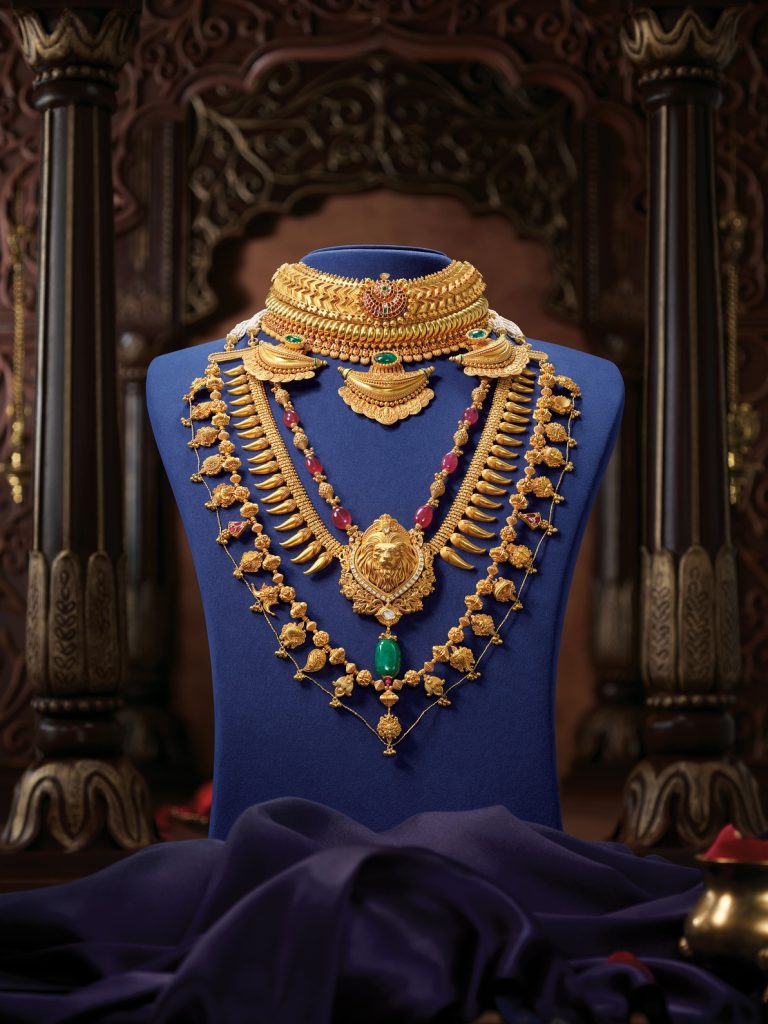
Rajmudra
The technical execution of both pieces involved a hybrid approach. Traditional goldsmithing techniques like Jadai, Kempu, Taar Ka Kaam, and Chappai were used in combination with modern design software to ensure balance, modularity and comfort. Invisible locking systems and ergonomic scaling allow these pieces to be worn as complete sets or in parts, making them both wearable and versatile.
This design process has positioned Indriya as a brand committed to authenticity while meeting the aesthetic and emotional needs of its audience. Both Rajmudraand Anantara appeal to consumers looking beyond superficial luxury, i.e., buyers who value origin, story, and significance in what they wear.
“When someone wears these pieces, it’s not just about how they look,” says Rastogi. “It’s about what they carry — pride, belief and a living cultural memory.”
Launched in July 2024, Indriya is a jewellery brand from the Aditya Birla Group. Itnow operates 24 stores across key Indian cities. With a strong focus retail expansion, the brand is steadily building customer trust and positioning itself as a strong contender in India’s jewellery market.
Written by Achal Chaubey
Retail Jeweller India Exclusive