
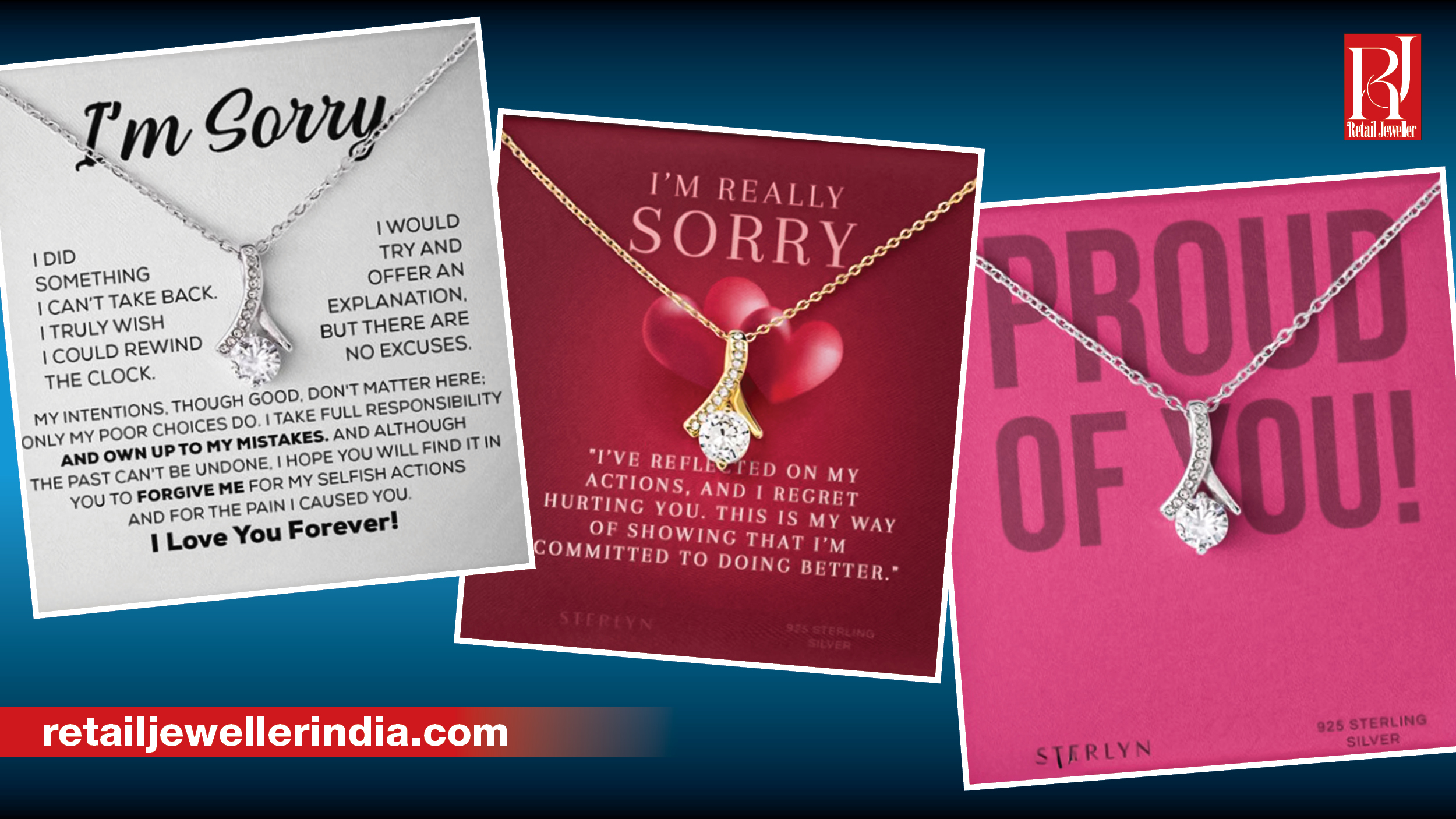

Launched in late 2022, Sterlyn, a D2C silver jewellery brand, capitalises on the growing market of branded gifting by offering affordable, personalised, and experiential gifts with customised messaging and premium packaging. Founder Vivek Soni explains to The Retail Jeweller how the brand’s focus on the middle-income group, simplifying communication for those who may struggle to find words to express their emotions, is scaling up the business significantly year after year
Edited Excerpts:
Sterlyn comes from a legacy background. How did the online sub-brand come about?
Sterlyn emerged from Brajesh Jewellers, a Chhattisgarh-based retailer with over 35 years in traditional jewellery. Launched in September 2022, the idea is to view jewellery not just as a product but as a medium of expression, especially for gifting. Data also revealed that nearly 70–75% of India’s population earns under Rs. 3 lakh annually, making affordability crucial. With an average inventory value of around Rs. 1,800 in silver, even students can buy meaningful gifts. This led to our message card jewellery concept, designed to help people express emotions through jewellery.
What positions the brand as a speciality gifting jewellery brand? How is buying jewellery as a gift from Sterlyn different from other jewellery brands?
Customers choose Sterlyn knowing they will find relevant options quickly without endless browsing. The experience goes beyond the product. Each piece comes with a printed message card placed inside the box, designed for emotions such as love, apology, appreciation, birthdays, anniversaries, or even self-affirmation. Many people want to express feelings but may not know how to articulate them, so we simplify that process. The packaging itself is designed like a gift, with options tailored to specific occasions or sentiments. Customers can select pre-designed message cards or personalise their own, and we also help refine the wording.
Tell us about your online retail model.
Sterlyn sells through its own website as well as marketplaces such as Myntra, Nykaa, Ajio, and Amazon. However, nearly 90% of our sales come directly from our website. Among marketplaces, Myntra and Nykaa perform the strongest. Since our focus is gifting, which often involves last-minute purchases, we are working on enabling faster delivery through our website and quick commerce platforms. We plan to go live soon on Blinkit and Zepto, and are also exploring funding to support this quick commerce expansion.
How are you seeing the gifting culture evolve in India and what trends are you observing?
One of the most striking insights for us is that 50–60% of our orders come from men who are buying jewellery as gifts for sisters, wives, or girlfriends. Our core customer is a 22–35-yearold Gen Z or early millennial woman, often receiving the jewellery as a gift. Tier-one metro cities dominate our sales, with Hyderabad, Bangalore, and Mumbai contributing the largest share, while tier-two markets are catching up quickly. Interestingly, many orders are placed from metro cities but delivered to tier-two and tier-three towns.
Sterlyn is India’s one of first plastic-positive jewellery brands. What does that mean?
We track plastic usage in our monthly packaging. If we use 10 kg of plastic in packaging, we recycle 10% more than what we used. A company does this for us and we get a certificate for every quarter.
Our outer mailer bag is biodegradable, not single-use plastic. Even if you throw it outside, it decomposes in about 60–90 days. A lot of cosmetics brands do this, like 82°E by Deepika Padukone, but in jewellery we are amongst the firsts to introduce this feature or position ourselves this way. It’s certified. We pay for it out of profits because we want to be conscious about the environment. we’re not just selling jewellery, we’re trying to connect with the youth who value the ethos of the brand.
For a digital-native brand, how important are social media and repeat customers?
Social media plays a key role in building Sterlyn’s narrative around gifting and emotion. Through reels and content, we showcase new occasions for jewellery purchases and help customers see jewellery as a meaningful gift, which also generates enquiries. For retention, we actively use WhatsApp targeting, with repeat engagement happening across both Meta and WhatsApp, which are our primary channels for customer communication. Typically, customers return to buy again within four to six months. Since we are still bootstrapped and focused on building strong operational foundations in the early years, retention is an area we are now working to strengthen further. The goal is to shorten the repeat purchase cycle as we scale the team and systems.
As a young bootstrapped startup, what did Sterlyn gain from your experience of getting selected at the ISB iVenture Immersion Program?
The early years of building Sterlyn were largely guided by instinct, identifying market gaps, experimenting with products, and learning through the process. The ISB iVenture Immersion Program has helped bring a more structured approach to that journey. Interactions with unicorn founders and ISB alumni reinforced the importance of building disciplined systems rather than relying on one-time successes. Equally valuable has been the peer network of founders across sectors who are navigating similar scaling challenges, making the learning both practical and relevant for a bootstrapped brand like Sterlyn.
What has Sterlyn’s growth trajectory been like over the last three years, and what challenges did you face?
In the initial years we relied purely on organic growth and did not run ads. As a result, sales in the early months were modest, around Rs. 50,000. However, once the systems were in place and the brand began gaining traction, the business scaled rapidly. Soon, we recorded about Rs. 50 lakh in sales, marking more than 100x growth. Last year, our website alone generated around Rs. 1.7 crore in gross sales. As far as challenges are concerned, Chhattisgarh, as limited facilities for CAD, CAM, casting, and mould processes. As a result, about 70–80% of production happens in Jaipur, where the ecosystem for jewellery manufacturing is stronger.
Tell us about your plans to launch a demi-fine jewellery sub-brand.
The key difference I see between silver and demi-fine jewellery is design flexibility. In silver, it’s difficult to offer bulky pieces. With the demi-fine range, we can introduce a wider variety of chunky, trendy, and contemporary designs while still keeping them affordable. Another important differentiator will be trust. In the demi-fine segment, very few brands currently offer product warranties or guarantees, and that is something we plan to provide to build stronger customer confidence.
By Pratyasha K
The Retail Jeweller India Magazine