



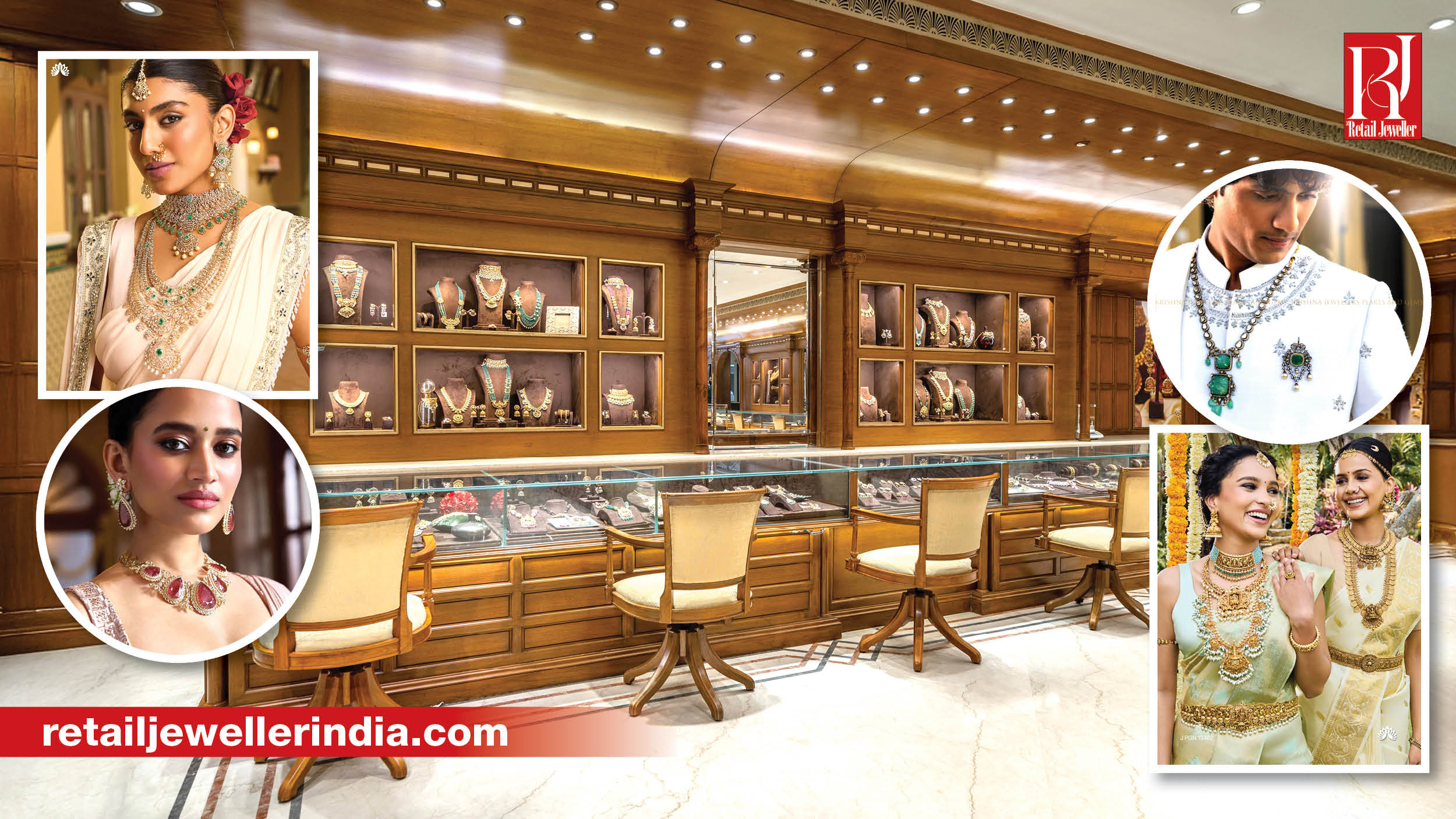

In less than a decade, Krishna Jewellers has moved from a pearl-led legacy to a design-driven bridal destination in Hyderabad’s competitive market. Director Umesh Kumar Agarwal tells how by avoiding price battles and focusing on curated bridal experiences, the brand has built trust, scaled rapidly, and created a one-stop retail model for the modern wedding customer.
Q. Krishna Jewellers, Pearls and Gems is today one of Hyderabad’s most recognised jewellery destinations — but the brand’s roots go back much further. Can you take us back to where it began?
The business was started by my father, and at one point, we had 20 to 30 stores around the city — pearls, primarily. Hyderabad has always been synonymous with pearl retail, and Krishna Pearls became a name that local buyers and tourists both knew well. That brand recognition was genuinely high — whenever someone came to Hyderabad, Krishna Pearls was part of the itinerary. We did make an early entry into gold and diamonds around 2004, but that model wasn’t the right approach. The real reinvention happened in 2016 when we opened our Jubilee Hills flagship with a completely different vision: a multi-category, one-roof destination built around design-led bridal jewellery. By 2018 we had added silver articles under Krishna House of Silver and a dedicated pearl segment on the second floor. Today we have four showrooms for pearls and two multi-floor flagship stores — Jubilee Hills and Kokapet — that carry the full jewellery range. It has been a decade of deliberate building.
Q. Positioning as a bridal destination in 2016 meant entering one of the most competitive segments in one of India’s most discerning jewellery markets. How did you approach that?
We were very conscious about it. When we looked at the market, there were jewellers who kept a handful of designs and worked largely on order, and then there were those who began building ready inventory around 2010–15. What was still missing was a synchronized bridal concept — a single look, one need, one answer. We started presenting complete bridal looks in that way, and customers responded strongly. They didn’t want to be overwhelmed with options. When everything is curated as one look, it feels solved. Bridal today accounts for about 60 per cent of our business — and that number includes the pre-wedding occasions that are so culturally significant in the South, like half-saree ceremonies. The customer we are serving is design-driven, not price-driven. That was the segment we wanted to own.
Q. Bridal customers in Hyderabad are known for high loyalty — which also means they are very hard to acquire, especially for a relatively newer player in gold and diamonds. What worked in your favour?
A few things. First, transparency and policy — we gave detailed bills from the beginning, offered clear return and exchange terms, and never made the customer feel they couldn’t question us. In a high-value purchase, that assurance matters enormously. Second, the brand legacy. My father had already done the work of building that trust over decades. Third, and this is something we did very early: digital marketing. At a time when most jewellers were deeply reluctant to put their designs online — worried about price comparisons or design theft — we were completely comfortable showcasing our inventory. We were moving fast enough with new designs that we weren’t afraid to publish them. Our thinking was that roughly 20 per cent of people who see a design might go compare prices elsewhere, but 80 per cent will return with that image as a reference and buy from us. That confidence in our own product paid off significantly. A huge chunk of our bridal inventory is visible on our website, which is still not the norm in this industry.
Q. The store format — bridal on the ground floor, daily wear above, pearls and silver higher up — is the inverse of how most large-format stores are laid out. Was it Intentional?
Completely intentional. Most stores build gradually to the premium — you see the lighter pieces first and work your way to the expensive ones. We reversed that. Walk into Jubilee Hills and the first thing you see on our ground floor is our heaviest, most elaborate bridal collection. That is our identity statement. It tells the customer immediately what this store is about. The first floor has daily wear, and the second has pearls, silver, and Tavya. And when someone comes in for a black bead chain and sees the bridal floor, they file it away. When their occasion comes, they know exactly where to return. That is how you build customer lifetime value across categories.
Q. What does the next phase of growth look like for the brand?
Measured. The Kokapet store opened last year — 7,000 square feet, three floors, same format — and it is still maturing. We will let it find its feet before opening the next one. For Krishna Jewellers, one or two new stores by 2027–28, staying within Telangana and Andhra Pradesh because our designs and clientele are deeply rooted in South Indian culture. For Krishna Pearls, the ambition is larger — pearl demand exists across India, including the north, so that brand has potential to travel. Tavya will move faster: three to four standalone stores in Hyderabad this year, then outward. We are self-funded and intend to stay that way for now. The business generates enough to fund its own growth if we take baby steps and take them well.
By Maithili Patange
Retail Jeweller India Magazine