




Global experts debate technology, consumer shifts, e-commerce, and the co-existence of natural and lab-grown diamonds, offering perspectives on how the industry is adapting to volatile market conditions
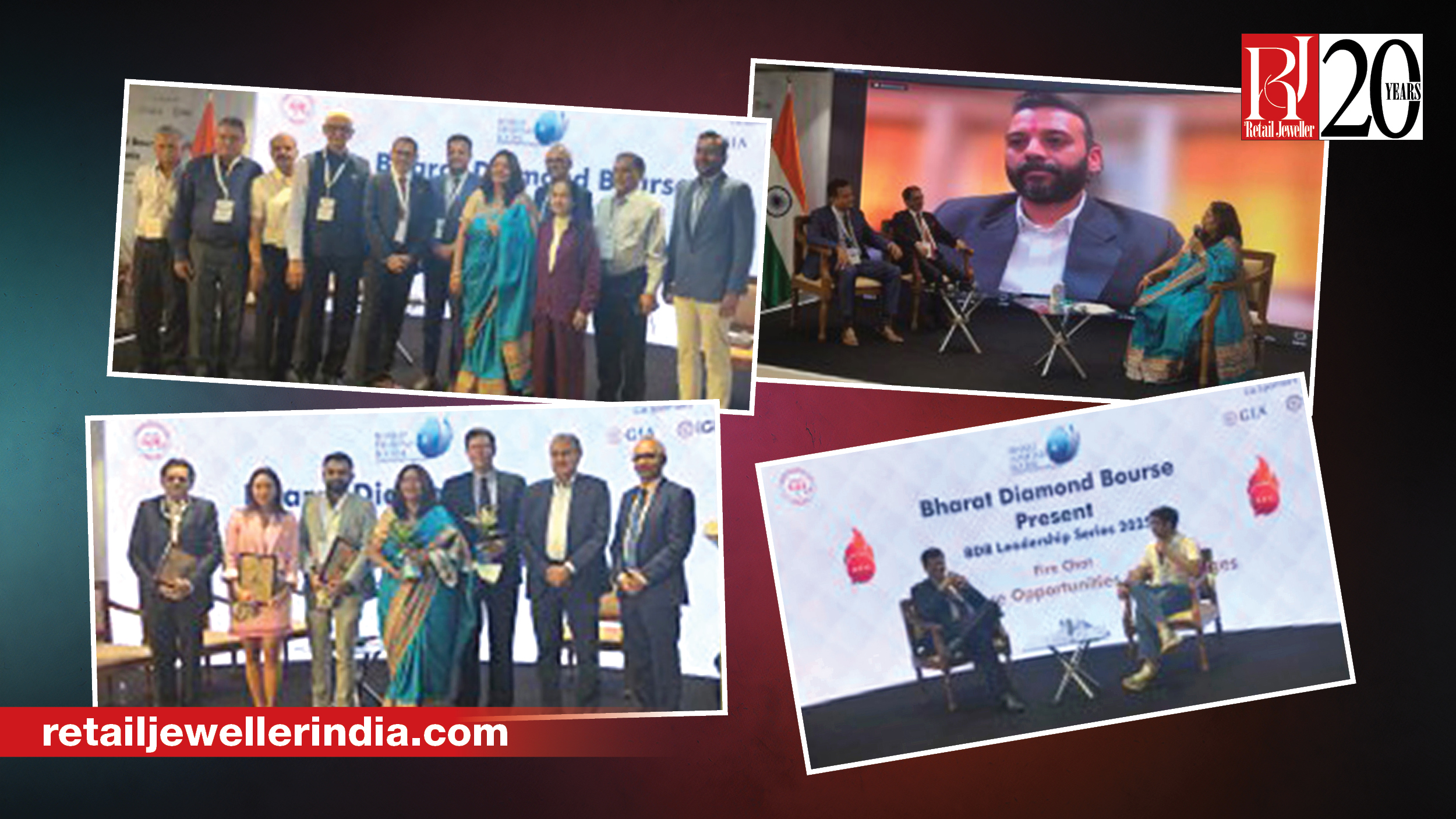
Mumbai: The Bharat Diamond Bourse (BDB) hosted its latest edition of the Leadership Series on September 24, 2025, drawing thought leaders, entrepreneurs and jewellery retailers to discuss how the industry is recalibrating amid technological change, market uncertainty and changing consumer demand.
The forum opened with the presentation ‘How is Technology Shaping the Future of Diamonds?’ delivered by Tom Moses, Executive Vice President and Chief Laboratory and Research Officer, GIA. He highlighted advancements such as artificial intelligence for clarity grading, new generation colorimeters, and traceability tools that are poised to change both efficiency and trust across the pipeline. “The real opportunity is in how technology can help us maximize utilization of rough and elevate cut quality across the board. For retailers and consumers, this means diamonds presented on a level playing field, where innovation drives both transparency and profitability in the long run,” he observed, while also stressing that human expertise remains indispensable in judging gemstones despite the growing role of automation.
This was followed by the session ‘Changing Business Landscape: What Does the Future Hold?’ presented by Liang Weizhang, Founder of HuBWis Strategic Creations, who addressed the aftermath of the steep price falls in 2024 and the gradual stabilization witnessed this year. Using comparative data from China and Hong Kong, he pointed out that while certain categories remain under pressure, prices for larger diamonds have steadied and consumer sentiment is improving. “The lesson of the past 18 months is that resilience lies in adaptability. Retailers who balanced costs, aligned inventory to new realities, and embraced discounted pricing have not only survived but are positioned for recovery. The challenge ahead is navigating tariffs, supply contraction, and the delicate balance between natural and lab-grown diamonds,” Liang noted, adding that Indian and Chinese traders will increasingly face competition in the same international markets as tariff uncertainties in the US and elsewhere reshape trade flows.
The panel discussion on ‘What’s Driving Jewellery Demand in India and the Middle East’ was moderated by industry consultant Nirupa Bhatt and brought together Abdul Salaam, Vice Chairman, Malabar Group; Dr Pratap Kamath, MD, Abaran Timeless Jewellery and Siddharth Sawansukha, MD, Sawansukha Jewellers. The conversation focused on consumer demand shifts, personalization and the rise of self-purchase. Kamath underlined that design remains the biggest differentiator, noting that today’s consumer is prepared to pay more for exclusivity and a sense of personalization. Salaam spoke about managing scale across Malabar’s 410 stores in 14 countries, saying that technology and a design bank of over 2,50,000 SKUs allow the group to address diverse regional requirements without losing focus on customer experience. Sawansukha stressed that East India’s strong artisanal heritage has successfully integrated handcraft with machine production, ensuring tradition and modernity evolve together to meet consumer expectations.
In the most exciting fireside chat ‘E-Commerce in Jewellery: Opportunities & Challenges’ featuring Mithun Sacheti, Founder of CaratLane, in conversation with Pranay Narvekar, Partner at Pharos Beam Consulting, Sacheti reflected on the early challenges of building an e-commerce jewellery business in an environment with little logistical infrastructure or consumer readiness for high-value online transactions. He argued that expanding the base of consumers must remain central to business thinking. “What this industry often misses is that the jeweller’s role is not only to preserve margin but to expand the base of consumers. If you solve for price points that match wallets, focus on volume, and embrace new channels, you fundamentally change the growth equation,” he said, highlighting that resilience of mindset was as critical as capital in those formative years.
The day concluded with the theme of convergence and coexistence in the final panel, ‘Natural and Lab Grown Diamonds – A Shared Future,’ moderated by Nirupa Bhatt and featuring Ashish Pethe, Partner, Waman Hari Pethe Jewellers; Smit Patel, Director, Greenlab and Olivia Landau, Founder and CEO, The Clear Cut. Speakers agreed that both categories are here to stay, though their positioning will differ. Patel emphasized the rapid strides of technology in lab-grown manufacturing, while Landau noted that younger consumers see lab-grown as accessible luxury but still attach deep emotional value to natural diamonds. Pethe stressed that retailers must avoid polarizing the debate and instead educate customers on making informed choices. The consensus was that both natural and lab-grown diamonds will continue to evolve as parallel businesses, with innovation and story-telling shaping how consumers perceive value.
With its focus on technology, market realities and evolving consumer behaviour, the BDB Leadership Series 2025 provided participants with a valuable exchange of ideas. Supported by GIA and IGI, the sessions offered practical insights into how the diamond industry is adapting to change.
The Bharat Diamond Bourse, based in Mumbai, is one of the world’s largest diamond trading hubs, housing over 2,500 offices. It specializes in polished diamond trading and global distribution.
Retail Jeweller India News