


Amid rising gold prices and shifting buyer preferences, GJS April 2025 spotlighted silver jewellery’s growing appeal and a strategic pivot in gold offerings. The show reflected demand for lightweight, fast-selling designs and re-affirmed the show as a key indicator of evolving demand trends
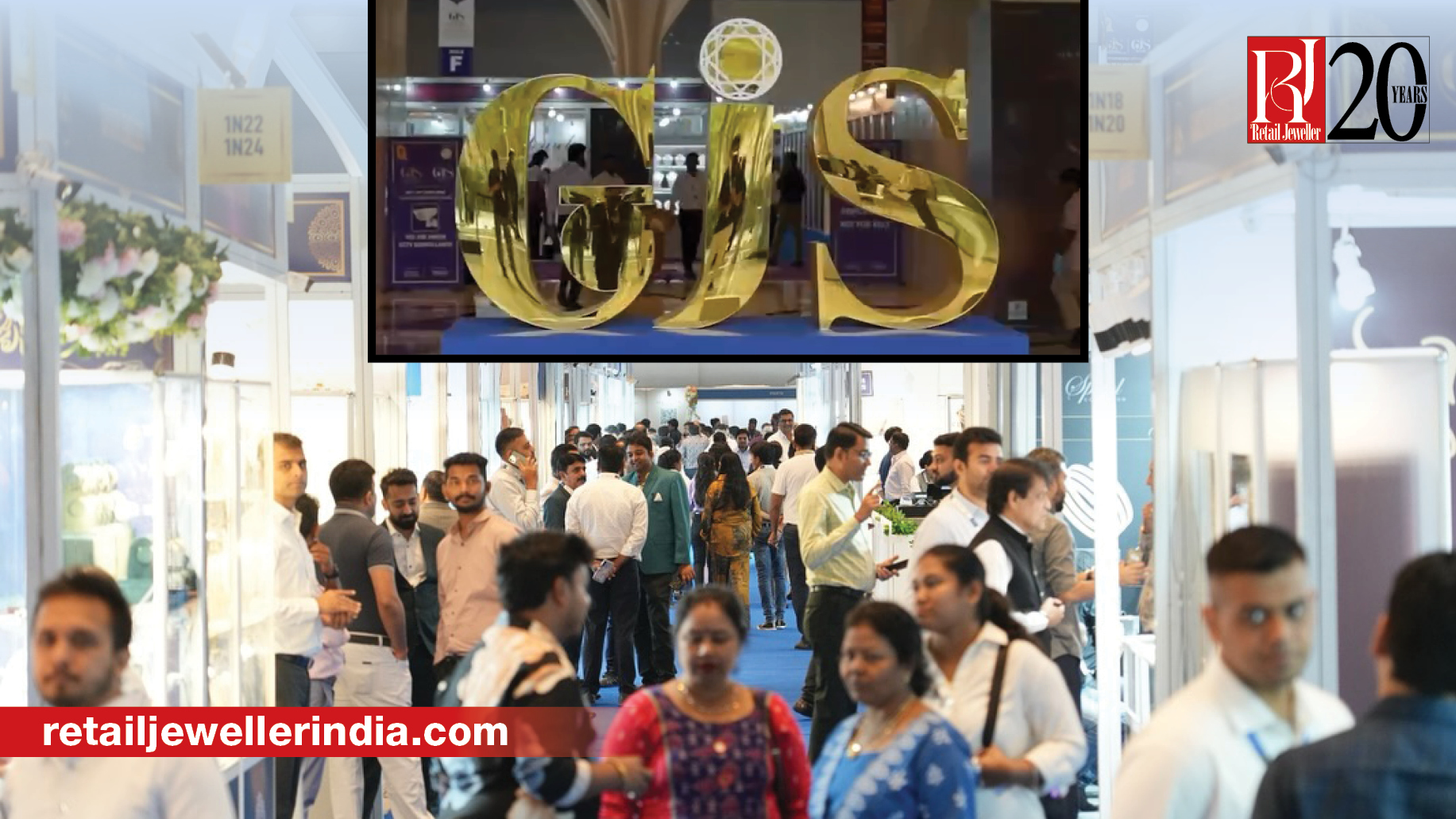
Mumbai: The April 2025 edition of the India Gem & Jewellery Show (GJS) recently concluded at Mumbai’s Jio World Convention Centre, offering the industry a timely opportunity to engage ahead of Akshaya Tritiya. Organized by the All India Gem and Jewellery Domestic Council (GJC), the seventh edition of the show welcomed over 15,000 trade visitors and hosted more than 400 exhibitors, reinforcing its position as a key B2B platform in the domestic jewellery calendar.
The show continued with its established cash-and-carry format, which enables immediate transactions alongside traditional order placements. For many participants, this model brought welcome efficiency. “Being ready stockists, this model worked suitably for us. It helped us swiftly meet the demand for lightweight, generic jewellery before Akshaya Tritiya, especially from buyers across the North, East, Madhya Pradesh and Maharashtra,” said Khushboo Ranawat, Director, Swarna Shilp Chains & Jewellers.
Retailers arrived with clear goals and structured budgets, seeking designs that offered higher stock turn and inventory mobility. This shift in approach was apparent across the show floor, particularly in gold jewellery. While the event maintained a healthy footfall over all four days, several exhibitors reported the first two days as the most productive in terms of transactions and genuine enquiries.
The prevailing high gold prices shaped much of the buying sentiment. Lightweight and mid-range gold designs drew attention for their practicality and broader customer appeal. Retailers largely avoided locking capital into heavier or niche pieces that might move slowly.
Shringar House of Mangalsutra, which focused on lighter necklace sets, found this strategy aligned with buyer expectations. “We’re not seeing reduced interest, but sharper buying decisions,” said Chetan Thadeshwar, Chairman & MD, Shringar House of Mangalsutra. “Our long-term clients are placing smaller orders, but they are repeating them more often.” This evolving mindset is influencing the way manufacturers and wholesalers design and price their offerings.
A practical outlook was evident throughout the gold segment, with suppliers adapting to market conditions by offering designs that are versatile, cost-effective, and aligned with consumer expectations.
Amid this backdrop, silver made a confident and notable entry into the spotlight. The introduction of a dedicated ‘GJS Silver’ pavilion marked a key milestone, reflecting silver’s growing relevance as a standalone category. Silver jewellery—once seen as a budget-friendly alternative—now occupies a central place in retailers’ portfolios.
A wide variety of silver offerings were on display, from oxidized and tribal jewellery to 9.25 bridal sets and gold-polished daily wear. Mumbai-based HP Silver saw strong traction for its lightweight, rhodium-finished jewellery across both traditional and modern retail formats. “Retailers, who previously overlooked silver, now see it as a strategic category,” said Piyush Sakaria, Owner, HP Silver. “The ROI is compelling, with steady monthly sales, design flexibility, and less capital lock-in. Additionally, silver doesn’t require intense price hedging like gold.”
Shree Omkar Jewellers Pvt Ltd, a repeat exhibitor at GJS, focused its 2025 showcase entirely on gold-polished silver. “This is our fourth year at GJS, and the first day was the busiest, followed by consistent traffic,” said Rajnesh Kant Agarwal, Managing Director, Shree Omkar Jewellers Pvt Ltd. “We specialize in bridal and daily wear, and this year we focused only on gold-polished silver due to gold’s price surge.”
First-time exhibitors also reported strong interest in their silver collections. Tirupati Gems & Jewels presented bridal 9.25 silver jewellery, silver purses and its premium Lavira line. “As first-timers, we’ve seen strong demand and encouraging turnout in the first two days,” said Tushar Natani, Owner, Tirupati Gems & Jewels. “While our core buyers are from North India, we’re gaining traction in Hyderabad, Gujarat, Mumbai and Pune.”
The decision to highlight silver purses and curated collections reflects a broader industry trend: buyers are seeking distinctive, high-performing products that suit diverse regional markets. For many, silver is emerging not just as a cost-effective alternative, but as a creative and versatile category in its own right.
Another debutant, Dharmi Jewels, reported brisk business in the first two days of the show. “It’s our first time at GJS, and these two days have been exceptionally busy,” said Ramanlal Jain, Director, Dharmi Jewels. “We specialize in CNC designs and Bombay bangles, catering mainly to North India.” The company’s focus on machine-crafted jewellery underlines the growing importance of technology in delivering precision and design variety.
Many exhibitors noted that silver jewellery purchases typically ranged between Rs 50,000 to Rs 1 lakh, with buyers using these orders to test new product lines before committing to a scale. For smaller retail formats and regional chains, silver offers an accessible entry point into the precious jewellery category, with faster inventory rotation and lower capital exposure.
Across both metals, one recurring theme was buyer pragmatism. Conversations on the show floor often went beyond design, touching on factors like hallmarking, karat flexibility, service timelines, and post-sale support. These operational elements are increasingly important, especially for retailers serving younger consumers who value speed, transparency and reliability.
However, not all manufacturers were equally aligned with these evolving preferences. Thathi Jewels, which focused on relatively heavier gold pieces starting at 20 grams, found that even their lighter offerings did not fully match current retail demand. The feedback pointed to the need for further adjustment, even within the lightweight category.
Meanwhile, Romil Jewelry found success with its adaptable approach. The brand catered to both chain stores and boutique retailers, offering trend-aligned collections in 18kt and 14kt gold. “Trend-aligned, wearable collections are helping us bridge the gap between legacy buyers and modern tastes,” said Manvi Shah, Business Development Lead, Romil Jewelry.
According to the exhibitors, the overall takeaway from GJS April 2025 was clear: product variety alone would not suffice. It was important to understand buyer needs, offering pricing flexibility, and delivering operational agility. Whether in the form of bridal sets or wearable fast-fashion styles, the most effective brands were those that matched their offerings to the current business environment.
The rising interest in silver further signals a shift in consumer perception. Especially in smaller cities, silver is being seen not just as a substitute for gold, but as an aspirational upgrade from imitation jewellery. It balances aesthetic appeal with affordability, making it an attractive choice for value-conscious buyers.
As the industry prepares for the next buying cycle, the April 2025 edition of GJS offered more than just a showcase of designs—it provided a live snapshot of changing retail dynamics. From the growing prominence of silver to strategic gold buying and evolving consumer behaviour, the show highlighted the need for adaptability and market responsiveness in a shifting landscape.
Written by Aparna Bhowmik
Retail Jeweller India Exclusive