



Placing its design strengths front and centre, Arnav & Co is deemphasising material as a determinant of value, seamlessly integrating gold, silver and fashion jewellery under one roof. In this conversation with the Retail Jeweller, co-founders Ashwini Oza and Chetan G Raja share their learning from the brand’s evolution, expansion into new categories, and innovative retail strategy
With sub-brands like Silver Canvas and Jewel Box, Arnav & Co caters to diverse consumer preferences without diluting its design-centric approach. Adapting to changing consumer preferences, successfully drawing younger buyers and leveraging storytelling to enhance engagement, this nimble brand proves that its design-first philosophy and unique business model, with multiple categories retailed under a single umbrella, can drive differentiation and long-term success in a competitive market
Edited Excerpts:
Pratyasha Kumari (PK): Please tell us about your growth and evolution as a brand. What was the market gap you identified, and how have you capitalised on it?
Chetan G R (CGR): When Arnav & Co began in 2002, as Arnav Design Studio, we had a strong focus on aesthetics and design-led jewellery. At the time, jewellery was still perceived largely as a commodity, with little emphasis on design. We saw our opportunity to introduce artistic, meaningful pieces that customers could resonate with. By 2005–2006, we transitioned into a full-fledged jewellery brand, rebranding as Arnav & Co while retaining our core principle of design-centric offerings.
PK: How did the brand come to expand into silver jewellery? What was the market perception of the category, at the time?
Ashwini Oza (AO): Around 2008–2009, we introduced Silver Canvas by Arnav. Silver has always been a personal favourite, and through our international travels and trade fair visits, we noticed how silver jewellery was highly respected in global markets. John Hardy, a renowned architect-turned-jeweller in Bali, was a major inspiration.
In India, then, silver was still considered a non-precious metal. We took this opportunity to reposition silver as a valuable segment, partly by emphasising design and craftsmanship.
PK: What was the inspiration behind Studio by Ashwini Oza? What is the studio experience like, for your clients?
AO: Studio by Ashwini Oza emerged from my passion for antique jewellery and the realisation that many clients were exchanging heirloom pieces for modern designs. The old pieces often had incredible workmanship and superior gemstones, not to mention deep sentimental value. Instead of letting these treasures fade into insignificance, I began working with clients to remodel and repurpose their jewellery, transforming them into wearable art. We coined the name and established it as an independent business line around 2010.
PK: Over the years, Arnav & Co has housed multiple designers under ‘Jewel Box by Arnav’. How did this diversification come about?
CGR: The diversification was a natural progression of our design-led approach. We wanted to cater to different customer segments while maintaining our core philosophy. Around 2019, we observed a wave of emerging Indian jewellery designers creating innovative and distinctive pieces. Jewellery remains a category where being able to touch and feel matters, and these designers often lacked a physical retail platform to showcase their work.
With the increasing visibility of the ‘Make in India’ narrative, and consumers’ interest in unique, artisanal designs, we saw an opportunity to create a curated space for such independent brands to flourish. Jewel Box by Arnav, thus, serves as a platform for established and up-and-coming designers, offering consumers access to a wide range of handcrafted jewellery in silver, brass and copper.
PK: Retailing multiple categories under one umbrella is a unique business model. How did this strategy develop?
CGR: This is what makes Arnav & Co stand out in the competitive jewellery market of India. Traditionally, jewellery retailers focus on a single category, such as gold, silver or fashion jewellery. We believe, however, that a woman’s jewellery needs vary based on her mood, the occasion and her personal style. Some days, she wants to wear heirloom gold pieces. On others, she prefers contemporary silver or trendy fashion jewellery. With this in mind, we created a comprehensive retail space for customers to explore different jewellery categories under one roof, while assuring them a strong design aesthetic.
Also, with this retail model, we target all possible audience groups at once, including the younger clientele as well.
PK: Your store presents designs and materials in an unusually integrated way. What is the thinking behind this approach to the retail experience?
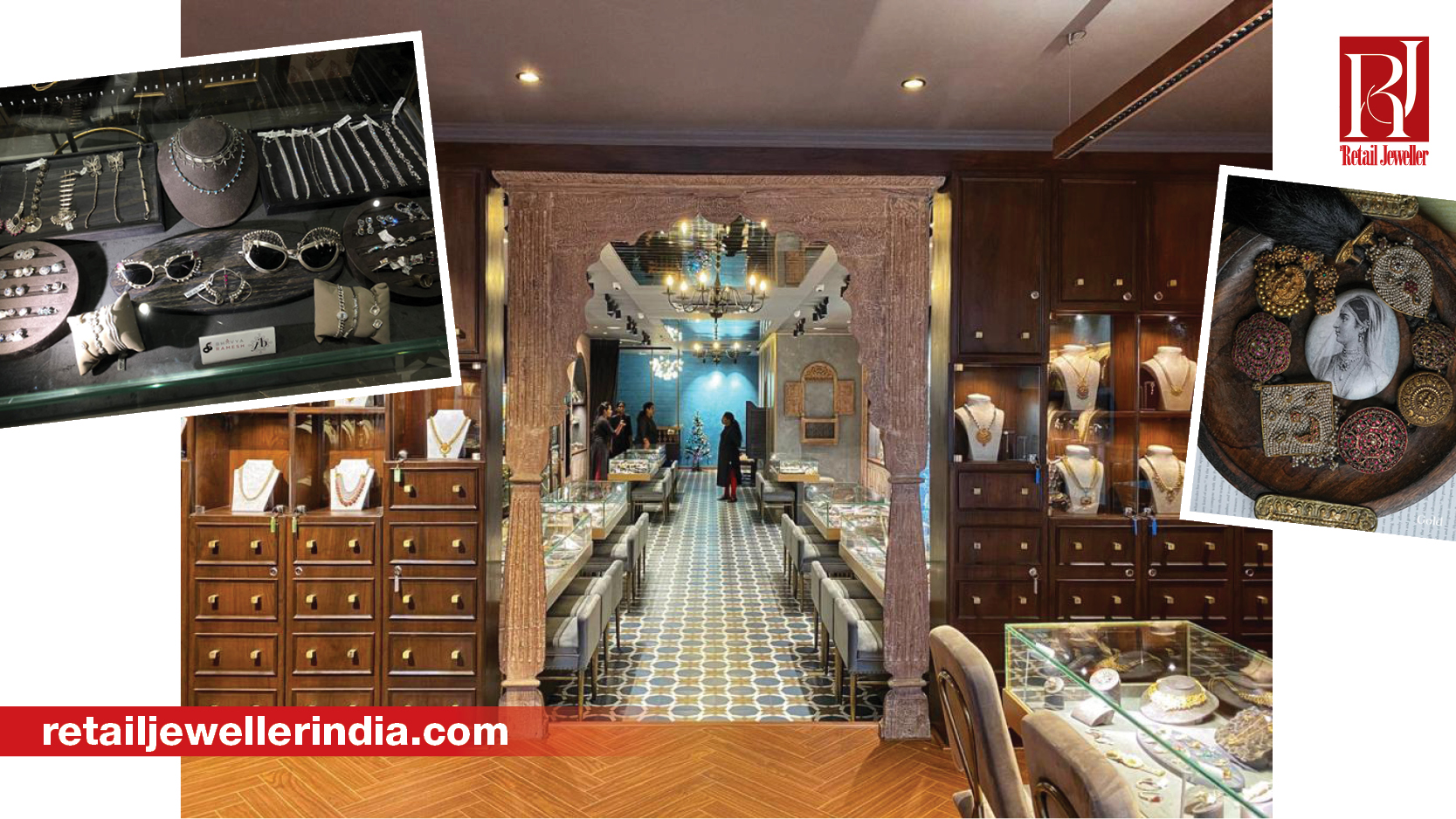
AO: We operate a single 2,000 sq. ft. store where we showcase all our ventures seamlessly. We don’t separate gold, silver or other materials by sections, as we want to focus on the design rather than the metal itself. We believe this provides a homogenous, unified retail experience where customers can appreciate the beauty of the design, irrespective of material. While there are separate areas for each of our brands, the overall atmosphere feels connected and consistent.
PK: Your store presents designs and materials in an unusually integrated way. What is the thinking behind this approach to the retail experience?
AO: We operate a single 2,000 sq. ft. store where we showcase all our ventures seamlessly. We don’t separate gold, silver or other materials by sections, as we want to focus on the design rather than the metal itself. We believe this provides a homogenous, unified retail experience where customers can appreciate the beauty of the design, irrespective of material. While there are separate areas for each of our brands, the overall atmosphere feels connected and consistent.
PK: Is it a concern that focusing on your sub-brands dilutes the brand identity of Arnav & Co? How do you hold things together?
CGR: Each brand has its own distinct identity and messaging. The common thread is our design-first philosophy. We ensure that each brand’s personality shines through, whether on social media or in-store, but we also leverage the connection between our brands. For example, we intentionally cross-promote across platforms, so that our customers know that these brands are all part of the same design family, sharing a unique design ethos.
In fact, our customers frequently cross-shop between our sub-brands. They purchase gold for investment, silver for occasion wear and brass for artistic and contemporary styling. Our clientele tends to value our design and aesthetics above the material, making it natural for them to explore our different collections for their various needs.
PK: What is your target audience in India, and how extensive is your reach? Do you create designs for regional markets?
AO: The designs are not region-coded. Instead, we aim for high-end, masterpiece designs that are attractive to any discriminating customer. We believe our designs are inclusive and will appeal to customers anywhere in India; and we see this happening as our designs draw a constantly widening audience. We prefer not to be limited by region, material or demographics. The only thing we want is for customers to see and love the jewellery we create.
PK: How does each sub-brand contribute to your overall sales? Do you see any trends in customer preferences?
CGR: Gold contributes the largest share of our revenue, at 65–70 per cent, followed by silver at 20–25 per cent and fashion jewellery (brass and copper) at 10–12 per cent. In terms of number of pieces sold, silver leads in volume, followed by brass. Gold jewellery is smaller in volume, but of course comes at a higher value per piece.
PK: What goal do you see your design-centric approach leading your brand towards?
CGR: Apart from holding the most gold in the world, India has always been known for its fine jewellery craftmanship and intricate designs. Each of the Arnav & Co ventures aims to drive the ongoing design revolution in India forward — and take it abroad. We aim to create jewellery that is not valued for its metal, but for its design mastery and aesthetics.
Written by Pratyasha Kumari