

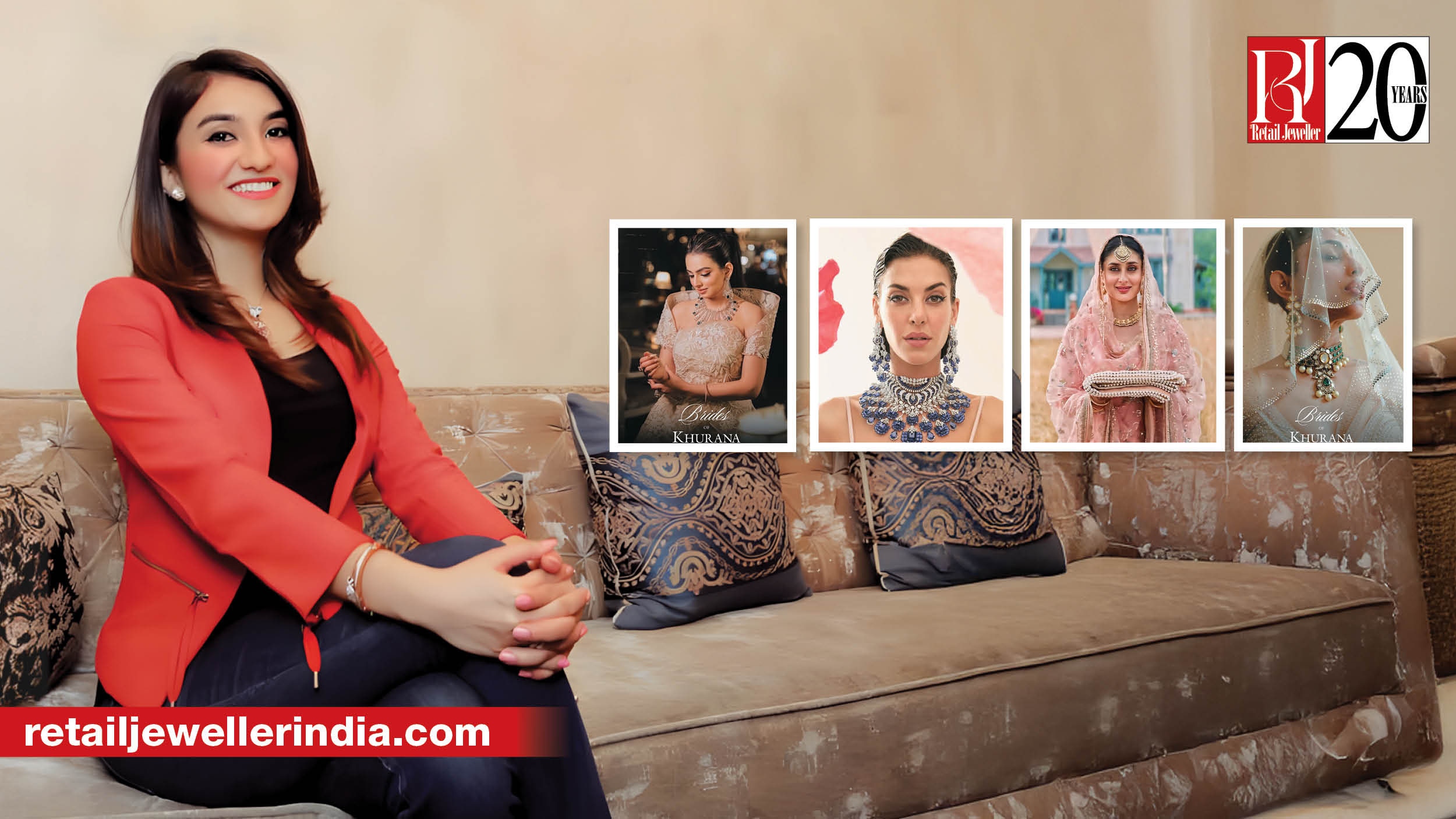

Soumya Khurana, Executive Director, Khurana Jewellery House, Amritsar
Weddings in Punjab were once a predictable affair—lavish, yes, but visually traditional. Red lehengas, gold jewellery, Polki with rubies, and maybe a splash of green. However, in recent years a new generation of Punjabi brides emerged, and with them came an entirely new way of looking at bridal jewellery.
It all started in the last few years, when a new kind of bride began walking into our store—curious, confident, and completely in sync with global bridal trends. These were millennial brides raised on Instagram, whose idea of a dream wedding was no longer shaped by family alone. With a universe of inspiration just a scroll away, even brides from smaller towns across Punjab were now imagining themselves in pastel lehengas and one-of-a-kind jewels. And the shift in jewellery began right there.
What changed it all? Honestly—celebrity weddings and weddings in Bollywood and Punjabi movies, that focused Punjabi brides. Pastel Punjabi brides like Kareena Kapoor in Laal Singh Chaddha, Sargun Mehta in Qismat 2, and Neha Kakkar at her wedding sparked a style wave—turning soft hues into a full-blown bridal trend. The minute pastel weddings started flooding social feeds, the red-and-gold bridal look quietly stepped aside.
Today’s Punjabi bride wants colour with character—gemstones that reflect her personality. The detachable chokers, earrings that transform from regal to minimal, and necklaces she can rewear long after the pheras, are amongst their choices. The hues we once considered “offbeat” have now become essential. Pink tourmalines, Russian emeralds, yellow sapphires, tanzanites, mint topaz, lavender amethysts, Paraiba tourmalines, powder blue sapphires—these aren’t just options; they’re in demand. We’ve seen a huge uptick in coloured diamond jewellery, especially yellow diamonds. We recently launched an entire yellow diamond collection—and the response was overwhelming. Another collection, our ‘Color Crush’ collection, one of our proudest creations, is a celebration of modularity and colour.
I still remember a bride who came in with a pastel blue lehenga. A few years ago, we might’ve paired it with ruby drops or a traditional Polki layout for contrast. But she didn’t want contrast—she wanted cohesion. We created a custom set with carved tanzanites and aquamarine enamel, complete with detachable saharas. She looked exquisite. More importantly, she looked like herself.
“We are seeing brides visit our Ludhiana store in search of exclusive statement pieces, over their long-time family jewellers. As a new entrant in the Ludhiana market, this is a huge win for us.” -Soumya Khurana, Executive Director, Khurana Jewellery House, Amritsar
As our brides changed, so did we. Our entire design philosophy shifted. We started crafting heavier pieces for the dramatic bride, modular pieces for the practical one, and light, functional designs that could belong in both wardrobes. Today, nearly 50% of our inventory has changed in this new direction.
At our Amritsar store, we’ve seen nearly 50-60% of brides choosing coloured jewellery over the traditional red-and-gold combinations. We have seen brides choosing to visit our Ludhiana store for unique statement pieces, often opting for us over their long-standing family jewellers. As a new entrant in the Ludhiana market, this is a a huge win for us. And we make sure no bridal piece is ever repeated. When she wears it, it’s hers alone. It becomes hers—forever.
We’ve seen a heavy demand for open-setting Polki, especially the coloured ones, with antique polishes, carved 3D stones, and detailed enamel work that adds texture and storytelling to every piece. The numbers only echo what we already know. Open-setting Polki sales have risen by 38%, and overall bridal jewellery sales have gone up by 28%.
As told to Pratyasha Kumari