




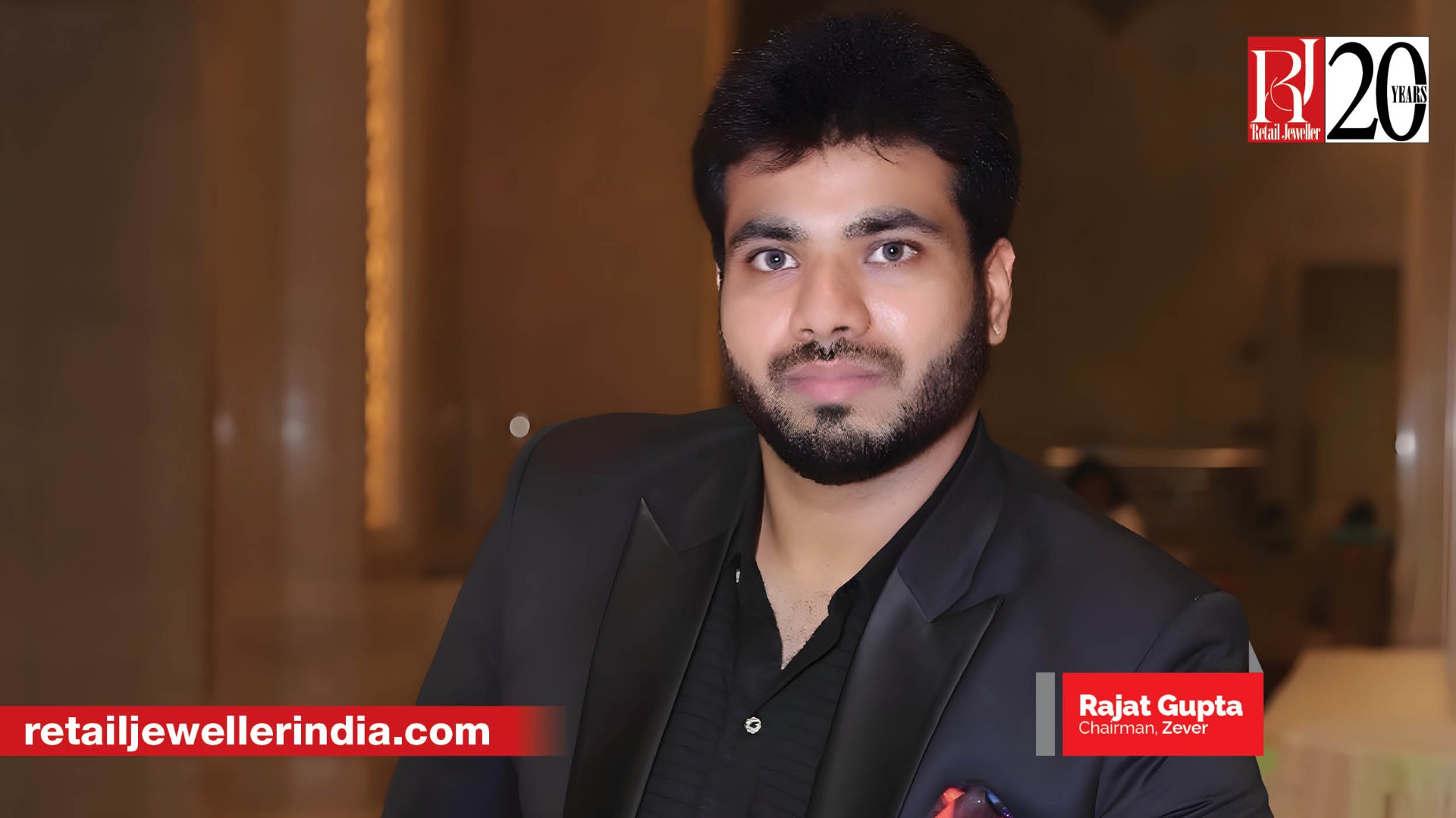

-Rajat Gupta, Chairman, Zever, New Delhi
My store sits a few hundred metres away from Kohaat, a jewellery market that never slows down. National chains, aggressive local players, endless offers, walk-in traffic that jumps from one shop to the next looking for the lowest rate. From the outside, my place doesn’t look like much: a simple space, no frills, nothing designed to impress. But we’ve been here since the 1980s, standing in the same catchment and steadily growing while many “big names” have burnt bright and faded.
People often ask me how. The answer is almost old-fashioned: I trust transparency more than I trust discounts.
The biggest shift I’ve seen is how quickly the word “discount” takes over a customer’s mind. Even before they study the piece, their first instinct is to ask for a reduction. The market feeds that thinking. One shop quotes 5 percent making, another drops to 4.9, another to 3.5. Social media is full of offers that look impossible to compete with. Naturally, customers start to believe jewellery is only about “how cheap can I get it”.
Hardly anyone asks what the real gold weight is, or whether the stone weight matches the tag, or if the diamonds are natural. It has become a race to the bottom, and the industry is the one that encouraged it.
My way of working pushes in the opposite direction. Every piece in my store carries a tag that states exactly what you’re paying for: gold weight, diamond weight, stone weight, total. The price you see is the price you get. The only change is the day’s gold rate and GST, and we explain that clearly. There is no backdoor negotiation, no two versions of the truth. We also refuse all “no bill, no GST” requests, even though several walk-ins still try. If we say we operate on honesty, the transaction has to start honestly too.
We have a fixed-price policy. If the tag says Rs. 1,24,100, that is the bill. The only exceptions are a handful of people who have been with our family for decades, where a 2–3 percent courtesy discount feels like respect, not sales strategy. Otherwise, there are no seasonal schemes, no clearance theatrics, no inflated MRPs. My margins are set to allow me to stand by a piece years later if the customer comes back.
And that’s the real reason transparency costs more upfront. Jewellery in our country comes with expectations of exchange, return and full responsibility. Gold can move from 62,000 to 1,18,000 within a year. Customers expect approval periods but want today’s rate when they finally pay. If I’ve promised a certain gold weight or a certain diamond grade, I must be able to honour it even if someone walks in at midnight with an emergency. If I cut corners to win the sale, I’ll pay for it later. So I don’t cut corners.
When a client says they saw “the same thing” cheaper in Chandni Chowk, I don’t panic. I break down my costing, explain the diamond quality and show them how every gram and every cent is accounted for. Sometimes they understand and stay. Sometimes they walk. Either way, I won’t win the day by being the cheapest. I want to win the decade by being the most honest.
“When a client says they saw ‘the same thing’ cheaper in Chandni Chowk, I don’t panic. I break down my costing, explain the diamond quality and show them how every gram and every cent is accounted for. I want to win the decade by being the most honest”
-Rajat Gupta, Chairman, Zever, New Delhi
One more thing that sets us apart is stock ownership. Many retailers in crowded markets rely on sample pieces or the old box system, where suppliers keep stock with them. We chose the harder route. Every item you see here is ours. We’ve built manufacturing tie-ups in Mumbai and Hong Kong, and we do not depend on borrowed trays. If someone wants to see a Rs. 10,000 ring or a Rs. 2 crore bangle, I have the actual piece—not a promise. It demands higher investment, but it builds far deeper trust with serious buyers.
We also made a conscious decision to stay with natural diamonds only. When lab-grown entered the market, it created noise that confused customers. A 2 lakh solitaire look for a fraction of the price is tempting, but the resale is close to zero. I’d rather sell fewer pieces but stand by them years later. I want customers’ next generation to come back and still feel respected, not misled.
We are among the oldest jewellers in our catchment. When we opened, the entire stretch was empty; today it is hard to find parking. Social media has put thousands of designs on every phone. Customers know more, demand more, question more. Yet many families still come to us generation after generation. New customers walk in, see the variety and the tags, listen to our policies, and realise this isn’t a “hit-and-run” shop. This is a business built on consistency.
Even in a market obsessed with offers, our fundamentals haven’t changed: sell what you promise, price what you deliver, respect the customer enough to be clear, and respect yourself enough not to cut corners. Discounts bring footfall. Integrity brings loyalty.
In my experience, loyalty lasts longer.
As told to Pratyasha Kumari
The Retail Jeweller India Magazine