


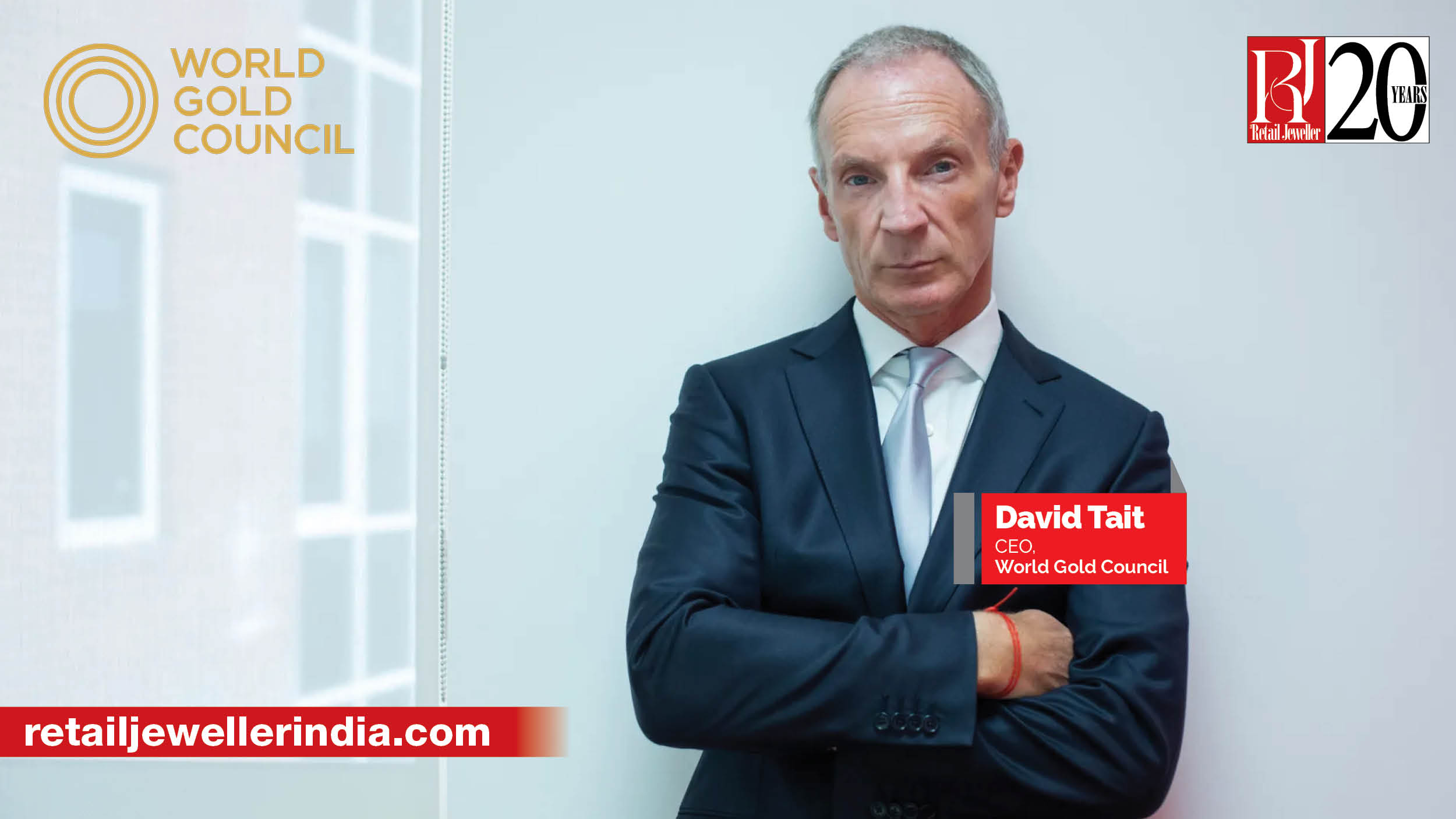

In a recent conversation with The Retail Jeweller, David Tait, CEO, WGC brings a direct, ground-level view of the challenges and opportunities shaping gold’s future. He speaks about the shift toward investment-led demand, the urgency to formalise artisanal mining, and the rising expectations of digital-first consumers. For the trade, his message is cautionary and catalytic. by Maithili Patange
Edited Excerpts:
A lot is changing in the gold ecosystem today. What is the one shift in consumer behaviour that has surprised the global industry the most?
The biggest shift this year has been the sharp move towards investment bars and coins, away from jewellery-led purchases. Price is one factor, but price itself has been driven by geopolitical friction, economic uncertainty, rising debt levels and a general sense of global tension. Consumers who have traditionally bought jewellery are now choosing to diversify their portfolios by holding gold in different forms.
We’ve also seen the impact of this shift in the growth of gold ETFs over the last 12 months. So while some jewellery demand softened, that slack was absorbed by investment-led products. This behavioural change has been one of the most notable trends of the last two years.
From your vantage point, what is one global truth about gold that the industry still hesitates to confront?
Artisanal gold mining. Nearly 20–30 million people depend on artisanal mining worldwide. It represents close to 130 billion dollars in value every year, and a significant proportion of that flows into the hands of bad actors.
We cannot outlaw artisanal mining. People need to survive. But we must bring this gold into a formal, transparent structure. If we redirect this gold through legitimate channels, we can eliminate mercury use, protect local environments, reduce child labour and stop the trafficking that occurs around these mining hubs.
This is the dark underbelly of the gold industry, and acknowledging it is the first step. My mission is to create systems that move this gold into the formal economy, where it no longer fuels destructive supply chains.
That brings us to the integrity of gold supply chains. How should the industry strengthen confidence in gold’s provenance?
Integrity is the single most important pillar the gold industry must build on. In 2022, the World Gold Council, alongside the London Bullion Market Association, created a global database for responsibly sourced gold. Before that, there was no central system to verify the provenance of gold. Coming from investment banking, I found that unbelievable.
Today, all large-scale mines and refiners we work with are on this database. Major banks and institutions are joining too. Over time, this will become ubiquitous. Every consumer, retailer and investor will be able to check the origin and responsible-sourcing status of the gold they buy.
And here’s the reality: in the future, if your gold isn’t on this database, your market access will shrink. That’s deliberate. The industry has to move toward full transparency.
How is the next generation redefining the role of gold as an asset? And what does the industry need to unlearn?
Young consumers are far more comfortable with digital forms of ownership. ETFs are a perfect example. India has 1.5 billion people with phone access, but only a small fraction even knows they can buy gold electronically in seconds.
This generation will still buy jewellery and hold physical gold, but they will also embrace ETFs because they’re secure, simple and inexpensive. It’s a massive opportunity for India, which is starting from a relatively low ETF penetration base.
What the industry must unlearn is the assumption that gold ownership must always look the same. Younger buyers want convenience and transparency. They expect digital-first access, and the industry must speak their language. If I could change one thing about how the industry communicates with younger audiences, I would change the name “exchange traded fund.” It sounds technical and dull. Years ago, someone had the idea of calling them “gold bees.” If that had stuck globally, adoption would have been far faster. Young consumers want simplicity and relatability. The product is brilliant; the branding hasn’t kept up.
What is the one global retail innovation that gold markets cannot afford to ignore?
IAGES – the independent institution we’ve set up in India to raise wholesale and retail standards. The idea came from repeated conversations with jewellers who wanted marketing support, innovation support and surprisingly, leadership support. They needed a single, independent body to benchmark and accredit the industry.
So, we created it. This accreditation system will push high standards across the value chain and help consumers distinguish between accredited and non-accredited retailers. Over time, this will reshape consumer trust. It’s important that the public knows to look for this accreditation, because that’s how you protect your money.
Around the world, retail formats are changing fast. What is one retail practice you believe will not survive the next five years?
There is a real risk in the industry’s shift toward low-karat gold, often driven by rising prices. I understand the commercial motivation, but gold’s essence lies in its purity and intrinsic value. Diluting that weakens the product and undermines long-term consumer confidence.
The fastest race to the bottom is compromising purity just to make a sale. I urge retailers and manufacturers to maintain gold’s core standards and preserve what makes it unique.
Is there anything the global gold industry is falling short on that threatens customer confidence?
Retailers and buyers are not the issue. The real gap lies in the global governance of artisanal gold. This gold fuels criminal networks and is devastating water systems across Central Africa and Central America. Some gold-producing countries are now afraid of rising gold prices because they fear their citizens will abandon everything to dig, worsening environmental destruction.
This problem is bigger than the industry alone. It needs G7, G20 and governmental intervention. If we execute the World Gold Council’s proposals worldwide, we can protect ecosystems, safeguard human rights and bring billions of dollars into formal, ethical trade.
By Maithili Patange