



The platform translated the World Gold Council’s global research and market intelligence into actionable strategy for the trade, and decoded what will it take for retailers to capture India’s next phase of economic growth
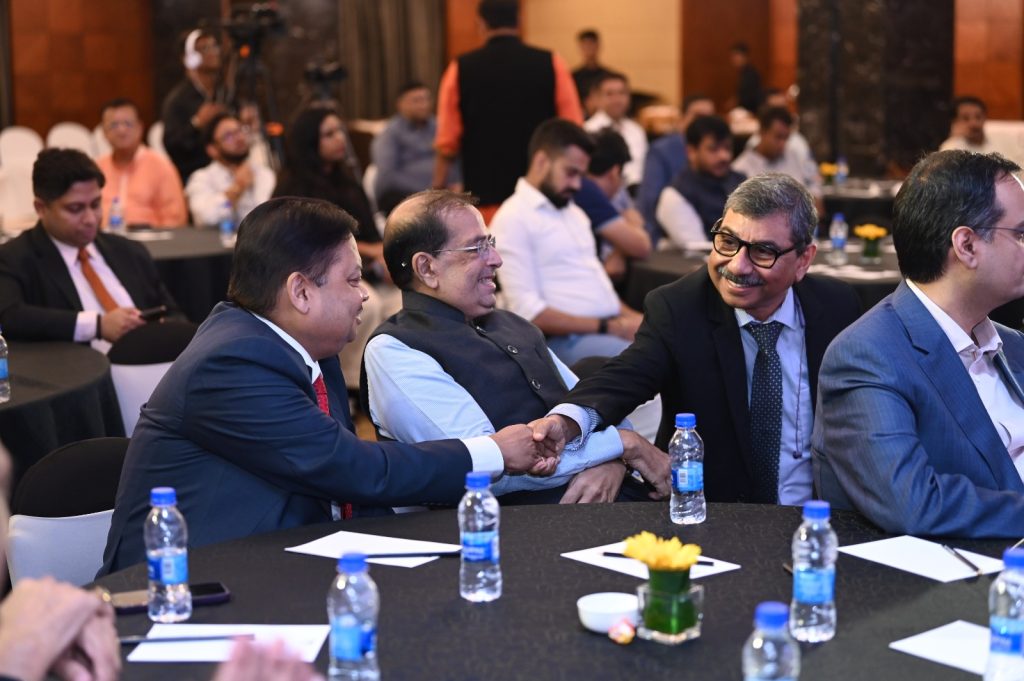
Kolkata: The World Gold Council (WGC) hosted the third edition of its India Gold Dialogue at The Park, Kolkata, with The Retail Jeweller as the event’s Trade Marketing Partner, bringing together retailers, manufacturers, regional representatives of the Gem & Jewellery Export Promotion Council (GJEPC), All India Gem And Jewellery Domestic Council (GJC), India Bullion and Jewellers Association (IBJA), National Stock Exchange (NSE) and other apex bodies for a day of data-driven conversations on the future of the country’s gold business, making it one of the highest-quality gatherings of jewellers in Eastern India. Positioned as a platform to translate WGC’s global research and market intelligence into actionable strategy for the trade, the Dialogue arrived in West Bengal at a moment when the industry is being asked hard questions: who is the next gold consumer, how should gold be sold, and what will it take for retailers to capture India’s next phase of economic growth.
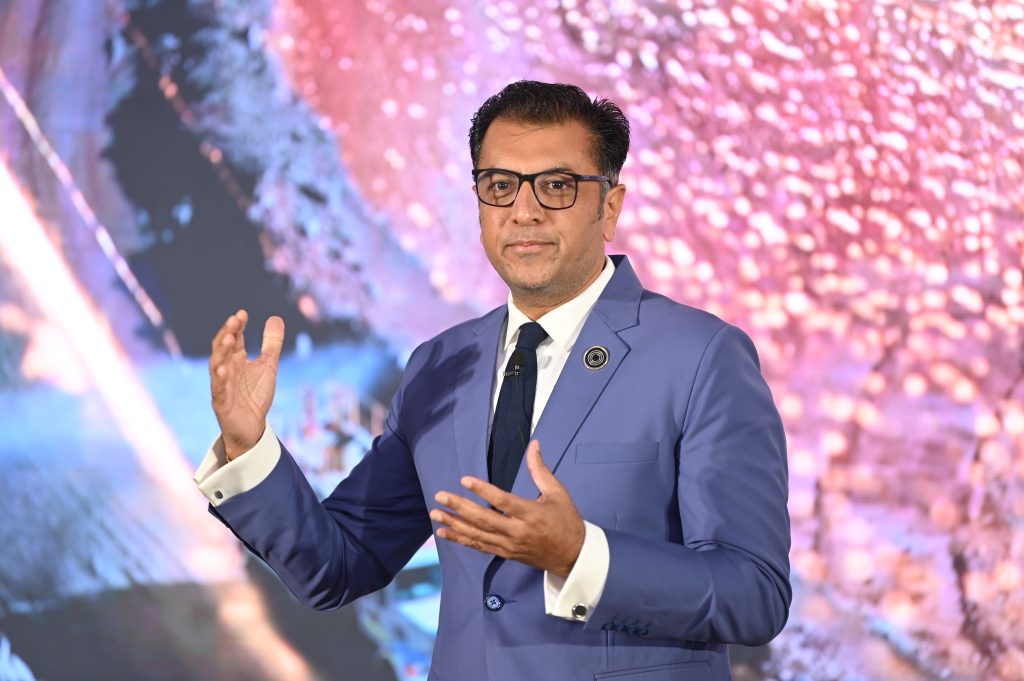
Opening the session, Sachin Jain, Regional CEO, India, WGC, framed the Dialogue around India’s demographic and economic trajectory. “India’s demographic dividend is unmatched — our median age is 28, and every second rupee spent in the coming years will be by a millennial or younger consumer. As disposable income rises, gold demand rises with it. This is the moment for our industry to visualize a five-times-bigger future and build toward it,” he said.
Jain’s central argument was one of scale: if India’s economy is projected to grow several times over the next two decades, the gold industry cannot afford to grow at a slower pace. Historically, WGC’s own data shows that every percentage point rise in per capita disposable income has translated into higher gold demand — a correlation that, Jain argued, retailers should be actively building their business plans around, rather than treating as a background trend.
He returned to this framing later in the session, positioning WGC not as an external observer but as a working partner to the trade. “This is our third India Gold Dialogue, and each time, my hope is the same — that we’re not just presenting data, but genuinely listening. World Gold Council wants to be an extended part of your team, a bridge that helps the industry unlock real opportunity, together,” Jain said.
One of the more provocative threads of the day came from Ankesh Jain, Head of Trade – Jewellery, WGC, who challenged retailers on how gold is currently priced and sold. “Almost 90% of India still sells gold as plus-labour, plus-making-charges, plus-tax — when our product and craftsmanship are premium. Through designer collaborations, a stronger 24-karat offering, and customisable gold accessories, we want to move the industry away from commoditisation and build real aspiration around gold for the next generation,” he said.
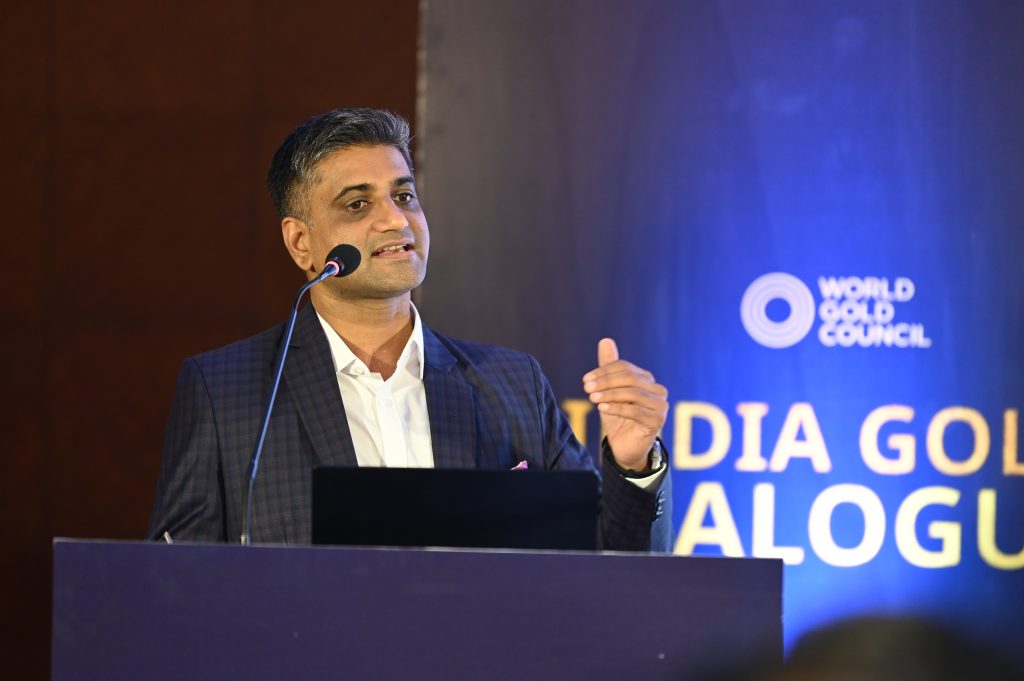
The point struck a chord with the room: several retailers in attendance later pointed to premiumization as one of the day’s most discussed ideas, agreeing that Indian jewellery — despite its craftsmanship — is still largely sold on a cost-plus basis rather than as an aspirational product. Jain’s session cited global case studies, including a Chinese jeweller that built a large, fast-growing business around 24-karat innovation within a few years — an example that several attending retailers singled out as a genuine takeaway to explore in their own businesses.
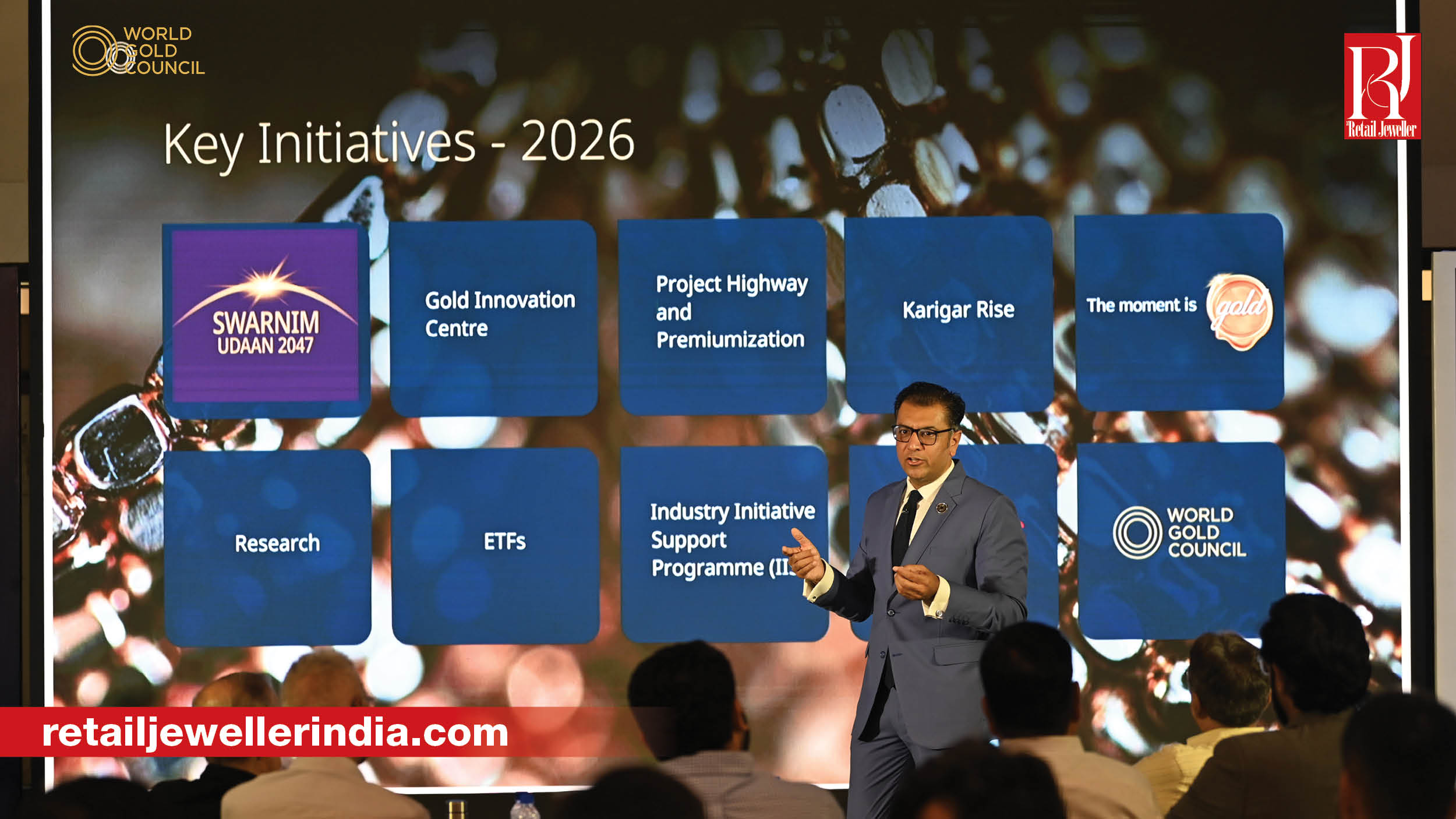
If premiumization was about how gold is priced, Arti Saxena, Head of Marketing, India, WGC, tackled how it is marketed — and to whom. Her session centred on WGC’s ‘Moment is Gold’ initiative, built around the insight that younger consumers still associate gold almost exclusively with major, infrequent occasions like weddings and Diwali, rather than as something to be worn and enjoyed regularly.
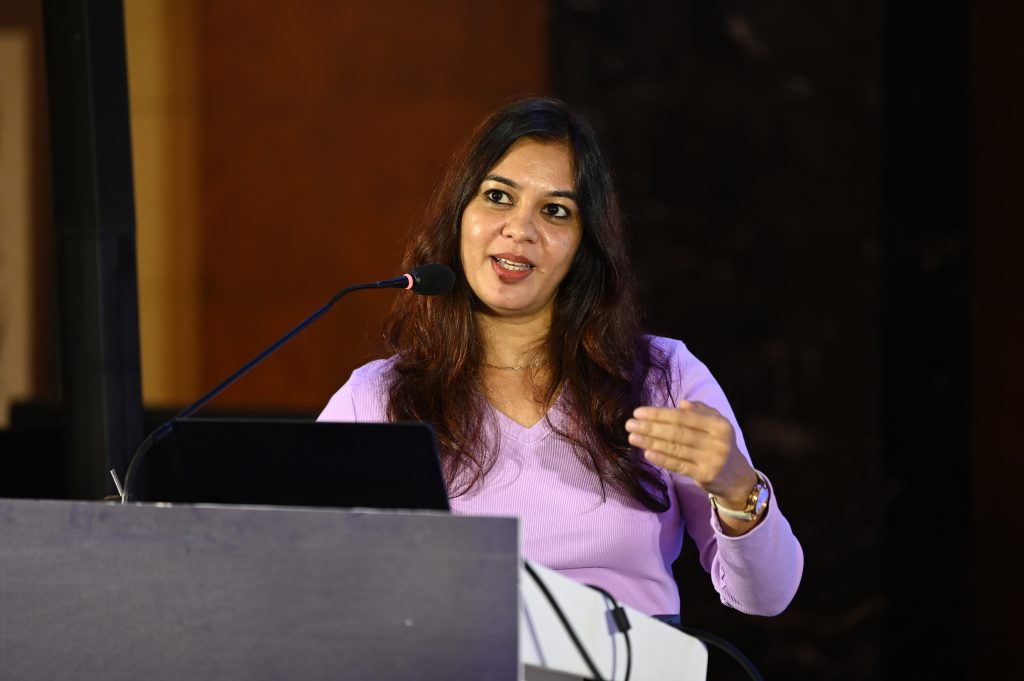
“Through ‘Moment is Gold,’ we’re moving gold beyond the classic wedding-and-Diwali occasion into everyday life. Why should gold stay locked away for one big day when it can be enjoyed and worn just like any other prized possession? We’re pushing the industry to explore and create new moments for gold,” Saxena said. The idea, she noted, is to move retailers away from discount-led, commoditised marketing and toward building fresh, everyday occasions for gold consumption — a shift aimed squarely at Gen Z and millennial buyers who don’t yet see gold as part of their regular lifestyle.
Kavita Chacko, Research Head, India, WGC, grounded the day’s conversation in fresh consumer research. Drawing on a survey of nearly 2,000 respondents, she outlined a market in transition. “Our latest consumer survey of nearly 2,000 respondents shows gold is increasingly viewed as a long-term financial asset, not just tradition. Consumers are adapting — trading down to lighter, financed pieces and exploring digital gold and ETFs — signalling a real opportunity for retailers to make gold easier to buy,” Chacko said.
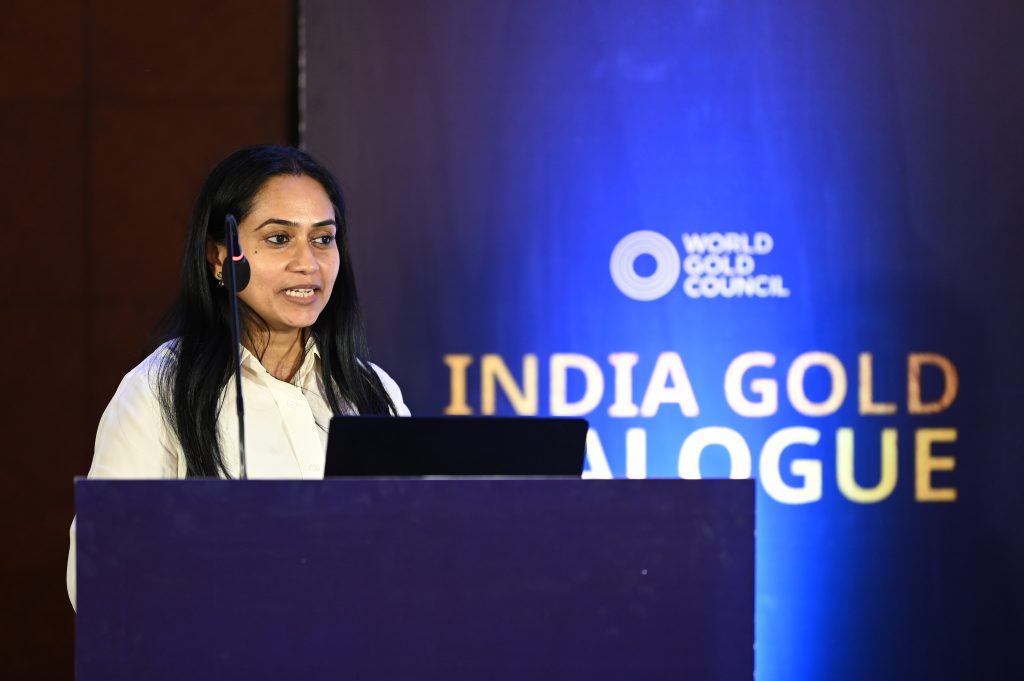
For retailers, the implication was direct: as consumers gravitate toward lighter-weight, more affordable, and more flexible ways to own gold — including financing and digital instruments — there is a widening opportunity to lower the entry barrier for younger and first-time buyers, rather than relying solely on traditional heavy-gold purchases tied to weddings and festivals.
Rupesh Kolwalkar, Deputy Global COO, WGC, used his session to lay out how the Council is backing these ideas with structural support. “Through our Industry Support Program, we’re investing in four key themes — worker upliftment, market innovation, India’s global positioning, and talent development for the trade. As the next generation looks elsewhere for jobs, we need the industry’s ideas and partnership to keep talent and innovation flowing into gold,” he said.
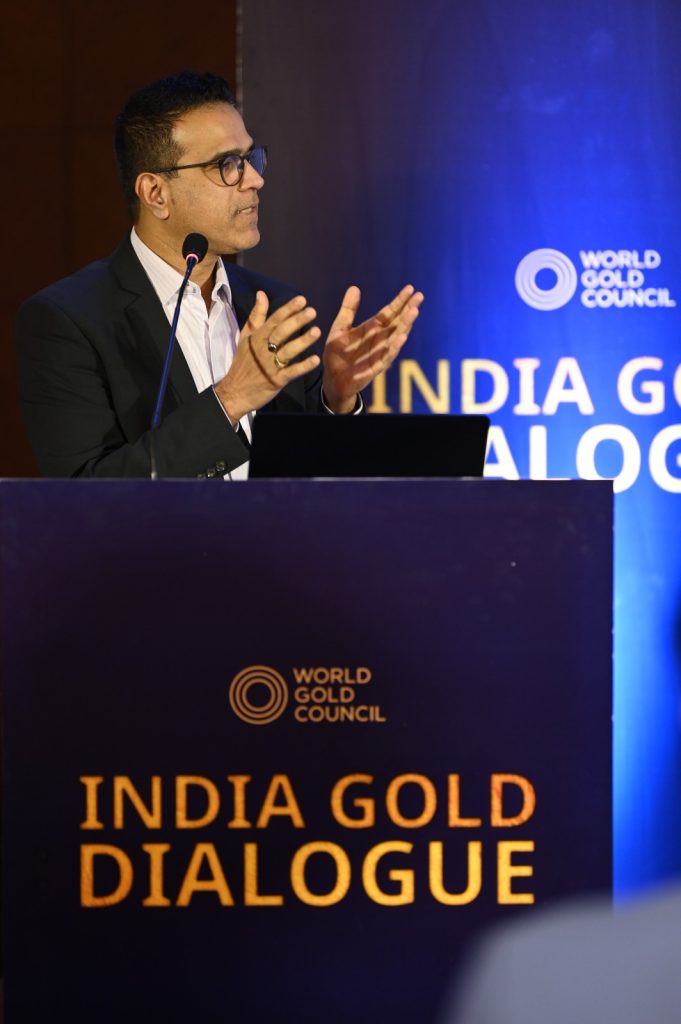
Kolwalkar’s session also touched on early discussions around a proposed workers’ park — a shared infrastructure initiative aimed at supporting artisans and craftspeople in the gold trade, with feasibility studies already underway. The idea drew interest from Kolkata-based retailers present, some of whom offered to co-invest in bringing such an initiative to the city.
The retailers in the room did not hold back their enthusiasm. Ratan Lal Agarwal, Founder and Director, RR Agarwal Jewellers, pointed to WGC’s ready-to-use marketing assets as an immediate win: “WGC’s marketing initiative — where we can download and brand-ready these campaigns for our own showroom — is excellent. We plan to bring this back, train our salesmen better, and explain these ideas directly to our customers,” he said.
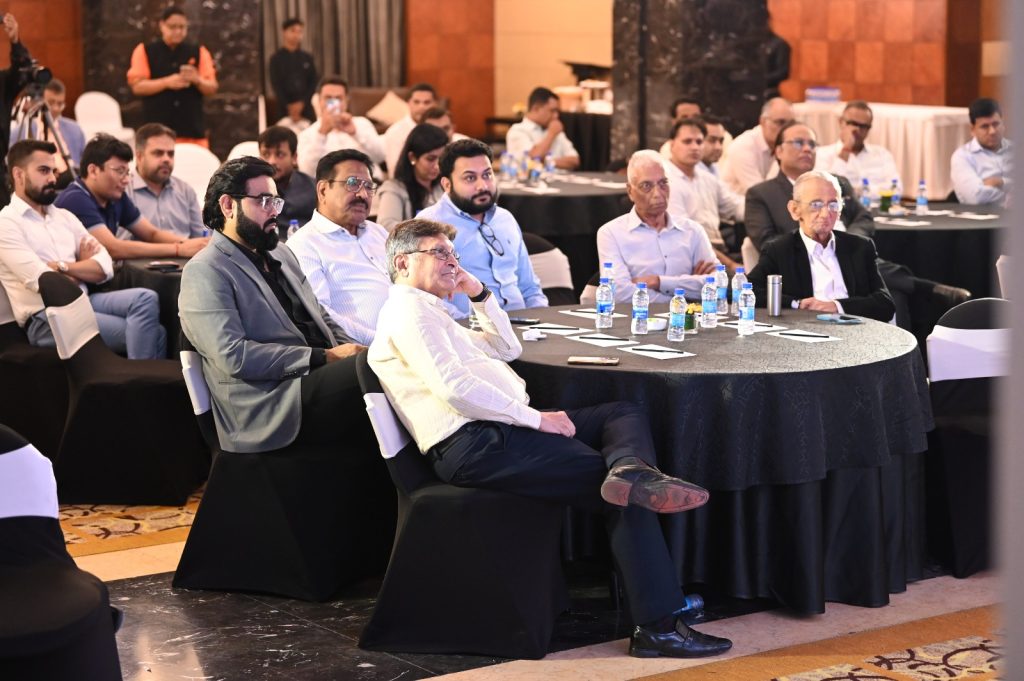
Prateek Duggar, Director, Indian Gem and Jewellery Creation, called the session “a fruitful session”, citing Jain’s global data points and the 24-karat case study as concrete takeaways. Rupchand Sawansukha, Director, Sawansukha Jewellers, attending his first WGC meeting, said he hoped for the Dialogue to be held two to three times a year given the clarity it offered on “guiding customers through buying, safekeeping, and understanding gold’s value”.
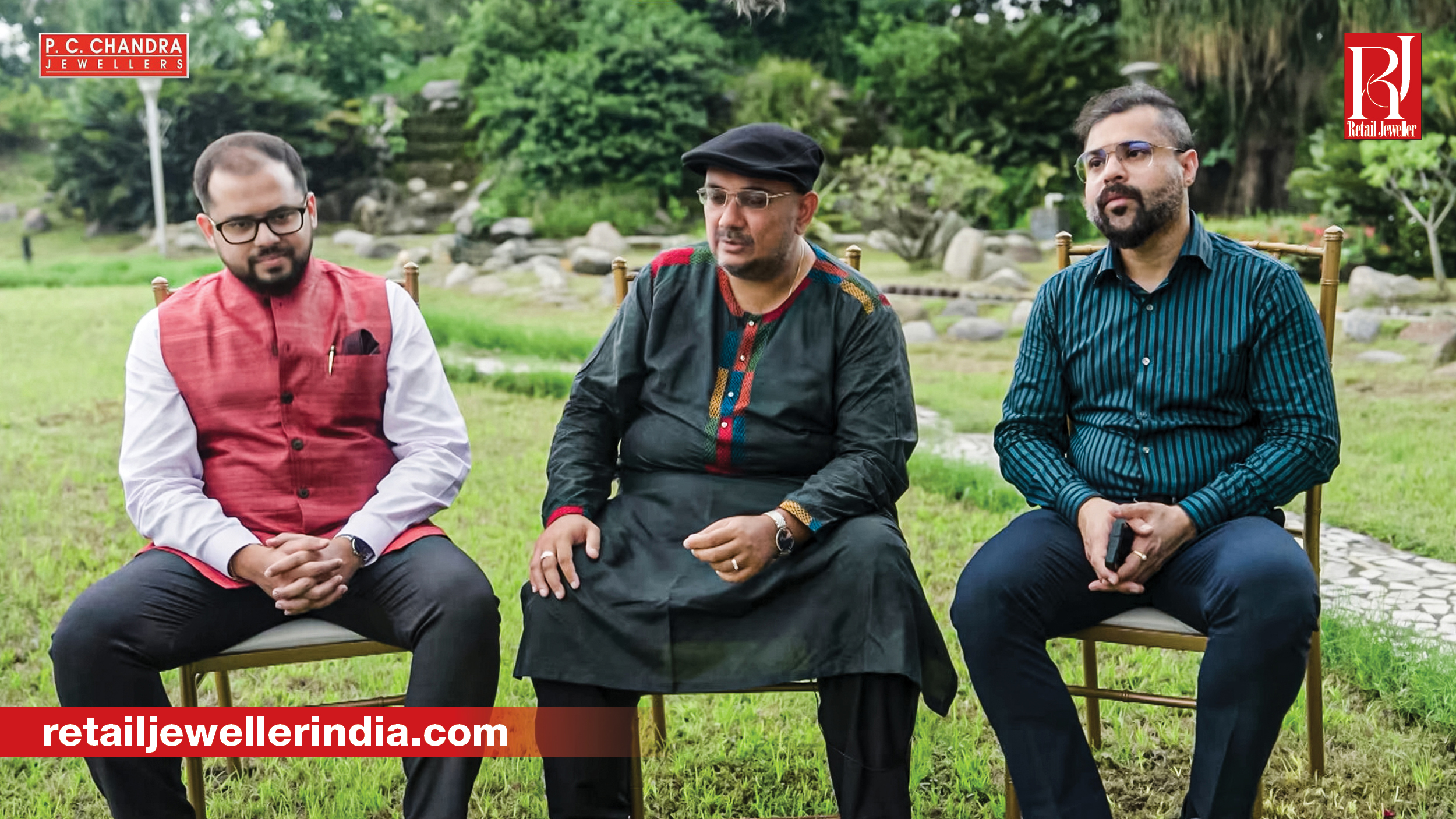
Suvro Chandra, Director, PC Chandra Jewellers and Bachhraj Bamalwa, Partner, Nemichand Bamalwa & Sons, both pointed to a shift already underway — describing WGC’s current direction, and its unconventional ideas around marketing and promotion, as something the industry needed to actively participate in rather than simply observe.
Samit Bhatta, Co-Founder & Publisher, The Retail Jeweller, summed up the day’s value for the trade: “The India Gold Dialogue is exactly the kind of platform our industry needs. It provides retailers and manufacturers with direct access to the World Gold Council’s research-driven strategic insights, enabling them to better understand evolving consumer trends and unlock new opportunities for growth. These meaningful conversations help businesses innovate, adapt to changing market dynamics, and build stronger, future-ready enterprises around gold,” he said.
Written By Maithili Patange
Retail Jeweller India News