



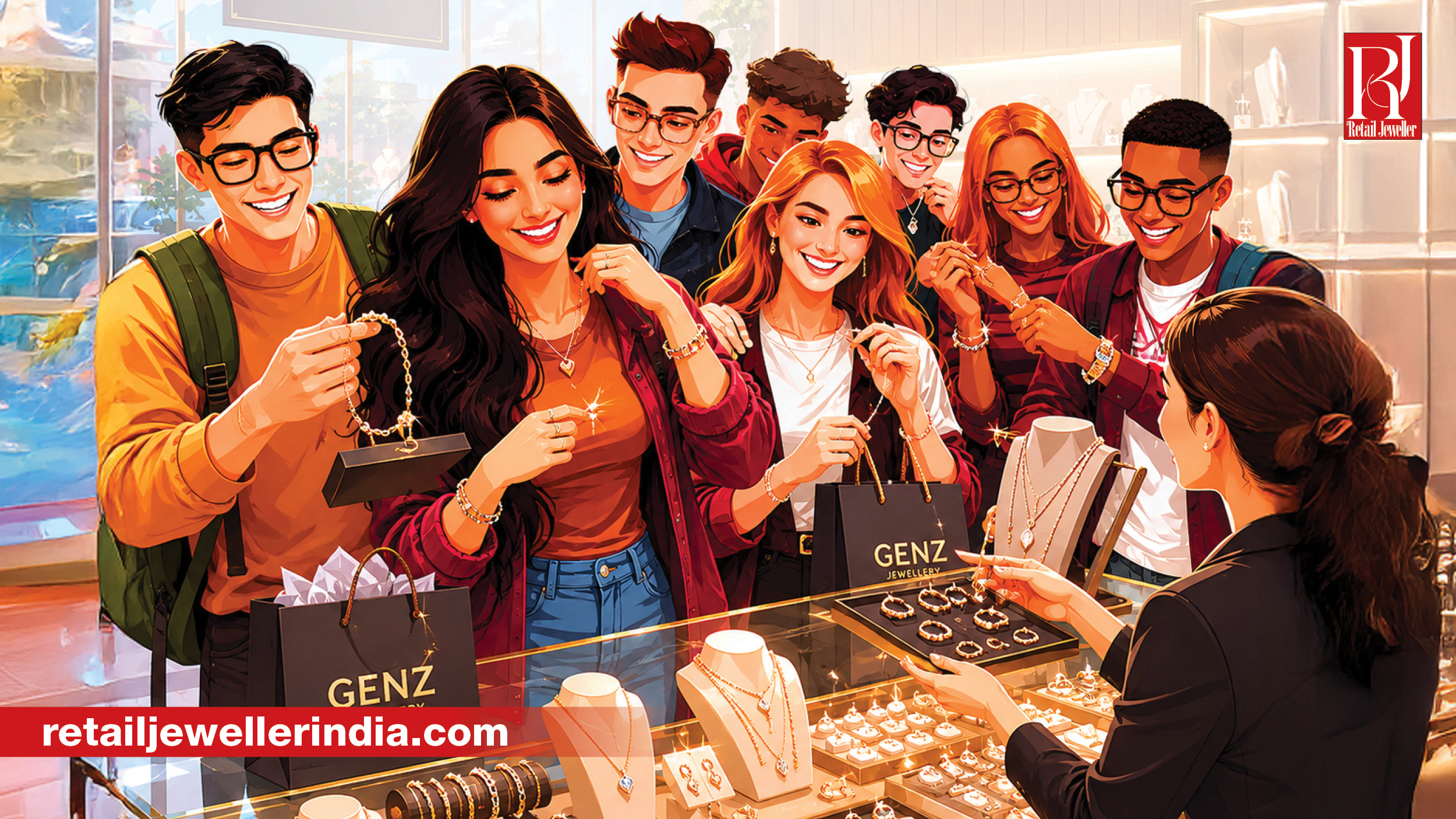

For decades, the jewellery industry built its playbook around traditional occasions, investment value and generational trust. That playbook still matters, but it is no longer the only one in play. A new buyer has arrived with her own language, her own occasions, and her own sense of what jewellery should mean to her. She is looking for jewellery that makes her Tuesday. She is not waiting to be eased into the category. She already knows what she wants. Does the industry know her?
Walk into any mid-size city in India today and you will find a young woman — probably in her mid-twenties, probably earning — doing something the jewellery industry did not fully plan for. She is buying jewellery for herself. Not for a wedding, not for a festival, and not because someone told her to. She is buying it the way she buys anything else she loves: because she saw it on Instagram, because the design spoke to her, because she had some money she wanted to spend on something that would last. She is the Gen Z consumer, and she is already here. Snap Inc. report, stands at USD 860 billion and is projected to rise to USD 2 trillion by 2035. This generation already accounts for 43% of India’s total consumption. They are not a future audience. They are a present one, and they are already making their own choices — including about jewellery.
THE CONSUMER HAS CHANGED, AND SO MUST THE CONVERSATION
The most important thing to understand about the Gen Z jewellery customer is not her age — it is her mindset. At Hazoorilal Legacy in Delhi, Sonal Narang, the Creative Head and Founder of Zoori, a sub-brand, describes watching the change unfold in her own store. “Earlier, jewellery was measured by what it contained — the gold weight, the number of carats. Now this generation measures it by how a piece fits into their life. Will it go with everything? Can I layer it? Does it feel like me? That is a completely different conversation,” says Narang. Supriya Kataria, the Founder of Kumari Fine Jewels, a design-led omnichannel fine jewellery brand built entirely to capture this shift, echoes the sentiment, “Customers at Kumari first connect with us through design and wearability rather than asking about gram weight. They are looking for lightweight, versatile, stackable jewellery rather than for occasional wear. That shift is very clear, and it is here to stay,” she says. Kumari has seen 20% year-on-year growth since its inception in 2022 and is targeting 25 stores in the next three years.
This shift from volume to versatility is evident across the market, but Narang observes a fundamental change that goes beyond design utility — it is a change in what motivates younger customers to buy in the first place. When Narang launched Zoori in 2023, the assumption was that self-purchase would be driven by milestones: a promotion, a first salary. What she found instead is that younger customers were creating occasions that did not exist before. A good week. A mood. A version of themselves they wanted to mark in some way. And that has changed what Zoori designs for and how it sells. “What I did not expect was how personal and private the purchase became.
The purchase needs no external validation, no audience, no event. It is entirely self-directed, marking a milestone no one else even knows about — something significant only to them. She is no longer justifying the purchase; she is simply treating herself,” says Narang. Kataria offers a different kind of evidence for the same shift — not in why younger customers are buying, but in how they are arriving. “Earlier, a customer would walk in with her mother or her aunt — someone to validate the purchase. Now she walks in with her friends, or alone. They arrive having already researched the collection on Instagram, saved references, and followed the styling content. That shift in group composition and customer confidence is the most tangible marker of what has changed,” notes Kataria.
The self-purchase shift has a particular texture worth noting. It is not just that younger women are buying for themselves; they are now making unconventional choices reflecting their desire to stand apart and express themselves through these adornments. Trisha Datwani, who founded Anmol Accents in 2025, noticed a gap while watching her own social circle. Her friends — women in their late twenties and early thirties — were wearing precious jewellery every day. Just not the kind that most fine jewellery stores are built to sell. “They are mixing and matching, wearing pieces to business meetings, lunches, and nights out, prioritising style over investment potential. Yet the market has very little for them in the space between fast fashion and heavy occasion jewellery. That was the space Anmol Accents was built to fill,” says Datwani. Datwani arrived at this revelation through another, more personal route — and her experience since launch has produced the sharpest lesson. When building Accents’ first collections, she made calculated bets on which designs would lead and which would follow. “The designs I considered most experimental — furthest from what conventional wisdom said a first-time fine jewellery buyer would want — sold fastest. That told me everything.
This customer is not tentative — she knows what she likes, she is not afraid of it, and she will buy it if you give it to her. The assumption that she needs to be eased in gently is wrong,” says Datwani. The Gaja elephant collection, rooted in Anmol’s own heritage but redesigned in a bold, contemporary idiom, became the brand’s strongest performer. Datwani now wants it to do for Anmol Accents what the Bulgari Serpentine did for Bulgari: become the signature this customer knows the brand by, returns for, and tells her friends about.
WHERE IS THE YOUNG BUYER GOING TODAY?
A significant and growing share of the young buyer’s first jewellery relationship is being formed not with traditional fine jewellery stores, but with a category of brands that were built specifically around how this consumer thinks. Over the last five years, the space between costume jewellery and fine jewellery has been claimed by design-forward, accessible, daily-wear, digitally native start ups — and the market data makes the scale of this shift clear. India’s demi-fine jewellery market was valued at approximately USD 238 million in 2024 and is projected to grow at 12% CAGR through 2030, according to Grand View Research — nearly double its current size.
The accessible premium segment — demi-fine and lab-grown diamond jewellery together — is already growing at two to three times the rate of the overall market led entirely by digital-first start-ups. The fastest-rising price tier is under exactly where a first-time independent buyer is comfortable spending. A few of the notable brands driving this — Giva, Kushal’s, Palmonas, Olio Stories, and others — have built their competitive advantage not on material or craftsmanship alone, but on a combination of design relevance, accessible price architecture, and deeply intelligent marketing.
Palmonas, founded in 2022 and now valued at over Rs. 126 crore after its Shark Tank appearance, fulfilled over 6.5 lakh orders in three years, driven primarily by its demi-fine collections. In FY25, it reported revenues of approximately Rs. 39 crore, turning profitable — a brand that did not exist four years ago. GIVA, which started with silver, recorded revenue of Rs. 518 crore in FY25 and raised Rs. 530 crore in a Series C in June 2025. It has since expanded into 14K and 18K gold — because the customers it built loyalty with in silver trusted it enough to follow it up the price ladder. As its founder Ishendra Agarwal has noted, ‘silver is the Gen Z gold’ — and GIVA has used that insight to build a customer base it now graduates into higher-value gold. Then there are several brands that are not competing on scale but creating niche communities of buyers.
Case in point: The Line by Natasha Khurana, a digital native brand with studios in Dubai, Delhi and Mumbai is a fine jewellery label built around a very specific visual and emotional world that a younger, design-conscious customer immediately recognises as hers. Sky Gold and Diamonds, a mainstream manufacturer based in Mumbai, offers one of the most revealing windows into how the Gen Z shift is being felt upstream, at the manufacturing level.
Akash Talesara, CEO of Sky Gold and Diamonds, watched the demi-fine category grow and asked a question: if younger customers are choosing non-precious jewellery for its design, what happens if you give them that same design language in precious metal? The result is a collection incorporating crochet, resin, woodwork, and art-inspired elements — inspired by Dior’s reimagining of everyday materials and by India’s own regional craft vocabulary. Sky Gold is now actively investing in sourcing new materials, developing artisan partnerships for the crochet elements specifically, and exploring further material innovations that keep the gold component minimal while delivering a fashion-forward finish. The collection is already drawing interest from both independent boutique retailers and larger chains, with demi-fine brands also approaching Sky Gold for manufacturing — a clear signal that the design gap between precious and non-precious jewellery is closing faster than the trade may have anticipated.
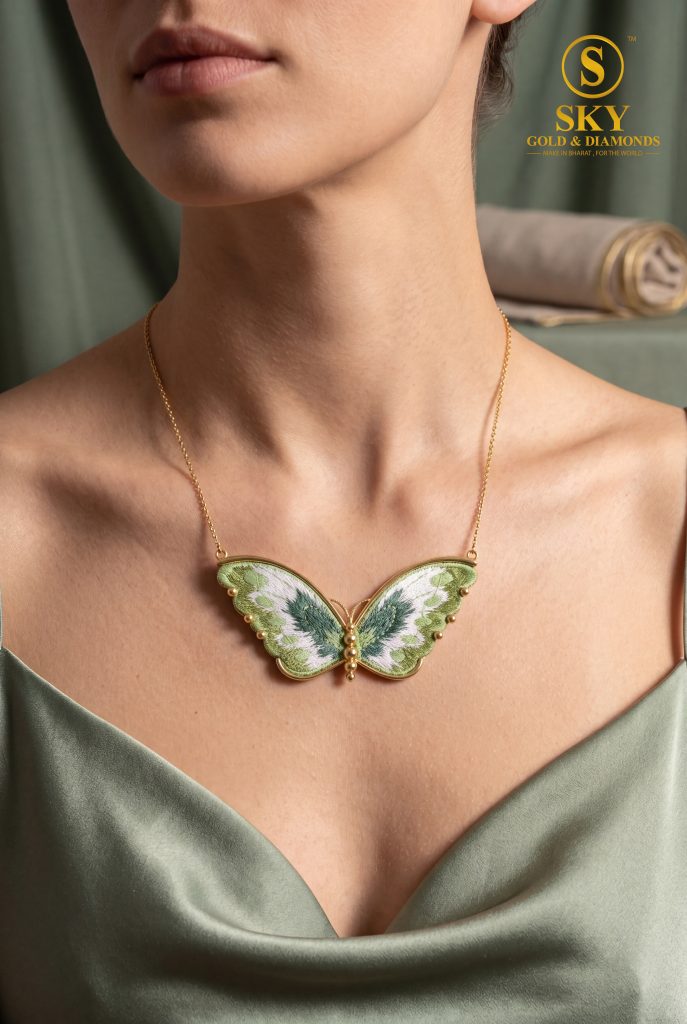
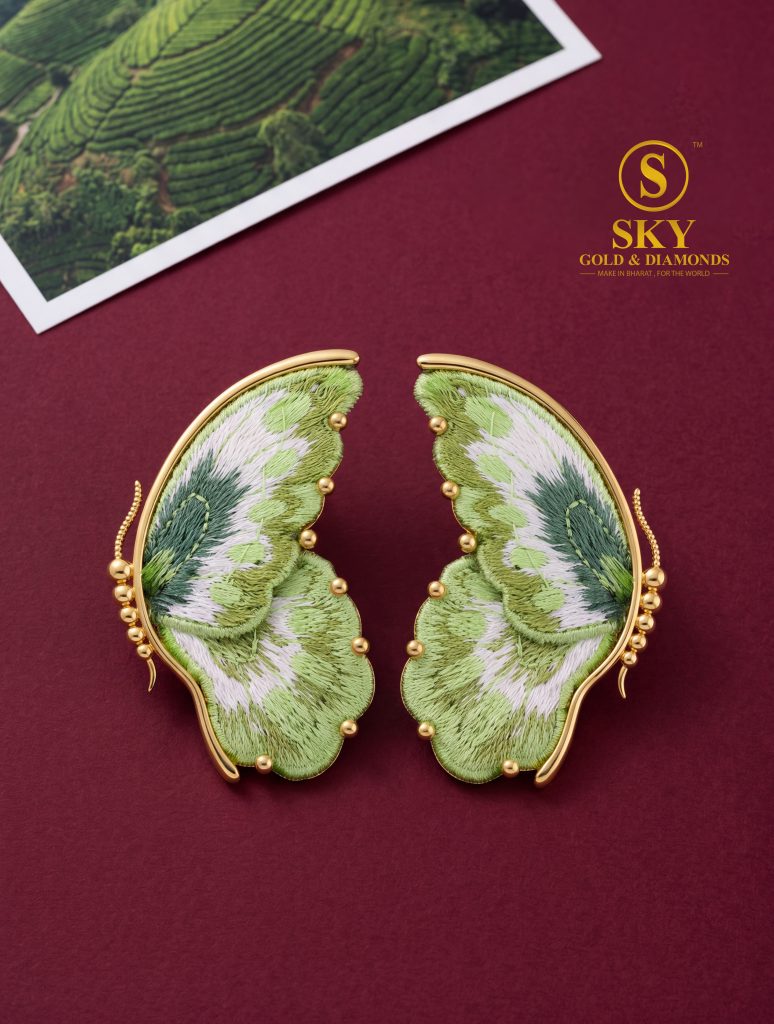
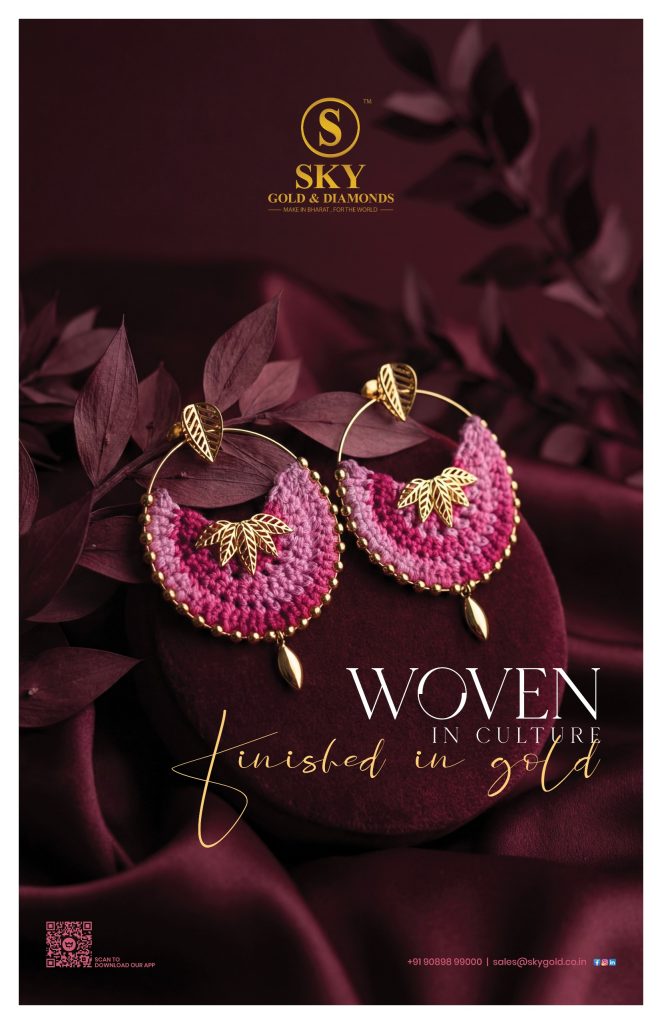
“The new generation does not see gold as precious as the way the older generation did. For them, a holiday is more exciting than buying gold. We have to stop thinking the way we thought for years and create tools to sell to a customer who is more fashion-driven and more customisation-oriented — that is the whole thought,” says Talesara. For the traditional jewellery trade, this is the market reality: the Gen Z customer’s first relationship with jewellery is increasingly being formed by brands that did not exist a decade ago, and that have built specifically around how she thinks. The opportunity for legacy retailers and fine jewellers is not to replicate what these brands do — but to understand what they have revealed about the customer and to build their own answer.
BUILDING THE RIGHT DOOR FOR A NEW CUSTOMER
The most deliberate strategic response to the younger customer among traditional jewellers has been the creation of sub-brands — dedicated identities built not to compete with the parent brand, but to offer a different kind of entry point. The thinking is not complicated: if the main store feels too formal, too expensive, or too removed from her world, build her something that doesn’t. And then make sure it leads, when she is ready, to the same house. Two of the most clearly articulated examples of this model are Mia by Tanishq and Gargi by P.N. Gadgil and Sons.
Mia, which launched as early as 2011, was the first brand in India to focus specifically on fine jewellery for working women, crafted primarily in 14K gold under the sub-Rs.1 lakh price point. Its business head Shyamala Ramanan describes Mia as a ‘recruiter brand’ — a term that has since become the most useful way of understanding the sub-brand’s purpose. ‘Gen Z comes in because Mia is a far more open and friendly format,’ she said in an interview with The Retail Jeweller. ‘There is no fear. We recruit people for Tanishq.’ The brand recently crossed Rs. 2,000 crore in revenue and is expanding aggressively into Tier 2 and Tier 3 markets, where — in Ramanan’s words — younger consumers want the same experience and design as metro shoppers, and are getting it.
Gargi by PNG, launched in 2021, operates in the everyday and occasion-wear fine jewellery category — brass, silver and lightweight diamond pieces, designed for a buyer aged 20 and above. Now at 100+ stores with 102% revenue growth and 101% profit rise in Q2 FY25-26, Gargi has followed a similar blueprint: fashionable, accessible, omnichannel, and explicitly positioned for consumers aged 20 and above who want something between fashion jewellery and heavy fine jewellery. The sub-brand model’s strategic logic extends well beyond the large listed players.
Tribe by Amrapali, a silver jewellery brand launched in 2013 in Jaipur, is one of the earliest examples of a boutique fine jewellery house doing this intentionally. Tarang Arora, CEO and Creative Director of Amrapali Jewels, made the decision long before it was fashionable to talk about Gen Z — because he could see younger customers engaging with the brand from a distance: loving the aesthetic, not yet ready to buy. Tribe was built as a bridge. “The most important learning is that you have to make jewellery feel personal and accessible. The moment you reposition it as something that reflects who you are today — something you can buy for yourself, wear every day — that is when younger consumers engage. It is about shifting the mindset from jewellery as inheritance to jewellery as self-expression,” says Arora.
Tribe operates on a content-first model — discovery through social media and influencer-led content, conversion through e-commerce and in-store. The pathway from Tribe to Amrapali is both intentional and tracked through CRM: events, previews, curated store experiences that gradually introduce Tribe customers to the larger Amrapali world. The trigger for graduation, Arora observes, is rarely income. It is confidence and familiarity — the feeling of trusting the brand enough to go deeper into it. There are also newer independent fine jewellery brands that operate differently, through a very precise communication and experiential strategy that attracts the Gen Z customer by making her feel instantly seen and understood.
EISH by Anand — founded by 22-year-old Ishika Anand as an offshoot of the 70-year-old Anand Jewels in Indore — is one of the clearest example. The founding story of EISH is itself instructive: when Gaurav Anand, Owner, Anand Jewels, shut the store early one day to show Ishika the full inventory and test the relevance of the merchandise for a new-generation of consumers she selected just 10% of what was there. Her friends who came in shared the same reaction. It was, as her father describes it, a revelation of what this generation actually seeks. What followed was not a sub-brand, but an entirely new retail concept: a 4,150 sq ft 18K-only boutique at Indore’s NRK High Street, with over 7,000 high-fashion fine jewellery pieces ranging from Rs. 15,000 to Rs. 1.5 crore.
Similar thinking is visible in the Challani Group in Tamil Nadu, which built Lille and Fedha after observing that younger customers — specifically those in college and early careers — were simply not finding a relevant entry point in the main Challani store. Lille, a minimalist 18K gold-anddiamond brand starting at Rs. 3,999, was designed specifically for a woman who wants to own her first piece of precious jewellery on her own terms. Fedha, a contemporary silver brand, extends that access to an even earlier stage. Both sub-brands are staffed by young, trained teams who understand the language, reference points, and pace of Gen Z interactions. A savings scheme — Rs. 5,000 per month, with the 11th instalment covered by Challani — creates a financial pathway specifically designed for someone at the beginning of her earning journey, not yet in a position to buy at the main store. Already, 10–15% of sub-brand customers are graduating to higher tiers. “We built Lille and Fedha after observing that younger customers — specifically those in college and early careers — were simply not finding a relevant entry point in the main Challani store. Already, 10–15% of sub-brand customers are graduating upward,” says Goutham Challani, Partner, Lille by Challani and Fedha by Challani.
Zoori by Hazoorilal Legacy works somewhat differently — not as a separate store, but as a dedicated section within every Hazoorilal Legacy store, with its own visual merchandising, a separate Instagram page, and staff trained in a new vocabulary that the main floor never needed. The crash.club is built on the same model. A sub-brand with its own distinct identity, in the stable of C. Krishniah Chetty Group (CKC), a one-and-a-half-century-old luxury heritage jewellery brand from Bangalore, operating from the parent brand’s flagship store. “An entering consumer in the silver, lab-grown space will move up to the gold and natural diamond space sooner or later. These categories are economical and fashionable — so they take it now, and then they grow into the category. Crash.club is where that journey begins,” says Chaitanya V. Cotha, Executive Director, Crash Club by CKC.
The brand most recently introduced green rhodium-plated 18K lab-grown diamond jewellery), which looks startlingly unlike conventional jewellery — and sold 15 pieces in its first month of launch at Rs. 5–7 lakhs per piece, drawing in both existing CKC customers experimenting with lab-grown and entirely new customers who might never have entered the main store. Anmol Accents also operates as a shop-in-shop within Anmol, with a one-price model — no discounting — that Datwani has used to build a specific kind of trust with younger buyers. The price range starts at Rs. 50,000.
The e-commerce platform, launched two months ago, is already performing well for pieces up to Rs. 2.5 lakhs. And the brand’s earliest communication — a series of 50 weekly poems about the modern woman, published on the main Anmol Instagram before Accents got its own page — was an explicit attempt to build an emotional connection before a commercial one. “The industry is becoming very corporate — volume, the same designs repeated a hundred times. But today’s woman wants individuality. She does not want to look like her friend. She wants something that makes her feel good about herself, that is genuinely different and hers,” says Datwani.
And then there are jewellers who are simply reshuffling the merchandise to make it more relevant to the youth. Managing Director, Siddharthaa Sawansukha, Sawansukha Jewellers in Kolkata, says, “We have consciously restructured the product mix — around 40% of the store’s merchandise now sits within price points accessible to younger, first-time buyers. We want to be genuinely present in her consideration set, not just aspirationally visible.”
THE EXPERIENCE IMPERATIVE
What is most instructive for traditional jewellers is that the first-generation brands built over the last decade are not just about materials or pricing. These brands understand that the discovery journey for this customer is almost entirely visual: she is not reading about a brand, she is feeling it — through the imagery, the styling, the aesthetic coherence of every post and campaign.
“The Line is not leading with price or material. It leads with a mood, a sensibility, a woman the customer sees herself in. That is what creates the initial pull,” says Natasha Khurana, Founder, The Line. The founders of sub-brands from the stable of legacy houses also concede that the brand influence on the customer begins long before the customer arrives at the store; the experience begins on social media. “The interest gets piqued online — on our website, on Instagram, it all builds up. And then when she comes to the store, it’s important that the two converge into a seamless experience,” says Narang.
And it is more complex than it sounds- the digital face of the brand has to be as intentionally designed as the retail floor layouts, counter conversations and visual merchandising. By the time a younger customer walks into a jewellery store, the relationship has already begun. She has followed the brand on Instagram, saved a design she loves, watched how the pieces are styled, and formed a clear picture of the brand’s world. The experience inside the store is not the beginning of the relationship — it is the moment it either deepens or disappoints. What the physical environment must do is confirm that the brand she imagined and the brand she finds are one and the same.
This is the experience challenge. Not décor, not hospitality in the abstract — though both matter — but the coherence of a brand world across every touchpoint from the first digital encounter to the moment she decides to buy. It requires the brand to make deliberate choices not just about what the store looks like, but about how it sells, what language it uses, how the staff engage, and what the customer feels when she leaves. Sawansukha is clear that this kind of effort only works when every piece of communication and merchandising is aligned. A piecemeal approach — a campaign here, an event there, without the inventory or the in-store language to back it up — is, in his view, the single biggest trap brands fall into.
For legacy brands, the challenge of building this kind of coherent world is real but not insurmountable. At EISH, with minimalist interiors, curated, sparse displays, lounge seating, and coffee spaces, the store is built on the conviction that the luxury experience need not mean prohibitive pricing — and that a younger customer who might walk past a traditional jewellery store will walk into one that feels like it understands her.
Prices are displayed in price tag cubes alongside each piece, reducing guesswork, hesitation, and reliance on staff at the counter. Instead of over-stacking the counters and creating visual chaos, the display is neat and minimal, giving each design its own space and visually engaging customers. The back room holds additional options, presented on a trolley during a sitting. Finding staff with the right aesthetic sensibility and flair for fashion came with its own challenge because, as Ishika Anand, Founder, EISH by Anand Jewels, notes, “Educated young sales people with fashion sense are rarely drawn to traditional jewellery store environments. EISH was built to be an exception to that.”
At Anmol Accents, the experience begins before the jewellery is even shown. The shop-in-shop design — periwinkle blue, the elephant logo, pouches instead of boxes, a colour palette and brand language entirely distinct from Anmol’s main floor — signals immediately that this is a different conversation. The sales team, trained on the full story behind every collection, sells through narrative rather than specification. The result is a customer who leaves not just with a purchase, but with a story she can tell about why she bought it.
At Zoori, the in-store environment has been redesigned around how younger customers actually wear fine jewellery. Visual merchandising shows stacked ear combinations and layered wrist looks — because the pieces are daintier and the customer needs to see the possibilities. Staff have been trained in terminology that barely existed in the traditional fine jewellery vocabulary: mixed metals, ear stacks, modular charm additions. The store section functions as a visual world of its own, distinct from the Hazoorilal Legacy floor it sits within. Kumari Fine Jewels, which started online before opening physical stores, learned something fundamental from that digital-first period: that younger customers are entirely comfortable discovering and trusting a fine jewellery brand digitally, provided the brand feels transparent and authentic. When she arrives at the Kumari store, the atmosphere is designed to sustain that trust — conversational rather than transactional, pressure-free, and centred on exploration rather than sales. “They are guided to find something that genuinely feels like them. The environment is more relaxed, making browsing extended and buying easy.
That ease is not accidental. It is designed to shift from selling to connecting,” says Kataria. The Indian jewellery industry has built its strength over generations on the deep emotional weight of its relationship. What it requires, as this generation of earners comes into its own, is to be expressed in a language, a visual world, and a retail experience that a 24-year-old recognises as hers — not something she will grow into later, but something that is already for her right now. The occasions the new consumer is buying for, and the choices she is making, might be entirely new— they do not stem from those the industry is creating or those it has historically designed for.
WGC’S BET ON THE YOUNGEST BUYER: THE MOMENT IS GOLD 2.0 With ‘The Moment is Gold 2.0,’ the World Gold Council (WGC) is shifting its strategy to catch Gen Z and millennials before they even have independent buying power. The insight? Gen Z does not wait for weddings to justify gold. WGC’s core focus is a high-growth, self-purchase segment that traditional industry currently misses. By moving away from transactional sales pitches about purity and price, WGC is framing gold as a modern social currency for personal identity. The goal is to build an emotional connection early on, ensuring that the next generation views gold as a meaningful tool for self-reward long before they make their very first retail purchase. “Phase 1 of the campaign proved that younger buyers will actively engage with gold once the narrative feels authentic to their own lives, not borrowed from their parents. Phase 2 deliberately builds on this momentum, positioning gold as something you don’t wait to receive, but choose for yourself” Arti Saxena, Director and Head of Marketing, World Gold Council India |
INDRA: DE BEERS’ PUSH TO BUILD THE NEXT GENERATION OF DIAMOND BUYERS De Beers India’s latest Diamond Acquisition Study lays out the shift: 51% of all diamond purchases now come from Gen Z, and 64% of all purchases are self-purchases. They are not waiting for the bridal occasion to bring young consumers into diamonds — it is building for a generation already buying on its own terms. After a year-long study into what younger consumers actually value — uniqueness, personal journey, lifestyle fit — De Beers built campaigns around rituals this generation was already living. The second piercing campaign, for instance, turns a common Gen Z ritual into an occasion for a father to gift his daughter her first diamond earrings (Love From Dad). Now INDRA is building tools to aid this shift in jewellery stores, now spanning 1,500-plus doors nationwide, with free campaign access, local-language content, and sales training — equipping stores to meet a shift the data shows is already underway. “We looked at what modern-day rituals, behaviours and traditions younger consumers are building — and then we amplified those. You do not tell this generation how to wear jewellery. You observe how they already are, build a world around it, and become part of their life” Toranj Mehta, VP – Marketing, De Beers India |
This is a new customer territory, encompassing purchase triggers and templates that the traditional jewellery retail model is not designed to capture at scale. But it is a gentle nod to the unique position the category continues to occupy- not a meagre transaction but a rare purchase. One that reflects her and embeds memories of a special moment. The task at hand for the industry is to deepen this connection and stoke the layered emotions precious jewellery evokes among the new generation of customers. These brands and organisations have started that translation. Each in a different way, at a different scale, from a different starting point — but all moving in the same direction. The younger customer is not a future opportunity. She is the present.
By Maithili Patange
Retail Jeweller India Magazine