



At ‘The Retail Jeweller Business Reset’, the conversation was around how effectively Kolkata’s heritage can be translated into the language of the modern consumer, and increasingly, the global buyer
Kolkata: Kolkata’s jewellery industry has always been defined by a distinctive combination of craftsmanship, legacy and consumer trust. But as the market enters a period of rapid change—with elevated gold prices, evolving consumer preferences and increasingly globalized competition—the city’s jewellers are looking beyond tradition to identify their next avenues of growth.
That was the underlying theme at an exclusive industry engagement ‘The Retail Jeweller Business Reset’ held at The Park, Kolkata, where three initiatives—Indian Natural Diamond Retailers Alliance (INDRA), Indian Association for Gold Excellence and Standards (IAGES) and GemGold—brought different but complementary perspectives to the city’s jewellery community.
The conversations spanned three critical areas of the business: growing the natural diamond category, creating stronger standards and transparency in gold, and opening international B2B opportunities for Kolkata’s distinctive jewellery.
Making natural diamonds more relevant to a wider consumer base
The De Beers INDRA session examined one of the industry’s most important growth questions: how can natural diamond jewellery reach a significantly larger consumer base?
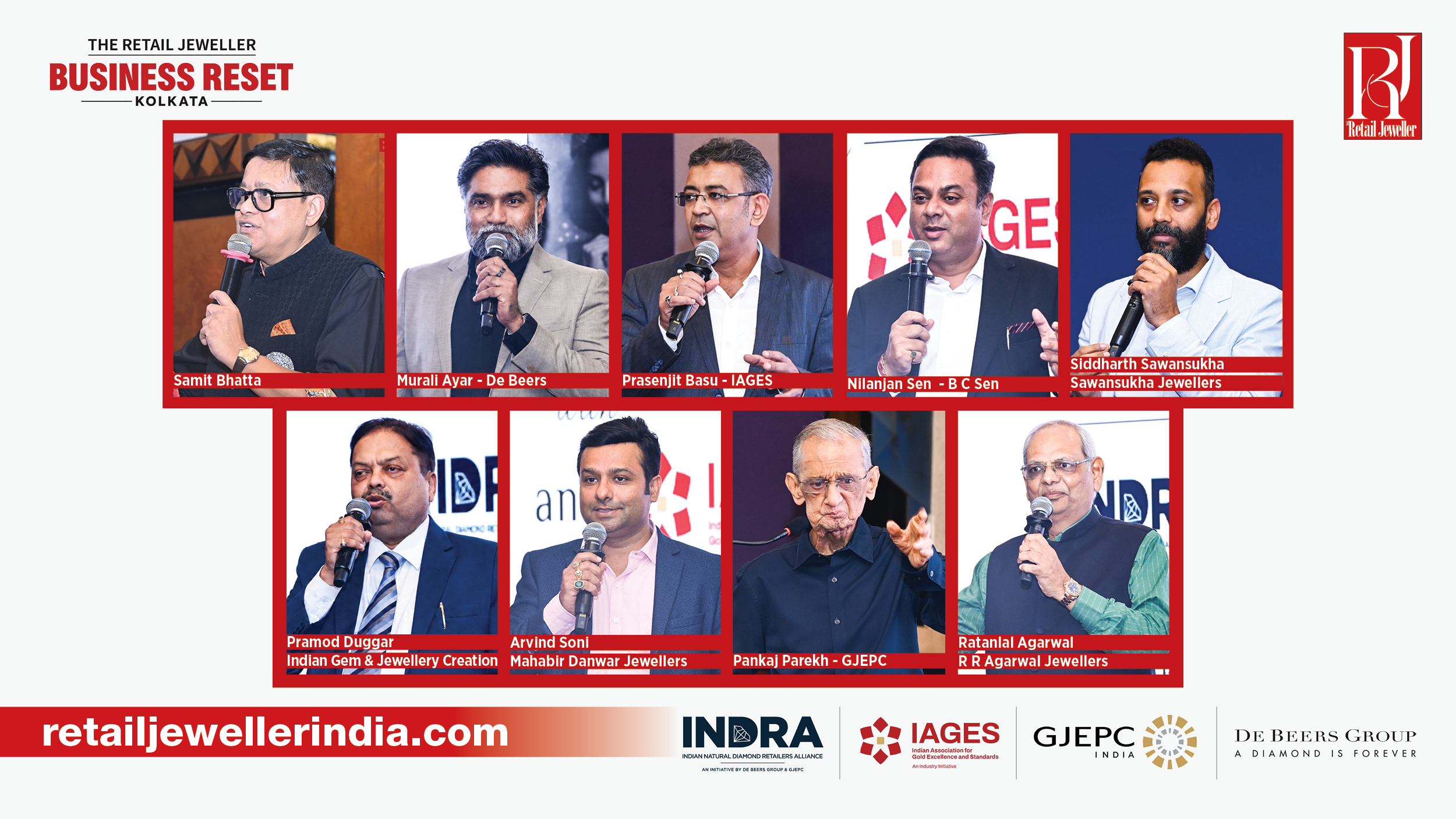
The discussion brought together several prominent names from Kolkata’s jewellery fraternity, including Siddharth Sawansukha of Sawansukha Jewellers, Nilanjan Sen of B. C. Sen Jewellers, Pramod Dugar of Indian Gem & Jewellery Creation, Ratanlal Agarwal of R. R. Agarwal Jewellers, and Arvind Soni and Amit Soni of Mahabir Danwar Jewellers, among other industry representatives.
Led by Murali Ayyar of De Beers India and Samit Bhatta of The Retail Jeweller India, the conversation moved beyond the traditional positioning of diamonds as an occasion-led purchase.A key theme was the need to make natural diamonds more visible and relevant to younger consumers through sustained, year-round communication.
For retailers, that means moving from periodic campaigns to a more consistent consumer narrative—one that explains the characteristics and authenticity of natural diamonds while also reinforcing their emotional and long-term value.
Digital platforms, advertising and consumer education were identified as important tools in this effort. The opportunity, participants suggested, is not merely to sell more diamond jewellery, but to expand the occasions and consumer segments associated with it.For Kolkata’s jewellers, this could be particularly relevant as younger buyers increasingly seek jewellery that combines heritage with contemporary design and personal expression.
From purity to a broader definition of trust
If diamonds represent an opportunity for category expansion, the gold conversation is increasingly about strengthening the foundation on which the industry operates.
The presentation by Prasenjit Basu of the IAGES focused on transparency, accountability and standardization across the gold jewellery ecosystem.
Traditionally, consumer trust in gold has been closely associated with purity. But the industry’s definition of trust is becoming broader.Responsible business practices, transparency, compliance, responsible sourcing and consistency are increasingly becoming part of the equation.
IAGES is working towards a framework that encourages businesses across the gold value chain to adopt more responsible and transparent practices, with accreditation and a defined code of conduct forming important components of the initiative.
For Kolkata’s retailers, the implications extend beyond compliance. In a market where consumers are becoming more informed and demanding greater transparency, stronger standards can become a competitive advantage.
The message is straightforward: purity remains non-negotiable, but trust in the modern jewellery business increasingly depends on the systems and practices behind the product.
Kolkata’s craftsmanship meets the global opportunity
The third conversation took the city’s jewellery industry beyond the domestic market.
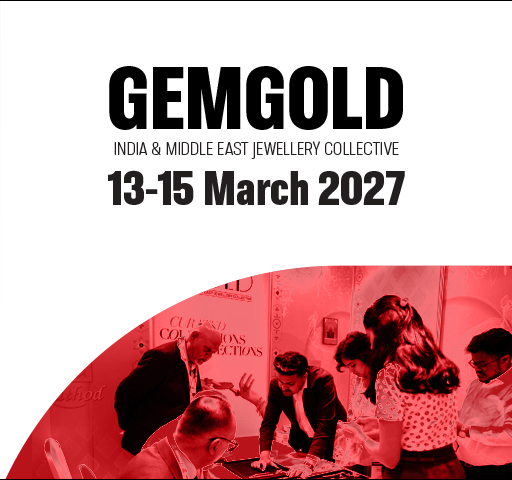
With Kolkata’s distinctive jewellery craftsmanship now recognized through a GI tag, the discussion around the curated B2B jewellery platform GemGold focused on how the city’s design heritage and manufacturing capabilities could be connected to international B2B markets.
GemGold connects Indian jewellery manufacturers with NRI retailers and wholesalers across 25 countries, with its Dubai platform held every March.
Pankaj Parekh of the Gem & Jewellery Export Promotion Council (GJEPC) highlighted what makes Kolkata distinctive in the global jewellery landscape.
The city’s jewellery identity has been shaped by craftsmanship, cultural memory and a strong preference for intricate, detail-rich designs. Its traditional gold work and heritage-led aesthetic remain powerful differentiators, even as jewellers increasingly reinterpret them through lighter, more contemporary and wearable formats.That balance could prove crucial.
Global buyers are increasingly looking for differentiated products and reliable manufacturing relationships. Kolkata, with its design language and craftsmanship, has an opportunity to position itself not simply as a regional jewellery centre, but as a source of distinctive Indian design for international consumers.
The challenge—and opportunity—will be to preserve the authenticity of Kolkata’s jewellery traditions while adapting them to changing international tastes, price points and consumption patterns.
Three initiatives, one larger industry story
What made the Kolkata gathering significant was not simply the presence of three initiatives, but the way their objectives intersected.INDRA addressed product growth—how to expand the natural diamond opportunity.
IAGES addressed trust and process—how stronger standards and transparency can strengthen the gold ecosystem.
GemGold addressed market expansion—how Indian jewellery businesses can access new international B2B opportunities.
Together, they point towards a broader transformation underway in India’s jewellery industry.The next phase of growth is unlikely to come from any single product category or market. It will increasingly depend on how effectively jewellers combine compelling products, credible business practices and access to new customers and geographies.
For Kolkata, the opportunity is particularly interesting.The city already possesses what many emerging jewellery markets spend years trying to build: a deep design heritage, skilled craftsmanship, established consumer trust and a distinctive regional identity.The next question is how effectively that heritage can be translated into the language of the modern consumer—and, increasingly, the global buyer.
The conversation in Kolkata suggests that the city’s jewellery story is no longer only about preserving its past.It is about turning that past into its next competitive advantage.
Retail Jeweller India News