




The latest BIS market survey was conducted across 345 districts and based on 4,971 responses from 30 States and Union Territories
New Delhi: The Bureau of Indian Standards (BIS) has significantly expanded its Hallmark Unique Identification (HUID)-based silver hallmarking ecosystem, with 341 Assaying and Hallmarking Centres (AHCs) now serving 102 districts and more than 25,000 silver jewellers registered with the regulator. This was announced by the BIS ahead of the festive season, as silver gains greater consumer attention amid elevated gold prices.
Since the Silver HUID portal was launched on September 1, 2025, more than 77 lakh silver jewellery pieces have been hallmarked with HUID, signalling growing adoption of the system, the BIS said in its latest communication.
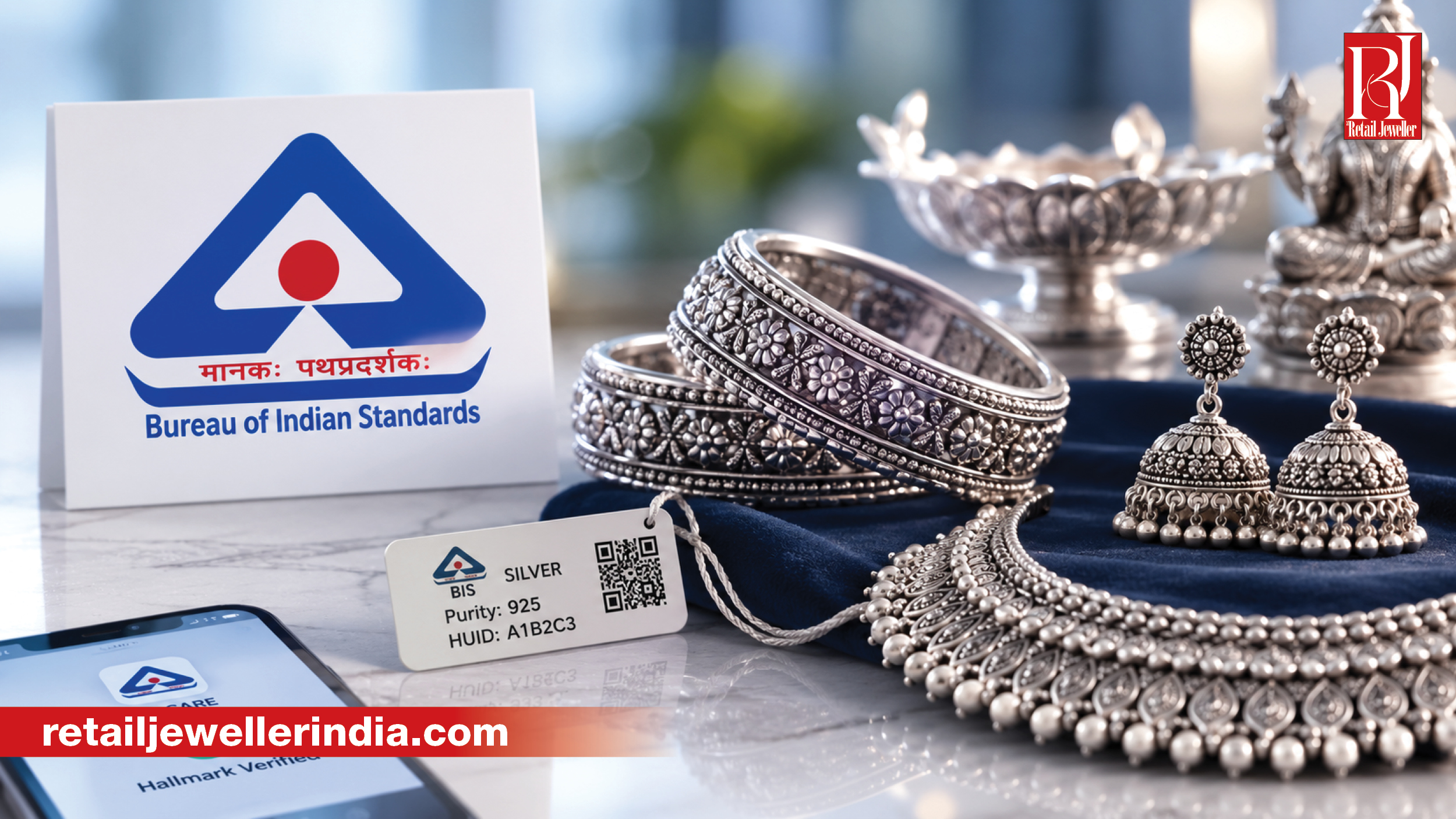
Under the revised IS 2112:2025 standard, silver articles carrying a hallmark feature the BIS Standard Mark with the word ‘SILVER’, the purity grade and a six-digit alphanumeric HUID. The system enables consumers to verify details of a hallmarked article through the BIS CARE app, including its purity, hallmarking centre and jeweller registration details.
The latest BIS market survey also provides an indication of the structure of silver demand. Conducted across 345 districts and based on 4,971 responses from 30 States and Union Territories, it found that articles weighing 10–25 grams and 25–50 grams together account for nearly 74% of reported demand. Anklets or payals, chains, toe rings, finger rings and bracelets emerged among the most commonly sold categories, while 925 and 800 were the most prevalent purity grades.
Regionally, the Southern Region accounts for 62% of silver hallmarking volumes, followed by the Western Region at 18% and the Central Region at 10%, highlighting the continuing concentration of organized silver hallmarking in established jewellery markets.
Silver hallmarking itself has been voluntary in India since October 2005. However, HUID marking is mandatory for silver articles that are hallmarked under the revised system. This distinction means the current expansion is primarily strengthening the infrastructure and traceability of the voluntary hallmarking ecosystem, rather than making hallmarking universally compulsory.
The infrastructure push follows BIS plans to further expand referral and assay laboratories for silver nationally over the next two years, as rising gold prices drive some consumers towards silver. BIS has also indicated that technology, including artificial intelligence and robotics, is being explored to improve testing capacity and turnaround times.
For retailers, the wider HUID network offers a stronger framework for communicating purity assurance and traceability at the point of sale. BIS is advising consumers to purchase hallmarked silver from registered jewellers, verify the HUID through the BIS CARE app and retain the purchase invoice.
The Bureau of Indian Standards (BIS) is India’s national standards body, established under the BIS Act, 2016, to promote standards, quality and conformity assessment across products and services. In the jewellery sector, BIS administers hallmarking standards for precious-metal articles, providing consumers with an independent mechanism to verify purity. Its hallmarking framework covers gold and silver, while the HUID system enables digital traceability of hallmarked articles through the BIS CARE app.
Retail Jeweller India News