




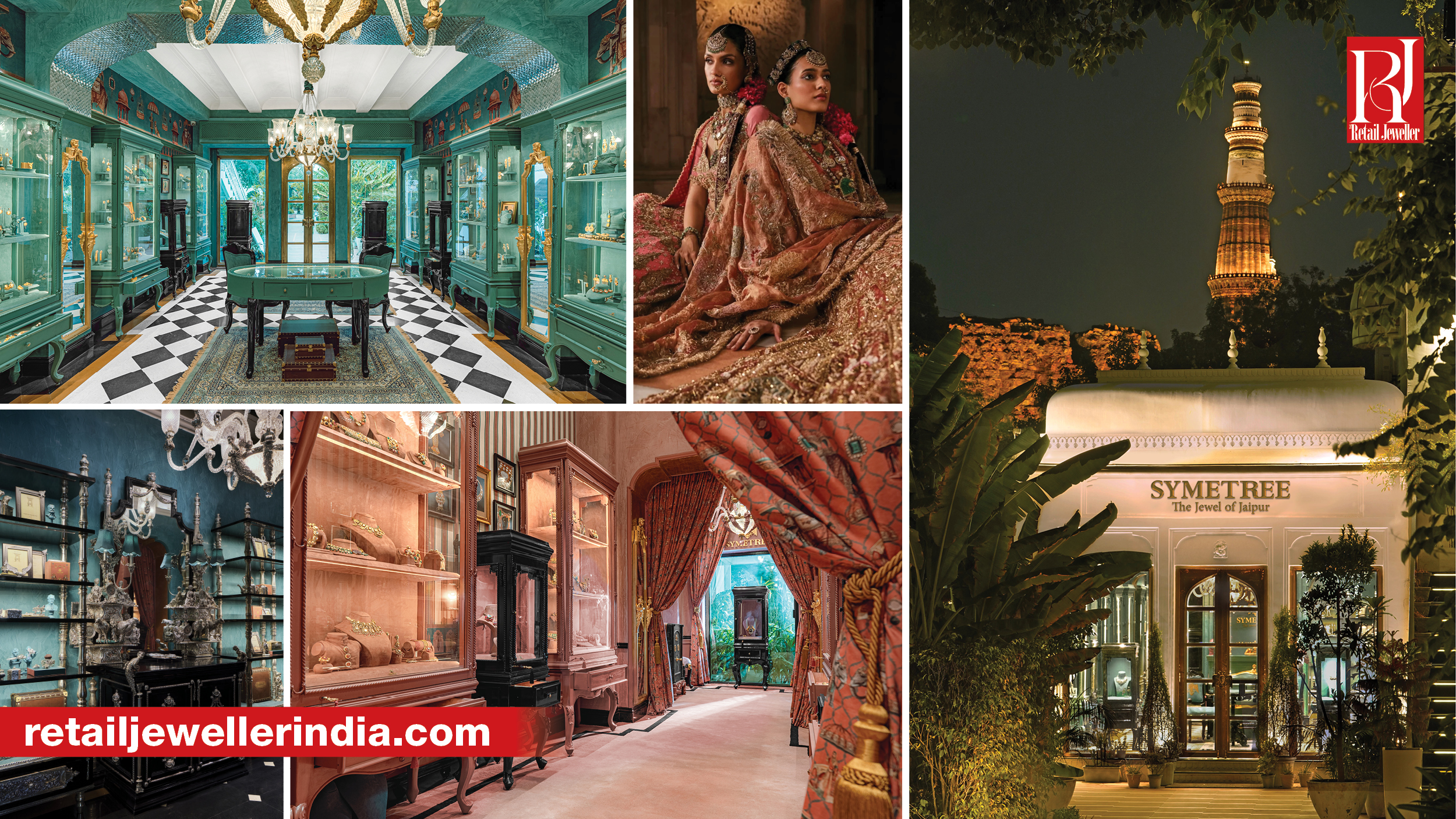

Founder and Director Abhishek Haritwal speaks to The Retail Jeweller about elevating the luxury experience by crafting not only tasteful designs but also non-templated destination spaces that tell their own stories and offer immersive journeys, manifesting the brand’s ethos, anchored in uncompromising authenticity and the cultural and emotional spirit it embodies.
EDITED EXCERPTS:
Pratyasha K (PK): You are buliding an aspirational royal-inspired first-generation jewellery business. Where did the journey begin?
Abhishek Haritwal (AH): I did not inherit a jewellery legacy, but I inherited exposure to the history of luxury. My years in Jaipur and proximity to its royal family showed me a world where Indian heritage and Western influence existed naturally together. My interactions with Rajmata Gayatri Devi shaped my understanding of refinement.
The name Symetree emerged during a 2008 conversation with HH Maharaja Bhawani Singhji about Jaipur’s symmetrical planning, architecture and jewellery traditions. The city became the intellectual structure of the brand. In an industry dominated by legacy names, historical knowledge became my strength and helped me build an identity without imitating an established house. I saw a clear gap in the market for a royal-inspired luxury jewellery brand that could be graced by royalty and ultra-HNIs, while also remaining aspirationally accessible to customers seeking a taste of that world. From its collections to its stores, every expression of Symetree exudes royalty and luxury.
PK: Did royalty give Symetree its first halo of aspiration?
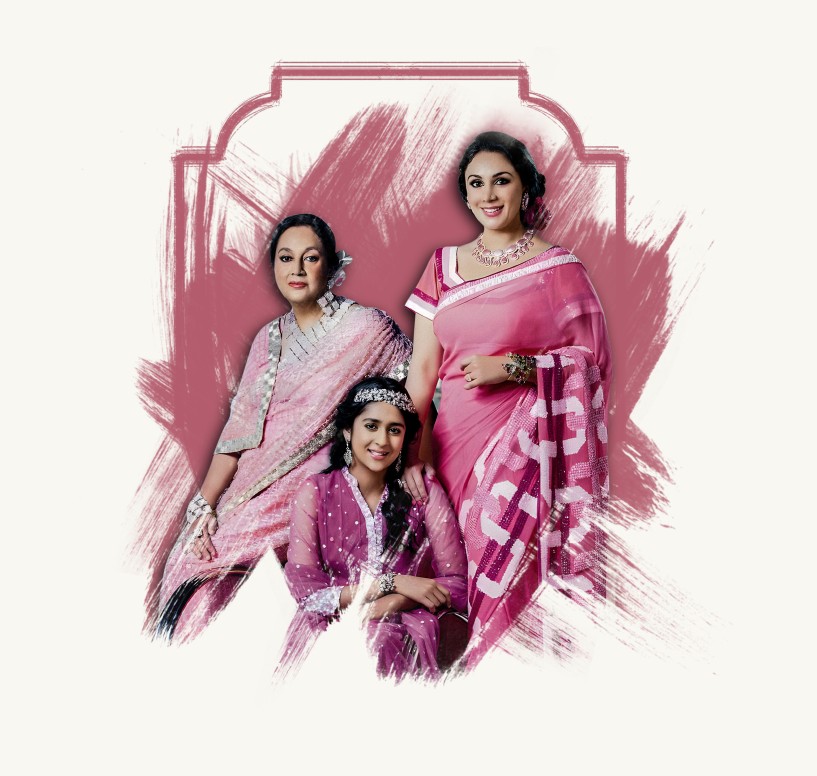
AH: Yes. Our proximity to Jaipur’s royal family gave us a benchmark for refinement, not just an aesthetic reference. It shaped how we approached design, presentation and storytelling. That relationship has continued across generations, with Rajmata Saheb Padmini Devi ji, Princess Diya Kumari ji and Princess Gauravi Kumari ji all worn Symetree in a visual celebrating Jaipur Pink. For a first-generation jeweller, that intergenerational acceptance is deeply significant. It shows that the brand is not borrowing royalty as an aesthetic; it has earned a place within Jaipur’s continuing story of refinement. The royal family of Qatar visited our Khan Market store and Symetree presenting Indian Navratans at The Metropolitan Museum of Art (The Met in New York City) further strengthened that aspiration. These moments showed that the brand’s royal language was being recognised by culturally discerning audiences in India and globally.
PK: Your stores across locations don’t adhere to a standard template. How are you approaching the retail experience of the brand?
AH: The idea is to build non-templated stores with their own immersive experience. We will not repeat a single standard store format; the setting itself should create anticipation. The unifying element is the uber-luxury retail environment and the choice of location that builds the story and speaks the brand language before the customer sees the jewellery. Our focus is North India, where the architecture, cultural context and luxury customer align naturally with the brand.
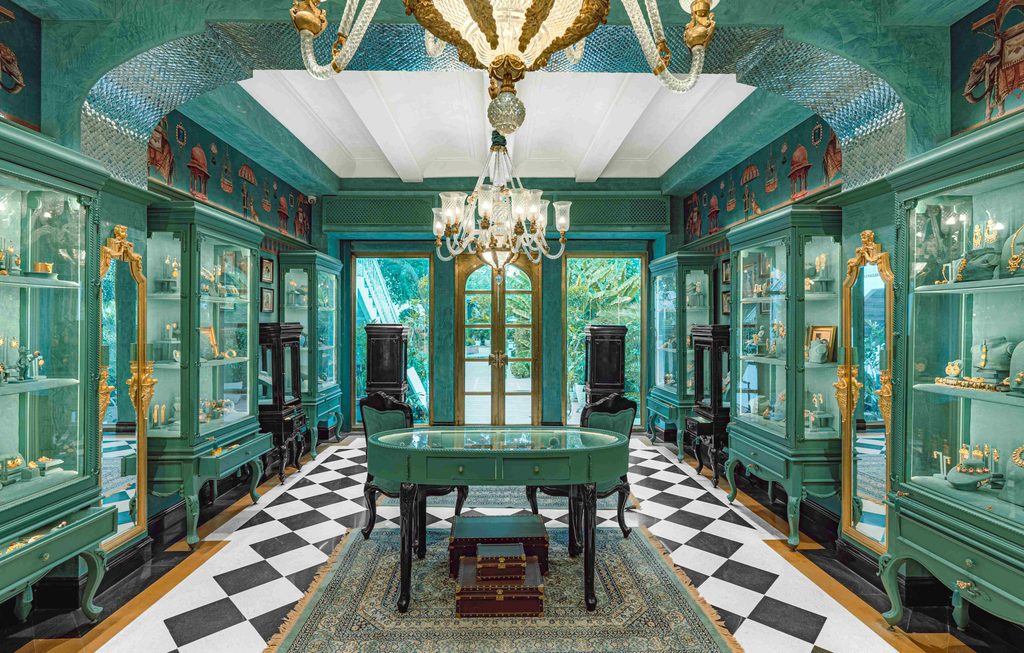
Ambawatta in Mehrauli houses our flagship, set in a restored 19th-century haveli. Khan Market is a central salon for Delhi’s established clientele. Sitapura is where our Jaipur atelier is located; the city also has an upcoming retail property.
We also have a boutique at Khas Bagh in Jodhpur, a royal heritage property with a café and vintage-car collection.
PK: Most jewellery brands expand by adding stores. Symetree wants to build destinations. Is this Symetree’s next expression of premiumness?
AH: We view stores as physical manifestations of the brand’s ethos. It must subconsciously heighten the brand’s premiumness. We are signing marquee properties and hope to bring two or three of them into the public eye over the next two years. One may combine a jewellery store with a café, another will be a museum, and another will be a five-room hotel. These are not extensions being added merely for scale. Each format must slow down the transaction while deepening engagement.
We want to create environments where jewellery, history, hospitality, and lifestyle come together. We are building a cult brand. We already have clients who do not want to go elsewhere. The next step is to make that relationship even stronger through experiences that cannot be replicated.
PK: The Ambawatta flagship blends 19th century structural heritage with a 21st century retail luxury. How did you bring about the transformation?
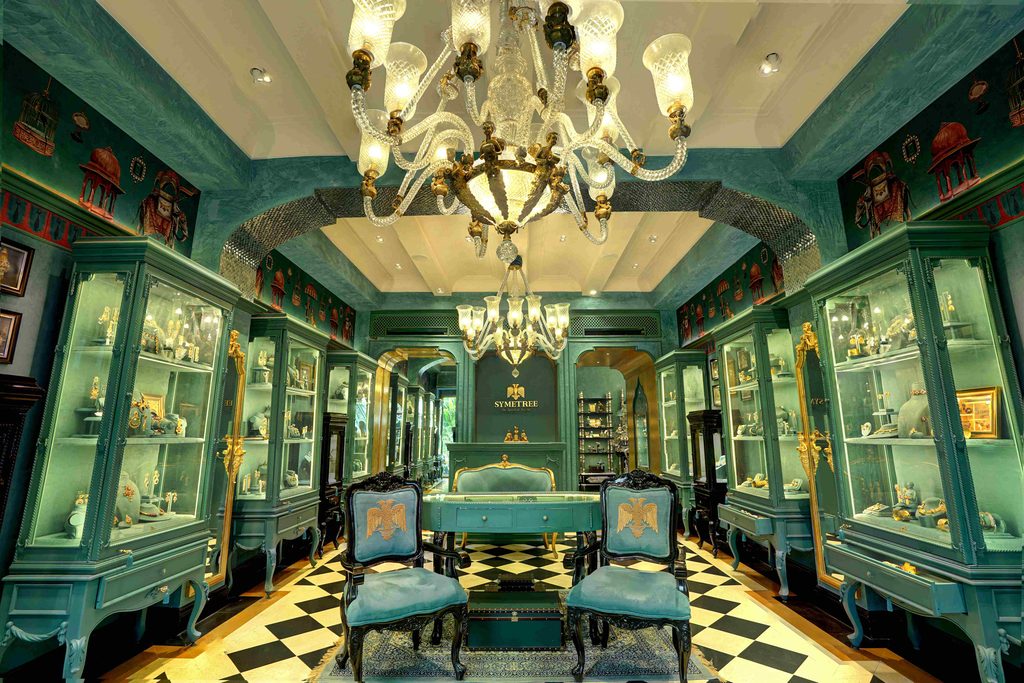
AH: High jewellery cannot be reduced to a product across a counter. The experience begins before the customer enters. The store unfolds as a sequence of stories. Our twin-headed eagle mascot appears at the gate and recurs throughout the property like a royal insignia, creating an immediate and consistent identity for the house.
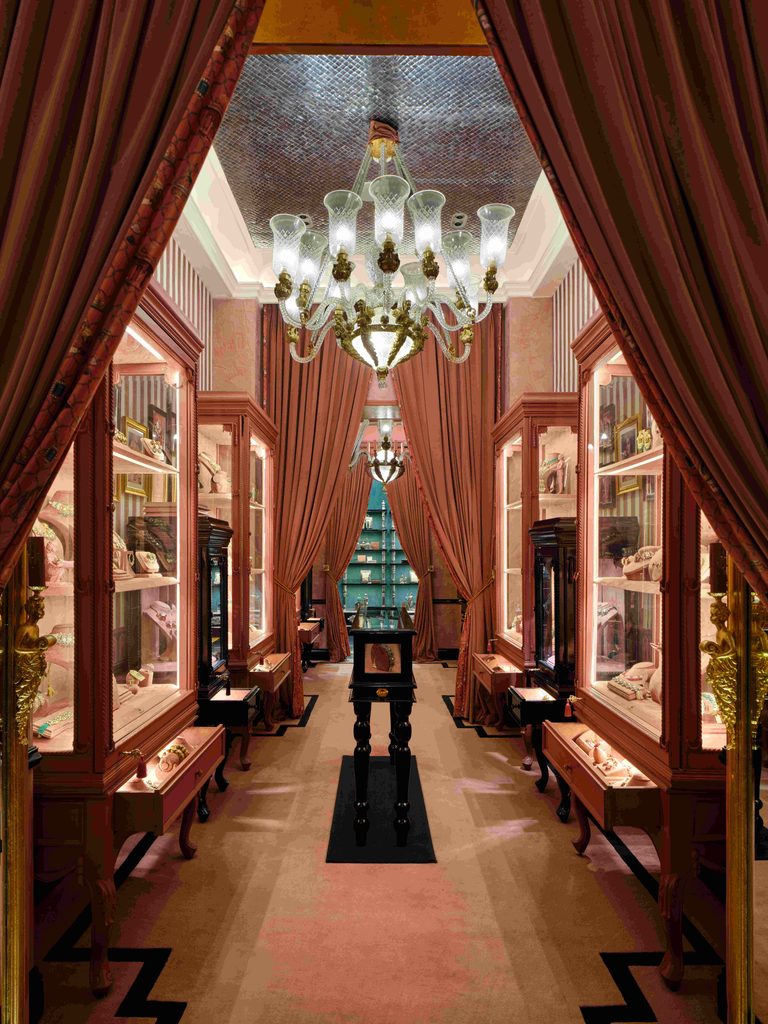
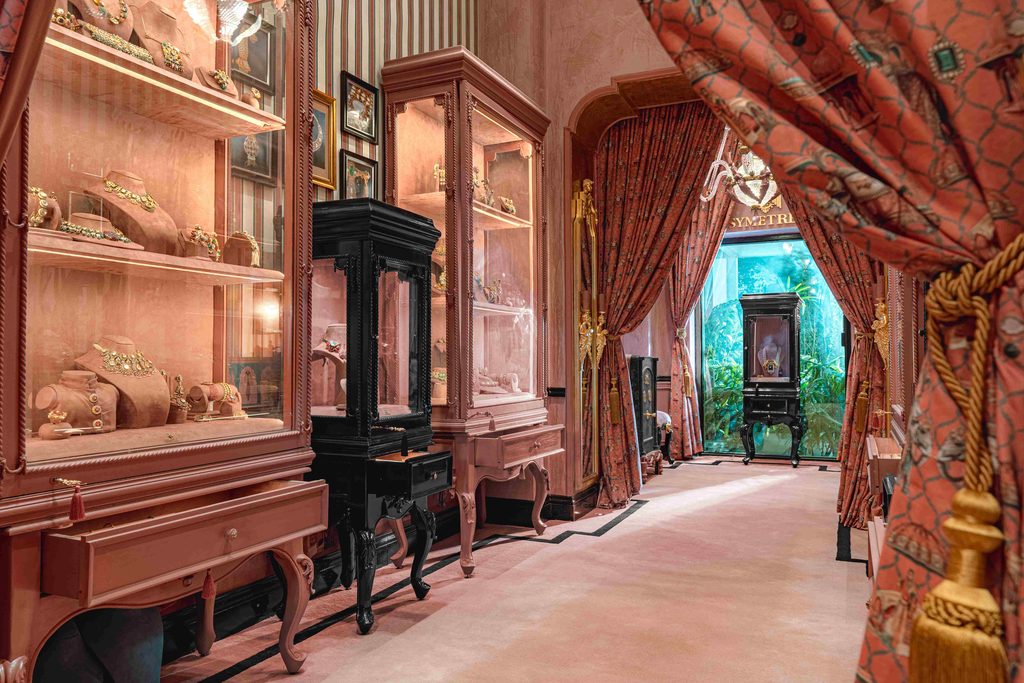
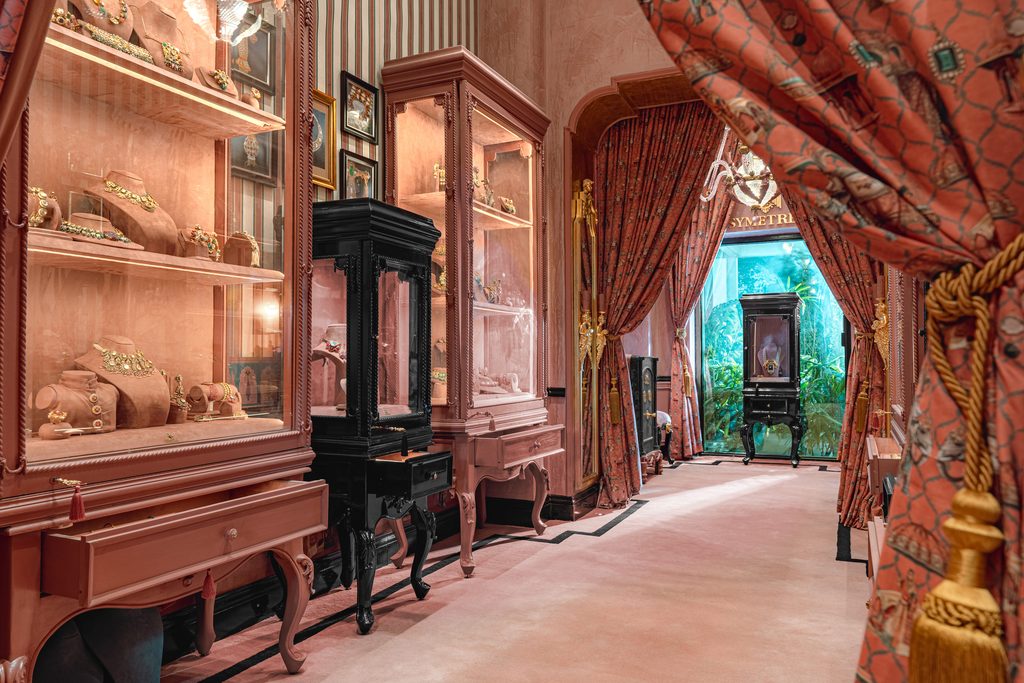
Inside, Rani Mahal, reimagines the royal zenana ghar as a private high-jewellery salon. Traditionally reserved for queens and princesses, the zenana was a secluded world of intimacy, personal rituals and treasured possessions. That sense of privileged access is recreated through Persian carpets, araish-finished walls, thikri-inspired mirrors, velvet drapes, gilded mirrors, chandeliers, antique cabinetry and objects from the founder’s private collection, leading to a vault-like display of jadau polki, rare emeralds, pearls and diamonds.
Rajat Mahal is dedicated to silver artefacts and objects, while the opening section showcases the brand’s silver jewellery.
PK: What makes the jewellery unmistakably Symetree?
AH: Our design language is rooted in Jaipur’s historic palaces, art and ornaments. These references come alive through local crafting techniques such as chilai, chittai, meenakari and others, with some pieces requiring over 250 hours of handwork.
Emeralds are another house signature. Our family’s association with the Kagem mine gave us an understanding of the gemstone from source to setting. We believe that the stone’s rarity should determine the jewel it becomes. Our collections each carry a distinct royal narrative. Gulabi Sandook is centred on bespoke bridal jewellery, jadau polki and heirlooms. Sawai brings together rare uncut diamonds, emeralds and collector pieces. Navratn reinterprets spiritual symbolism through detachable jewels, ear cuffs, medallions and stackable forms.
We have also built a complete men’s jewellery vocabulary spanning kalangis, sarpeches, kanthas, jewelled buttons and ceremonial accessories. Tirbari extends the brand into silver, while the Jaipur Polo Collection carries the same design language into dinnerware, tea services, trophies, artefacts and gentlemen’s accessories.
PK: The new bride wants heritage to stand out but does not want to resemble an earlier generation. How are you changing bridal jewellery for her?
AH: The modern bride wants to inherit meaning, not limitations. More than half of our brides have asked us to weave family heirlooms into new bridal parures. We also revive Solah Shringar, from the hasli and bajuband to the hath phool, payal and head ornaments, while reconsidering scale, comfort and styling.
Our larger bridal pieces are modular: necklaces split into layers, chokers become bracelets and detachable elements work independently. A young client may admire traditional jadau but reject a piece she can wear only twice. Versatility keeps its value alive.
Also, I strongly advocate that this generation chooses jewellery independently and then builds their wardrobe around it.
Written by Pratyasha K
Retail Jeweller India Magazine